
Online Tutoring
Preply Biology Tutors: Find the Right Match for Your Studies
A practical guide to choosing a biology tutor on Preply, from high school to university level.
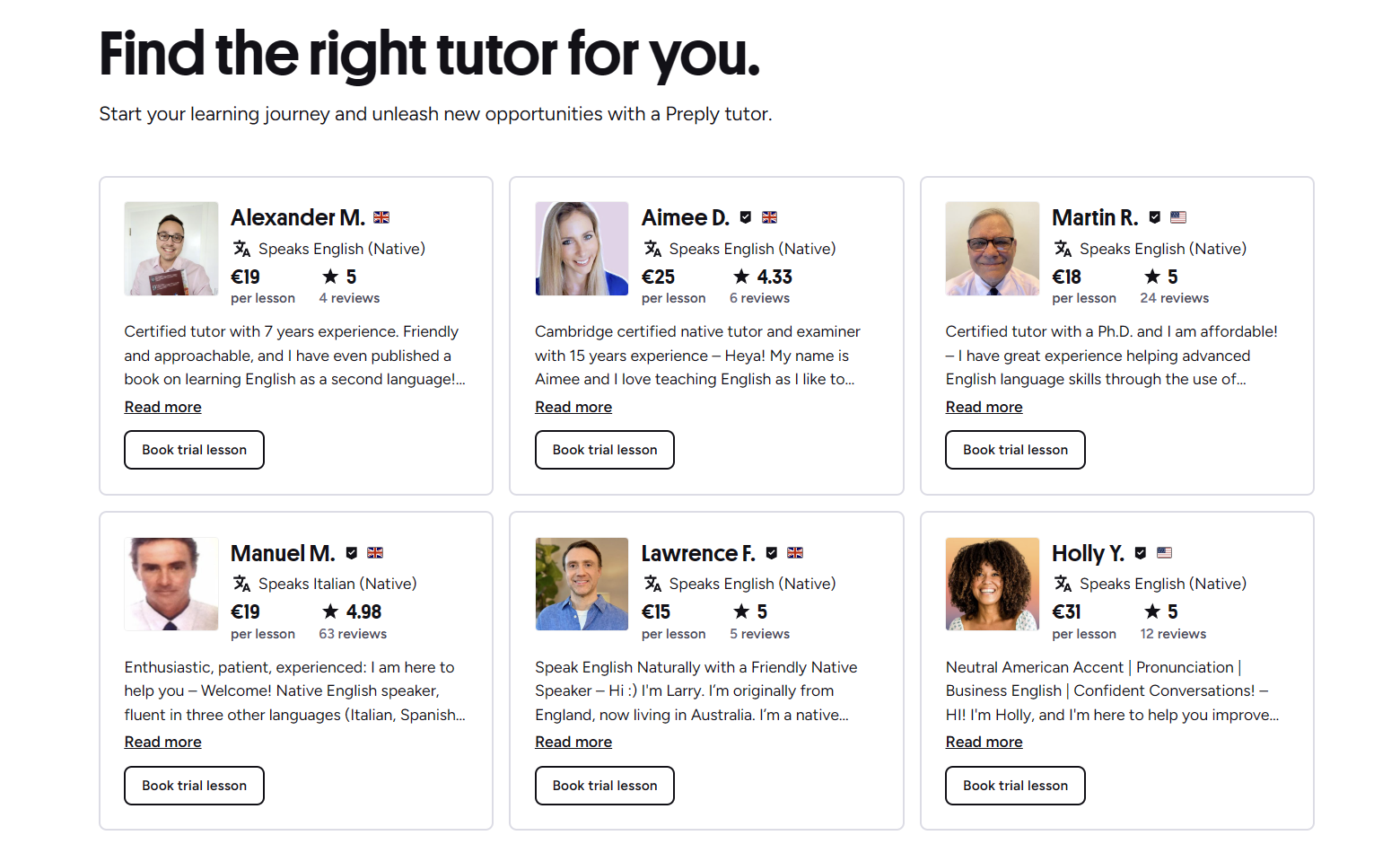
Biology is one of those subjects that can feel overwhelming when you're studying alone. The terminology piles up, the processes interconnect, and the diagrams never look quite the same as they do in the textbook. That's where a good tutor makes a difference — not by handing you answers, but by helping you build a mental framework that holds up under exam pressure. Preply has become a common starting point for students looking for that kind of support, partly because the platform lets you filter tutors by very specific criteria: academic level, specialty within biology, price range, availability, and even the language of instruction.
Contents
- 1. How Preply Works for Biology Students
- 2. Finding a Biology Tutor on Preply
- 2.1. Filtering by Specialty and Academic Level
- 2.2. Reading Reviews and Watching Introduction Videos
- 2.3. Trial Lessons: What to Test
- 3. What to Look for in a Biology Tutor
- 3.1. Qualifications and Teaching Background
- 3.2. Teaching Style and Communication
- 3.3. Availability and Time Zone Alignment
- 4. Pricing and Lesson Packages
- 5. Using the Preply Platform
- 5.1. Mobile App and Desktop Experience
- 5.2. Progress Tracking and Lesson Notes
- 6. Common Biology Topics Covered on Preply
- 7. Pros and Cons of Preply for Biology Tutoring
- 8. Alternatives to Preply for Biology Tutoring
- 9. Final Assessment of Preply Biology Tutors
The platform itself is straightforward. You create an account, set your goals — maybe you're preparing for AP Biology, maybe you need help with a university genetics module, or maybe you're an adult learner brushing up on ecology for a career change — and then you browse tutor profiles. Each profile shows the tutor's education, teaching experience, hourly rate, student reviews, and a short introduction video. You can book a trial lesson (usually 25 or 50 minutes) to see if the teaching style clicks before committing to a package. That trial step is important; a tutor who looks perfect on paper might explain concepts in a way that doesn't match how you learn.
What follows is a detailed walkthrough of how to use Preply for biology tutoring, what to watch for when comparing tutors, how the pricing works in practice, and where the platform falls short. The goal isn't to sell you on Preply — it's to give you enough concrete information to decide whether it's the right tool for your situation, or whether you'd be better off with a local tutor, a university help center, or a different online platform.
How Preply Works for Biology Students
Preply operates as a two-sided marketplace. Tutors set their own rates, write their own profiles, and manage their own schedules. The platform handles payment processing, video conferencing, scheduling reminders, and a basic lesson space with a shared whiteboard and file upload. For biology, the whiteboard matters — you'll use it to draw cell membranes, sketch phylogenetic trees, label anatomy diagrams, and work through Punnett squares in real time. The video call runs in the browser; there's no separate software to install unless you prefer the mobile app.
After you book a lesson, you get a calendar invite and a link to join. The tutor sees the same link. At the scheduled time, both of you enter the lesson room. You can share your screen if you want to show a specific problem set, a lab report, or a practice exam. The tutor can annotate on the shared whiteboard, and you can download the whiteboard content after the session. That's useful for review — you don't have to frantically screenshot everything during the lesson.
One practical detail: Preply lessons are sold in packages. You buy a block of hours (5, 10, 15, or 20) upfront, and the hours are deducted as you schedule lessons. If you don't use all the hours, they expire after a certain period — usually 12 months for the largest package, less for smaller ones. You can't roll over unused hours indefinitely. This matters if your schedule is unpredictable. Some tutors also offer a pay-as-you-go option for the first lesson, but after that the package system kicks in.
The search filters are where you'll spend most of your time upfront. You can narrow tutors by subject (biology), then by sub-topic: molecular biology, genetics, ecology, physiology, biotechnology, botany, zoology, microbiology, and more. You can also filter by student level — elementary, high school, university, adult learning — and by price range. The price filter uses the tutor's hourly rate in your local currency, which helps avoid sticker shock. Availability filters let you pick days of the week and time windows, which is essential if you're juggling classes or shift work.
Finding a Biology Tutor on Preply
Start with the subject filter set to biology. You'll see a list of tutors, each with a thumbnail photo, name, country, rating, number of reviews, and hourly rate. Click a tutor to open their full profile. The profile includes: education (degrees, institutions), certifications (TEFL, teaching licenses, subject-specific credentials), teaching experience (years, institutions, age groups taught), a written bio, the introduction video, and a list of specialties. The specialties section is where you'll see whether the tutor actually covers the topic you need — for example, "AP Biology," "IB Biology," "molecular genetics," "bioinformatics," or "medical school prep."
Filtering by Specialty and Academic Level
If you're a high school student preparing for AP Biology, look for tutors who explicitly list "AP Biology" as a specialty. Many tutors also mention familiarity with the College Board curriculum, the lab requirements, and the free-response question format. For IB Biology, search for "IB Biology" or "International Baccalaureate." University students should filter for "university level" and then scan specialties for the exact module name — "molecular cell biology," "evolutionary biology," "systems physiology," etc. Adult learners or professionals might prefer tutors who list "conversational biology" or "biology for non-majors" if the goal is conceptual understanding rather than exam prep.
Reading Reviews and Watching Introduction Videos
Reviews on Preply are left by students after completed lessons. They're generally reliable because the platform only allows reviews from verified lessons. Look for patterns: multiple reviewers mentioning "clear explanations," "patient," "good at breaking down complex topics," or "helped me improve my grade from X to Y." Be cautious of profiles with only 5-star reviews and very few total reviews — that can mean the tutor is new or has only taught a handful of students. The introduction video (usually 30-90 seconds) lets you hear the tutor's accent, pace, and teaching demeanor. If you struggle with fast speech or strong accents, the video is a quick compatibility check.
Trial Lessons: What to Test
Most tutors offer a discounted trial lesson (often 50% off their regular rate). Use it to test three things: (1) Can the tutor explain a concept you've struggled with in a way that makes sense? Bring a specific problem — a practice question, a diagram you can't interpret, a lab analysis you're stuck on. (2) Does the tutor ask questions to gauge your current understanding, or do they launch into a lecture? Good tutors diagnose first. (3) Is the technical setup smooth? Check audio, video, whiteboard responsiveness, and whether the tutor can share relevant resources (PDFs, diagrams, simulation links) during the call.
What to Look for in a Biology Tutor
Beyond the profile basics, there are practical qualities that separate tutors who help you pass from tutors who help you understand. The first is subject-specific teaching experience. A tutor with a PhD in marine biology might be brilliant at research but terrible at explaining mitosis to a high school sophomore. Look for tutors who have taught the exact curriculum you're following — AP, IB, A-level, university introductory biology, MCAT biology section, etc. Teaching experience at your level matters more than the highest degree earned.
Qualifications and Teaching Background
Preply doesn't verify degrees or teaching licenses beyond what tutors self-report. Some tutors display a "verified" badge for identity, but that doesn't confirm academic credentials. If credentials matter to you (for example, you want a tutor who has actually taught AP Biology in a classroom), ask directly in the trial lesson or via the platform's messaging system before booking. Many tutors are happy to share a LinkedIn profile, a university faculty page, or a teaching portfolio. If a tutor hesitates or gives vague answers, that's a signal.
Teaching Style and Communication
Biology involves a lot of visual and conceptual material. A tutor who relies solely on verbal explanation will leave gaps. Ask during the trial: "How do you usually teach [topic]?" Good answers include: drawing on the whiteboard, using screen-shared animations or simulations, walking through labeled diagrams, building concept maps, and having you explain the concept back (the Feynman technique). If the tutor says "I'll send you notes after," that's a red flag — passive note-receiving doesn't build durable understanding.
Availability and Time Zone Alignment
Preply shows tutor availability in your local time zone, which is helpful. But availability can change week to week. Before buying a package, message the tutor to confirm they can commit to a recurring weekly slot for at least the next 4-6 weeks. Some tutors are university students themselves; their schedules shift each semester. Others teach on multiple platforms and may have limited openings. A tutor with a consistent, predictable schedule is worth more than a slightly cheaper tutor who cancels or reschedules frequently.
Scroll horizontally to see all columns
| Criterion | What to Check | Why It Matters |
|---|---|---|
| Curriculum familiarity | Lists your exact exam or course (AP, IB, university module) | Knows the question formats, required practicals, marking schemes |
| Teaching experience at your level | Years teaching high school / university / adult learners | Adjusts depth and pacing appropriately |
| Visual teaching tools | Uses whiteboard, simulations, diagrams, concept maps | Biology is visual; verbal-only explanations often fail |
| Responsiveness | Replies to messages within a few hours | Indicates reliability and communication habits |
| Trial lesson quality | Diagnoses gaps, explains clearly, uses whiteboard actively | Best predictor of future lesson effectiveness |
The table above summarizes the five criteria that most reliably predict a good match. You can copy it into a note and score each tutor you trial on a 1-5 scale. A total above 20 usually means the tutor is worth continuing with.
When you're scanning the tutor grid, don't just sort by lowest price. The cheapest tutors are often newer to the platform or teaching outside their core expertise. A tutor charging $35/hour who has taught AP Biology for five years will likely get you further in three lessons than a $15/hour tutor who's never seen the AP curriculum. Price correlates with experience, but not perfectly — some experienced tutors keep rates low to maintain a full schedule. Read the bio and reviews to tell the difference.
A higher hourly rate often buys you fewer total hours because the tutor spots your misconceptions faster and doesn't waste time on material you already know.
Pricing and Lesson Packages
Preply tutor rates for biology typically range from $10 to $75 per hour. The majority cluster between $15 and $40. Factors that push rates higher: advanced degrees (PhD, MD), certified teaching credentials, specialization in high-stakes exam prep (MCAT, USMLE, GAMSAT), and high review volume with consistent 4.9+ ratings. Factors that push rates lower: tutors early in their careers, tutors based in countries with lower cost of living, tutors teaching general biology rather than specialized subfields.
Scroll horizontally to see all columns
| Tutor Profile | Hourly Rate (USD) | Best For |
|---|---|---|
| University student / recent grad | $10 - $20 | Homework help, basic concept review, high school biology |
| Experienced high school teacher | $25 - $45 | AP, IB, A-level exam prep, curriculum alignment |
| University lecturer / PhD researcher | $40 - $75 | Advanced university modules, MCAT, research-oriented tutoring |
| Medical student / MD | $35 - $60 | Physiology, anatomy, medical school prep, USMLE biology sections |
Packages come in 5, 10, 15, and 20-hour blocks. The per-hour discount increases with package size: 5-hour packages usually have no discount, 10-hour packages around 5-8% off, 15-hour around 10-12%, and 20-hour around 15-18%. The discount is applied at checkout. If you're unsure about a tutor, start with a 5-hour package after the trial. You can always upgrade later. Note that package hours are tied to the specific tutor — you can't buy a 10-hour package and split it across two different tutors.
Payment methods include major credit cards, PayPal, Apple Pay, and Google Pay. Preply charges in your local currency (USD, EUR, GBP, etc.) and handles conversion. There's no monthly subscription — you only pay for the package you choose. Refunds for unused hours are possible within 30 days of purchase if you haven't scheduled any lessons, but once you've used even one hour from a package, the standard refund policy becomes restrictive. Read the current terms before buying a large package.
Using the Preply Platform
The lesson space is where you'll spend most of your time. It's a browser-based video call with an integrated whiteboard, chat, and file sharing. The whiteboard supports freehand drawing, text boxes, shapes, and image upload. For biology, the ability to upload a diagram (say, a blank Krebs cycle) and annotate it together is the single most useful feature. You can also paste images directly from clipboard. The tutor can grant you control of the whiteboard so you can draw your own diagrams — a good tutor will hand you the pen often.
Mobile App and Desktop Experience
Preply has iOS and Android apps that mirror the web experience. The app is convenient for joining lessons on a tablet — especially if you use a stylus for whiteboard drawing. However, the whiteboard on a phone screen is cramped; a tablet or desktop is better for biology sessions. The desktop web version works in Chrome, Firefox, Safari, and Edge. No plugin installation is required. Screen sharing works natively in the browser. If you have a dual-monitor setup, you can put the video call on one screen and the whiteboard on the other.
Progress Tracking and Lesson Notes
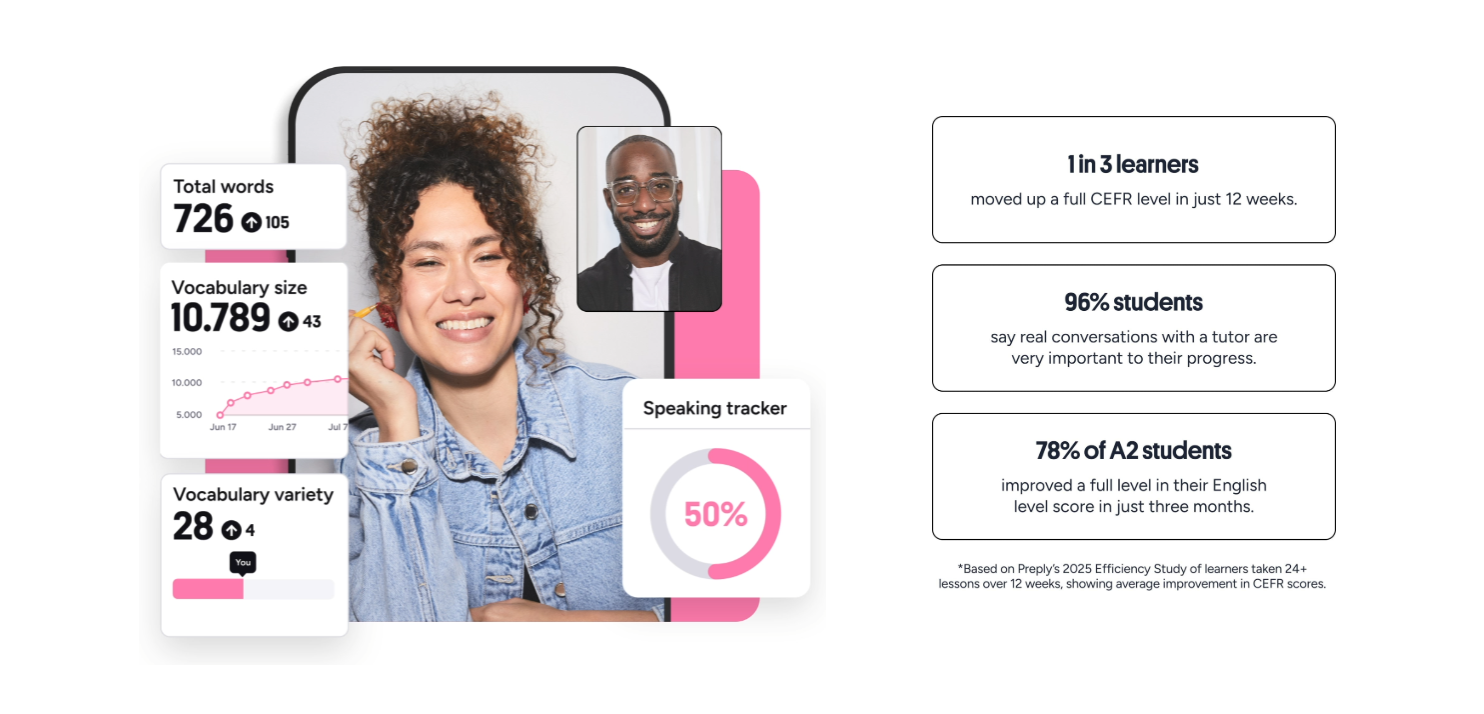
After each lesson, the tutor can write a short summary that appears in your lesson history. Some tutors also upload the whiteboard PDF, annotated diagrams, or practice problems. You can access these anytime from your dashboard. Preply also shows a simple progress graph: number of lessons completed, total hours, and a self-assessment slider the tutor can update (beginner, intermediate, advanced). It's basic but functional. For more detailed tracking, many students keep their own spreadsheet of topics covered, practice scores, and lingering questions.
One feature worth using: the "Learning Plan." After the first few lessons, some tutors will create a shared document outlining the topics you'll cover each week, aligned with your exam date or course syllabus. This turns ad-hoc tutoring into a structured course. Ask your tutor if they do this — it's not a platform feature per se, but many experienced tutors have their own template. A learning plan helps you see whether you're on track to cover everything before the exam.
Common Biology Topics Covered on Preply
Because tutors set their own specialties, the range is broad. The most requested topics cluster around standard curricula: cell structure and function, membrane transport, cellular respiration and photosynthesis, cell division (mitosis/meiosis), Mendelian and non-Mendelian genetics, molecular genetics (DNA replication, transcription, translation, regulation), biotechnology (PCR, gel electrophoresis, CRISPR), evolution and natural selection, phylogeny and classification, ecology (population, community, ecosystem), plant and animal physiology, and human anatomy systems. Many tutors also cover lab report writing, data analysis, statistical tests (chi-square, t-test), and experimental design — skills that appear in AP, IB, and university practical assessments.
- Cell biology: organelles, membranes, transport, signaling
- Genetics: Mendelian, molecular, population, epigenetics
- Evolution: mechanisms, evidence, speciation, phylogenetics
- Ecology: energy flow, nutrient cycles, population dynamics, conservation
- Physiology: nervous, endocrine, cardiovascular, respiratory, renal, immune
- Biotechnology: recombinant DNA, genomics, bioinformatics basics
- Exam-specific: AP Biology free-response, IB internal assessment, MCAT biology/biochemistry, A-level practical endorsement
If your topic is niche — say, computational biology, astrobiology, or a specific research technique — you may need to search more broadly and message tutors directly. Use the platform's messaging system to ask: "Do you have experience with [topic]?" before booking a trial. Many tutors have research backgrounds that aren't fully reflected in their listed specialties.
Pros and Cons of Preply for Biology Tutoring
The platform's strengths are real: huge tutor pool, granular filtering, trial lessons, integrated whiteboard, flexible scheduling across time zones, and no long-term contract. You can switch tutors anytime without penalty (unused hours stay with the original tutor, but you can stop booking new lessons). The review system, while not perfect, gives a decent signal. The lesson space works well for visual subjects like biology. The mobile app is solid for on-the-go scheduling and review.
The weaknesses are also real. Tutor quality varies widely — there's no standardized vetting of teaching ability. The package system locks you into one tutor per package. Hour expiration can waste money if your schedule changes. The platform takes a commission (tutors receive roughly 70-85% of what you pay, depending on their tenure), which inflates rates compared to hiring a tutor directly. There's no built-in curriculum or quality assurance for lesson content. Technical issues (audio lag, whiteboard glitches) happen occasionally, though they're rare on stable connections.
Scroll horizontally to see all columns
| Pros | Cons |
|---|---|
| Large selection of tutors with diverse specialties | No standardized teaching quality verification |
| Filter by exact curriculum (AP, IB, university module) | Package hours locked to one tutor; can't split across tutors |
| Trial lessons at reduced cost | Hours expire (3-12 months depending on package size) |
| Integrated whiteboard good for diagrams and annotations | Platform commission increases effective cost vs direct hire |
| Flexible scheduling across global time zones | Occasional technical glitches in video or whiteboard |
| No subscription; pay only for packages you choose | Refund policy restrictive after first lesson used |
Alternatives to Preply for Biology Tutoring
Preply isn't the only option. Wyzant operates similarly but is US-focused and allows pay-as-you-go without packages. Varsity Tutors offers more structured programs and group classes but at higher cost. Chegg Tutors (now part of Chegg Study) provides on-demand help but less continuity. Khan Academy and Bozeman Science are free video resources — not tutoring, but excellent for self-study. University learning centers often offer free peer tutoring for enrolled students. Local tutors (found via university bulletin boards, Craigslist, or Nextdoor) can be cheaper and allow in-person sessions, which some students prefer for drawing diagrams on paper.
For highly specialized needs — MCAT, USMLE Step 1, GAMSAT, or graduate-level molecular biology — dedicated test prep companies (Kaplan, Blueprint, Altius) or subject-specific tutors (often found via LinkedIn or academic networks) may provide more targeted materials. Preply tutors can help with these, but the platform doesn't curate for test-prep expertise the way a dedicated company does.
Free resources like Khan Academy cover 80% of the content. A tutor is for the 20% where you're stuck, not for re-teaching the whole syllabus.
Final Assessment of Preply Biology Tutors
Preply works well as a discovery and logistics layer. It solves the hard part of finding a tutor who teaches your exact curriculum, speaks your language, fits your budget, and is available at your preferred times. The trial lesson system lets you test compatibility before spending significant money. The whiteboard is adequate for biology's visual demands. The package model is a trade-off: you get a discount for committing, but you lose flexibility if your schedule shifts or the tutor isn't a good fit after a few lessons.
For most high school and university students, the practical approach is: spend 2-3 hours browsing profiles, shortlist 3-4 tutors, book trials with each (total cost roughly $30-80), then pick the one who explains your weakest topic most clearly. Buy a 10-hour package with that tutor. Schedule weekly. Reassess after 5 hours. If progress is solid, continue. If not, switch — you'll have 5 hours left on the package, which you can use for a trial with a new tutor (though you'll pay the new tutor's trial rate separately).
The platform won't teach you biology. A tutor will. Preply just makes it easier to find that tutor, pay them, and meet online. Whether that's worth the platform's commission depends on how much you value the search and scheduling convenience versus finding a tutor independently. For many students, especially those without local options or with unusual schedules, the convenience justifies the cost.
Frequently Asked Questions
How much do Preply biology tutors typically charge?
Most biology tutors charge between $15 and $40 per hour. University students and newer tutors start around $10-20. Experienced high school teachers and university lecturers range $25-75. Medical students and MDs for physiology or MCAT prep often charge $35-60.
Can I try a tutor before buying a package?
Yes. Most tutors offer a 25- or 50-minute trial lesson at a discounted rate (often 50% off). You can book trials with multiple tutors to compare.
Do Preply tutors follow specific curricula like AP or IB Biology?
Many do. Filter by specialty "AP Biology" or "IB Biology" and confirm in the trial that the tutor knows the current curriculum, lab requirements, and exam format.
What happens if I don't use all the hours in my package?
Unused hours expire: 3 months for 5-hour packages, 6 months for 10-hour, 9 months for 15-hour, 12 months for 20-hour. Plan your lesson frequency accordingly.
Can I split a package across multiple tutors?
No. Package hours are tied to the specific tutor you purchased them with. You'd need to buy separate packages for each tutor.
Is the whiteboard good enough for biology diagrams?
Yes. You can upload images, draw freehand, add shapes and text, and both parties can annotate. A tablet with stylus works best; a mouse is usable but slower for detailed diagrams.
How do I know if a tutor's credentials are real?
Preply verifies identity but not academic degrees. Ask the tutor directly for LinkedIn, university profile, or teaching portfolio. Most experienced tutors are transparent.
What if I have technical problems during a lesson?
Preply's support team can help with platform issues. If the problem is on the tutor's end (audio, video), you can reschedule. Lessons disrupted by platform bugs are usually credited back.