
Language Learning
Preply Korean Tutors: Finding the Right Match for Your Goals
A practical guide to choosing Korean tutors on Preply based on your level, budget, and learning style.
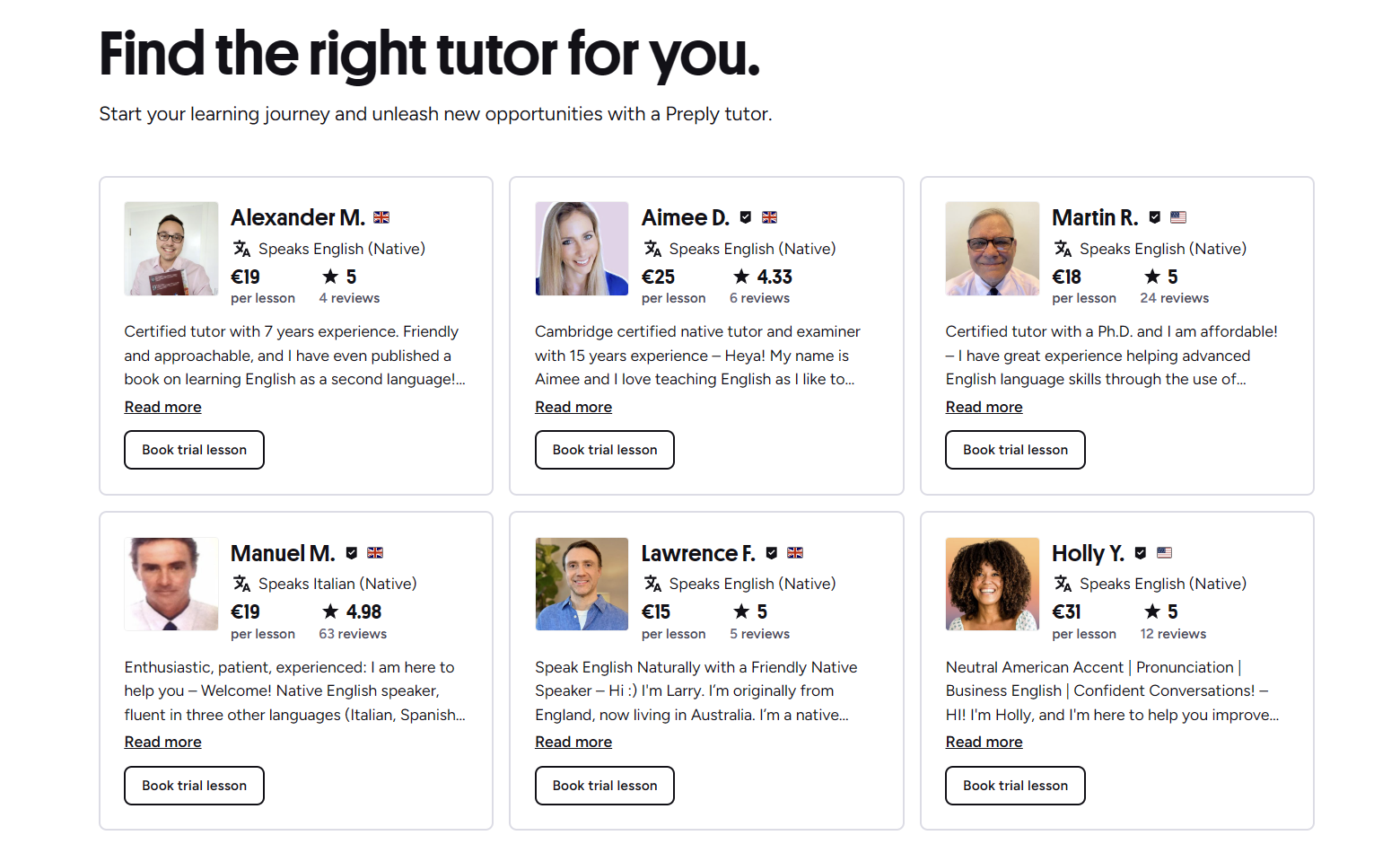
Preply has become one of the larger marketplaces for one-on-one language lessons, and Korean is among its more popular offerings. The platform lists hundreds of tutors who teach Korean, ranging from native speakers in Seoul to heritage speakers in the United States and certified teachers with formal linguistics backgrounds. For a learner, the volume of choice is both a strength and a problem. You can find almost any specialization — TOPIK preparation, business Korean, casual conversation, grammar deep-dives — but sorting through profiles takes time, and the platform's design nudges you toward booking quickly rather than comparing carefully.
Contents
- 1. How Preply Works for Korean Learners
- 2. Filtering Korean Tutors by Specialty
- 3. Price Ranges and What You Get
- 4. Trial Lessons: What to Look For
- 5. Native vs Non-Native Korean Tutors
- 6. Structured Curriculum vs Conversation Practice
- 7. Scheduling and Time Zone Considerations
- 8. Progress Tracking and Lesson Materials
- 9. Common Complaints from Reddit Discussions
- 10. Alternatives Worth Comparing
- 11. Final Assessment of Preply Korean Tutors
This guide walks through how to evaluate Korean tutors on Preply without wasting money on trial lessons that go nowhere. It covers filtering strategies, price realities, what trial lessons actually reveal, and the trade-offs between different tutor types. The goal is to help you make a decision that fits your current level, schedule, and budget rather than chasing the highest-rated profile.
How Preply Works for Korean Learners
The platform operates on a subscription model. You purchase a package of hours — typically 5, 10, 15, or 20 — and those hours expire after 28 days. Unused hours do not roll over. This structure pressures learners to schedule consistently, which can be good for momentum but frustrating if your week gets chaotic. Lessons happen in Preply's built-in video classroom, which includes a whiteboard, chat, file sharing, and screen sharing. The mobile app mirrors most desktop features, though some tutors prefer the web version for screen-sharing stability.
Tutors set their own hourly rates, and Preply takes a commission that decreases the longer a tutor stays on the platform. New tutors pay a higher cut, which sometimes shows up as slightly higher rates or less flexibility with scheduling. The platform also charges a service fee on top of the tutor's rate, so the price you see on a profile is not the final price you pay. That fee varies by region and payment method.
After each lesson, you can leave a public review and a private rating. Reviews are visible on tutor profiles and factor into the algorithm that determines search placement. Tutors also rate students, though those ratings are not public. The system creates an incentive for both sides to show up prepared and on time, but it also means tutors may avoid difficult feedback conversations to protect their average.
Filtering Korean Tutors by Specialty
Preply's filter panel lets you narrow tutors by price range, availability, native speaker status, and languages spoken. For Korean, the most useful filters are specialty tags and also-teaches fields. Many tutors tag themselves for TOPIK preparation, business Korean, K-drama conversation, or grammar focus. Some also list teaching certifications like the Korean Language Teacher Certification or university degrees in Korean education. These tags are self-reported, so treat them as signals rather than guarantees.
A practical approach: start with your primary goal. If you need TOPIK II writing practice, filter for tutors who explicitly mention essay correction and past-paper experience. If you want conversational fluency for travel, look for tutors who emphasize speaking time and use unstructured dialogue. If you are a complete beginner, prioritize tutors who teach Hangul systematically and have a structured curriculum for the first 20-30 hours. The platform's "also teaches" field sometimes reveals tutors who teach Korean alongside English or Japanese — this can indicate experience with learners from your language background.
- TOPIK preparation: look for past-paper experience and writing correction workflow
- Business Korean: filter for tutors with corporate training background or formal honorifics focus
- Conversational fluency: prioritize high speaking-time ratios and unstructured dialogue comfort
- Beginner foundation: require systematic Hangul instruction and structured curriculum
- Heritage learners: seek tutors familiar with fossilized errors and cultural context gaps
The availability filter is deceptively important. Korean tutors cluster in Korea (KST), North America, and Europe. If you are in EST, a tutor in Seoul is 13-14 hours ahead, which means their evening slots are your early morning. Some tutors offer late-night or early-morning sessions to accommodate overseas students, but those slots fill fast. Check the tutor's weekly calendar before booking a trial — many profiles show availability that is theoretical rather than current.
Price Ranges and What You Get
Korean tutor rates on Preply typically fall between $12 and $45 per hour. The lower end is dominated by newer tutors, university students, and non-native speakers with high proficiency. The upper end includes certified teachers with 10+ years experience, published textbook authors, and specialists in niche areas like legal or medical Korean. Most experienced tutors with solid reviews settle in the $20-$30 range. Remember that the platform fee adds roughly 10-15% on top.
Scroll horizontally to see all columns
| Tier | Hourly Rate | Typical Profile |
|---|---|---|
| Entry | $12-$18 | New tutors, students, non-native fluent speakers |
| Mid | $19-$28 | 2-5 years experience, solid reviews, some specialization |
| Senior | $29-$45 | Certified teachers, 10+ years, niche expertise, published materials |
Price does not always correlate with quality for your specific needs. A $15 tutor who structures beginner lessons well may be better for you than a $35 tutor who assumes prior knowledge. Conversely, advanced learners preparing for TOPIK II writing often need the feedback depth that only experienced examiners provide — and those tutors charge accordingly. The subscription model means you pay for hours upfront, so a mismatch costs more than a single trial lesson.
Trial Lessons: What to Look For
Preply offers discounted trial lessons — usually 50% off the tutor's regular rate for 50 minutes. You can book trials with multiple tutors, but each trial uses one of your subscription hours if you have an active package. The trial is your only low-stakes chance to evaluate teaching style, technical setup, and personal chemistry before committing hours.
During a trial, watch for these signals. Does the tutor ask about your goals and current level before diving in? Do they have materials ready or do they improvise? How do they handle your mistakes — immediate correction, delayed feedback, or a mix? Do they speak Korean at a level you can follow, adjusting speed and vocabulary? Do they use the whiteboard or screen share effectively? A tutor who spends the first 15 minutes chatting in English about their teaching philosophy without assessing you is likely winging it.
- Goal assessment within first 5 minutes
- Prepared materials or clear improvisation structure
- Balanced correction approach (not zero, not constant)
- Adjusts Korean level to your comprehension
- Uses platform tools (whiteboard, screen share) fluently
- Gives concrete homework or next-step suggestion
Red flags: the tutor dominates the conversation in English, has no visible materials, cannot explain a grammar point you ask about, or pressures you to buy a large package immediately. Also note technical issues — frequent audio drops, screen share lag, or unfamiliarity with the platform tools. These rarely improve and will waste lesson time.
Native vs Non-Native Korean Tutors
The native speaker filter is one of the most used and most misunderstood. Native Korean tutors offer intuitive pronunciation, cultural context, and natural idiom usage. They model the language as it is actually spoken, including regional variations and generational slang. However, many native tutors cannot explain why a grammar rule works — they just know it sounds right. This becomes a problem when you need structural understanding to build sentences yourself.
Non-native tutors who reached high proficiency (often TOPIK II level 5-6 or equivalent) frequently have better metalinguistic awareness. They learned Korean as adults, so they remember the specific hurdles — particle confusion, honorifics logic, verb ending stacks — and can explain them in English with precision. Some are certified Korean teachers who trained specifically to teach Korean as a foreign language. The trade-off: their pronunciation may have subtle non-native features, and they may lack deep cultural intuition for nuanced situations.
Heritage speakers occupy a middle category. They grew up hearing Korean at home but may not have formal education in the language. Their spoken fluency is often native-like, but they can have gaps in formal grammar, honorifics, and writing. Some heritage tutors are excellent for conversation practice but struggle to teach reading and writing systematically. Ask directly about their formal training if literacy is a goal.
Do not assume a native speaker is automatically better for conversation practice. Some native tutors default to English when the student struggles, or they simplify their Korean so much that you never hear natural speed. A skilled non-native tutor who maintains Korean-only immersion can be more effective for listening development. The only way to know is the trial lesson.
Structured Curriculum vs Conversation Practice
Korean tutors on Preply generally fall into two teaching styles, though many blend both. Structured tutors follow a textbook or self-created syllabus — often based on standard series like Seoul National University Korean, Yonsei Korean, or Talk To Me In Korean. They assign homework, track progress through units, and test periodically. This works well for learners who need external accountability and clear milestones.
Conversation-focused tutors build lessons around topics, articles, videos, or free talk. They correct in real time or provide a feedback document after class. This suits learners who already have grammatical foundations and need activation, fluency, and vocabulary expansion. The risk: without a syllabus, progress can feel invisible, and gaps in grammar may persist unaddressed.
Scroll horizontally to see all columns
| Aspect | Structured Curriculum | Conversation Practice |
|---|---|---|
| Best for | Beginners, exam prep, grammar gaps | Intermediate+, fluency, vocab activation |
| Materials | Textbook, slides, worksheets | Articles, videos, topic lists |
| Homework | Regular, graded | Optional, often writing or vocab |
| Progress visibility | Clear unit completion | Subjective, feels slower |
| Risk | Rigid, may not match interests | Gaps persist, no systematic coverage |
Many tutors offer a hybrid: structured grammar segments (20-30 minutes) followed by conversation application. Ask during the trial how they balance the two. If you want structure, request a sample syllabus or the textbook they use. If you want conversation, ask for a sample topic list or correction style. Vague answers suggest the tutor improvises every lesson, which works for some students but frustrates others.
Scheduling and Time Zone Considerations
Consistency matters more than intensity for language acquisition. Two 50-minute lessons per week beats one 2-hour session. Preply's calendar lets you book recurring slots, which locks in your preferred time and protects against schedule drift. However, tutors can change availability with notice, and recurring bookings do not guarantee the tutor will not take time off.
Time zone alignment is a practical constraint. Korean tutors in Korea (KST) are 13-16 hours ahead of US time zones. Their prime evening slots (7-10 PM KST) are 5-8 AM EST / 2-5 AM PST. If you are not a morning person, you will compete for their early morning slots (your evening) or weekend slots. Tutors based in North America or Europe have more overlapping evenings but may charge higher rates due to cost of living. Some Korean-based tutors explicitly offer "Americas-friendly" hours — look for this in their bio.
- Book recurring slots to protect your schedule
- Confirm tutor's time zone matches their listed availability
- Ask about holiday schedules (Korean holidays differ from Western)
- Check cancellation policy — 12-24 hours is standard
- Have a backup tutor for weeks when your primary is unavailable
The platform sends reminders 24 hours and 1 hour before lessons. Tutors can cancel up to 4 hours before without penalty, though repeated cancellations affect their rating. If a tutor cancels last-minute, you get the hour credited back. If you cancel late, the hour is usually consumed. Read the specific tutor's policy — some are stricter.
Progress Tracking and Lesson Materials
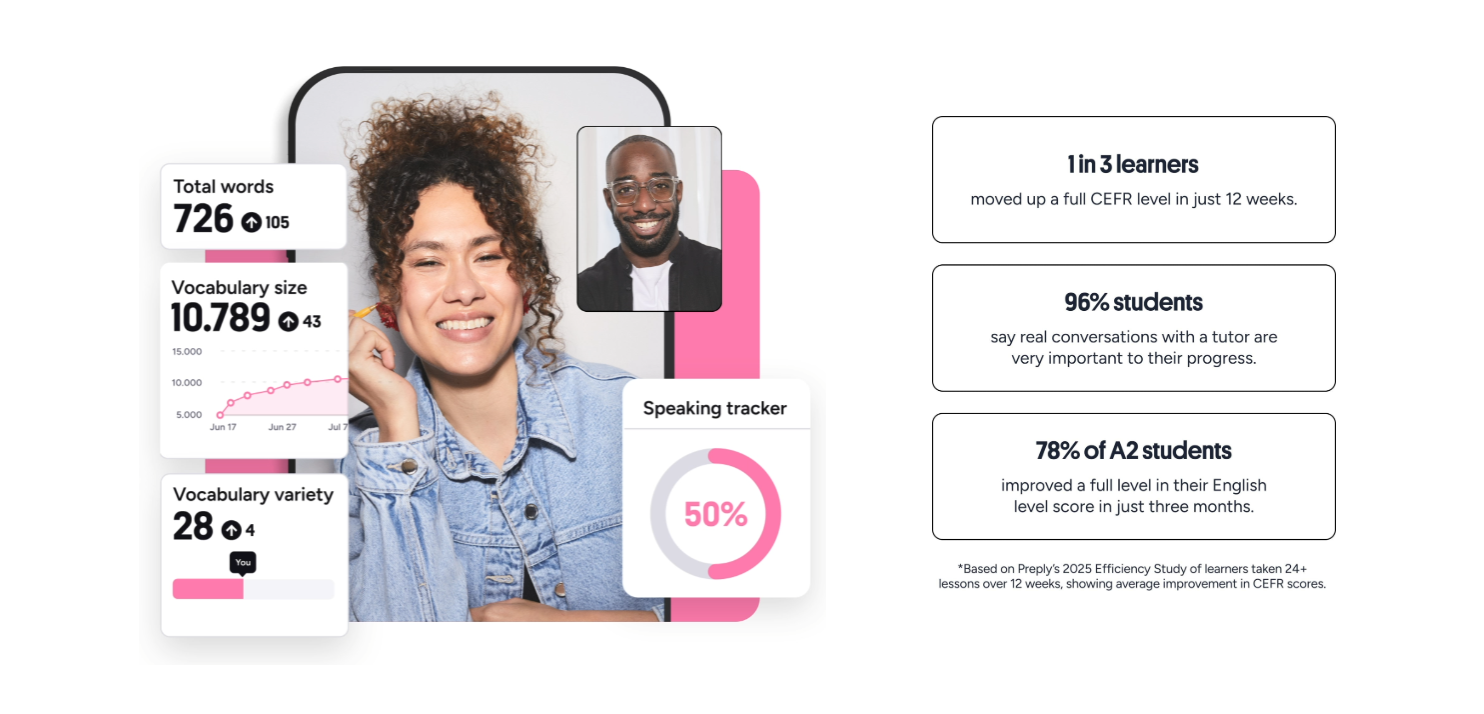
Preply's built-in progress tracking is minimal. The platform shows lesson count, total hours, and a self-assessment slider for speaking, listening, reading, and writing. Tutors can write lesson notes visible to you, but there is no standardized curriculum mapping or CEFR alignment. Some tutors maintain their own Google Docs or Notion pages for each student with vocabulary lists, grammar notes, and homework. Ask during the trial how they track and share materials.
For serious learners, external tracking is necessary. A shared spreadsheet with date, topic, new vocabulary, grammar points, homework, and self-rating creates accountability and a review resource. Some tutors will populate this for you; others expect you to maintain it. The platform's chat history preserves file shares and whiteboard snapshots, but searching it is cumbersome. Download important materials after each lesson.
Common Complaints from Reddit Discussions
Reddit threads about Preply Korean tutors surface recurring themes. The subscription expiration model draws the most frustration — learners lose unused hours when life interrupts. The platform fee added at checkout surprises first-time buyers. Some users report tutors who cancel frequently, arrive late, or reuse generic materials across students. Others mention tutors who push larger packages aggressively after a trial.
Technical complaints center on the video classroom: screen share audio not transmitting, whiteboard lag on mobile, occasional connection drops. These are not universal but frequent enough to factor in. A few users note that highly-rated tutors sometimes become less responsive after building a full roster — they stop customizing lessons and default to a standard routine.
- Hours expire in 28 days with no rollover
- Platform fee added at checkout (not shown in profile rate)
- Tutor cancellation or lateness patterns
- Generic materials reused across students
- Aggressive upselling to larger packages
- Video classroom technical issues (screen share audio, whiteboard lag)
- Top tutors becoming less personalized when fully booked
Positive patterns also emerge. Learners who find a compatible tutor often stay for months or years. The ability to switch tutors without penalty is valued — you are not locked into a contract. The review system, while imperfect, does surface consistently good tutors. And the sheer variety means niche needs (North Korean dialect, hanja, academic Korean) are more likely to be met here than on smaller platforms.
Alternatives Worth Comparing
Preply is not the only option for Korean tutoring. italki has a similar marketplace model but uses a pay-per-lesson system without subscription expiration — you buy credits and use them at your pace. Verbling focuses on certified teachers and has a stricter vetting process, but fewer Korean tutors. Cambly offers on-demand conversation practice without booking, though Korean coverage is thinner than English. University-affiliated online programs (Sogang, Yonsei, Kyung Hee) provide structured courses with set schedules and grades, but less flexibility.
Scroll horizontally to see all columns
| Platform | Model | Korean Tutor Count | Best For |
|---|---|---|---|
| Preply | Subscription (hours expire 28 days) | High (200+) | Variety, flexibility, niche specialties |
| italki | Pay-per-lesson, credits don't expire | High (150+) | Budget control, casual scheduling |
| Verbling | Pay-per-lesson, certified teachers only | Medium (50+) | Formal credentials, structured teaching |
| University programs | Semester-based courses | N/A (institutional) | Academic credit, comprehensive curriculum |
If your schedule is unpredictable, italki's non-expiring credits reduce waste. If you want a degree-adjacent credential, university programs are the only path. If you need a tutor with a specific certification (Korean Language Teacher Certification Level 2 or higher), Verbling's vetting saves screening time. Preply's advantage is volume — you can trial five tutors in a week and find a niche match (e.g., a tutor who teaches Korean through webtoons, or one who specializes in medical terminology for healthcare workers).
Final Assessment of Preply Korean Tutors
Preply works for Korean learners who want choice, can commit to a weekly rhythm, and are willing to invest time in trial lessons. The platform's strengths — tutor volume, specialty variety, flexible scheduling — are real. Its weaknesses — expiring hours, opaque fees, inconsistent tutor quality — are structural and unlikely to change. The subscription model rewards consistent learners and penalizes irregular ones. If you can maintain two lessons per week for at least two months, the economics make sense. If your schedule fluctuates, italki's credit system is safer financially.
The tutor you choose matters more than the platform. A mediocre tutor on Preply will yield mediocre results; an excellent tutor on any platform will accelerate your progress. Use the trial lesson ruthlessly. Test three to five tutors. Compare not just teaching style but communication outside lessons — responsiveness, material sharing, willingness to adjust. The tutor who replies thoughtfully to your pre-trial message is often the one who prepares for lessons.
Frequently Asked Questions
How many Korean tutors are typically available on Preply?
Preply usually lists 200+ Korean tutors at any given time, though active availability varies by season and time zone.
Do Preply subscription hours roll over to the next month?
No. Hours expire after 28 days and do not roll over. Unused hours are forfeited.
Can I switch Korean tutors after buying a subscription package?
Yes. You can use your hours with any tutor on the platform. Hours are tied to your account, not a specific tutor.
Are trial lessons free on Preply?
Trial lessons are discounted (usually 50% off) but not free. They consume one hour from your subscription if you have an active package.
What is the average price for a Korean tutor on Preply?
Most experienced Korean tutors charge $20-$30 per hour before platform fees. Entry-level tutors start around $12; specialists can exceed $40.
Does Preply offer group Korean classes?
Preply focuses on one-on-one lessons. Group classes are not a standard offering, though some tutors may accommodate two students by arrangement.
Can I get a refund for unused Preply hours?
Refunds for unused hours are generally not provided once the 28-day period expires. Preply's refund policy covers technical failures or tutor no-shows, not schedule changes.