

Business Education
Preply Corporate Language Training: A Practical Guide for Businesses
Everything you need to know about Preply for business language learning.
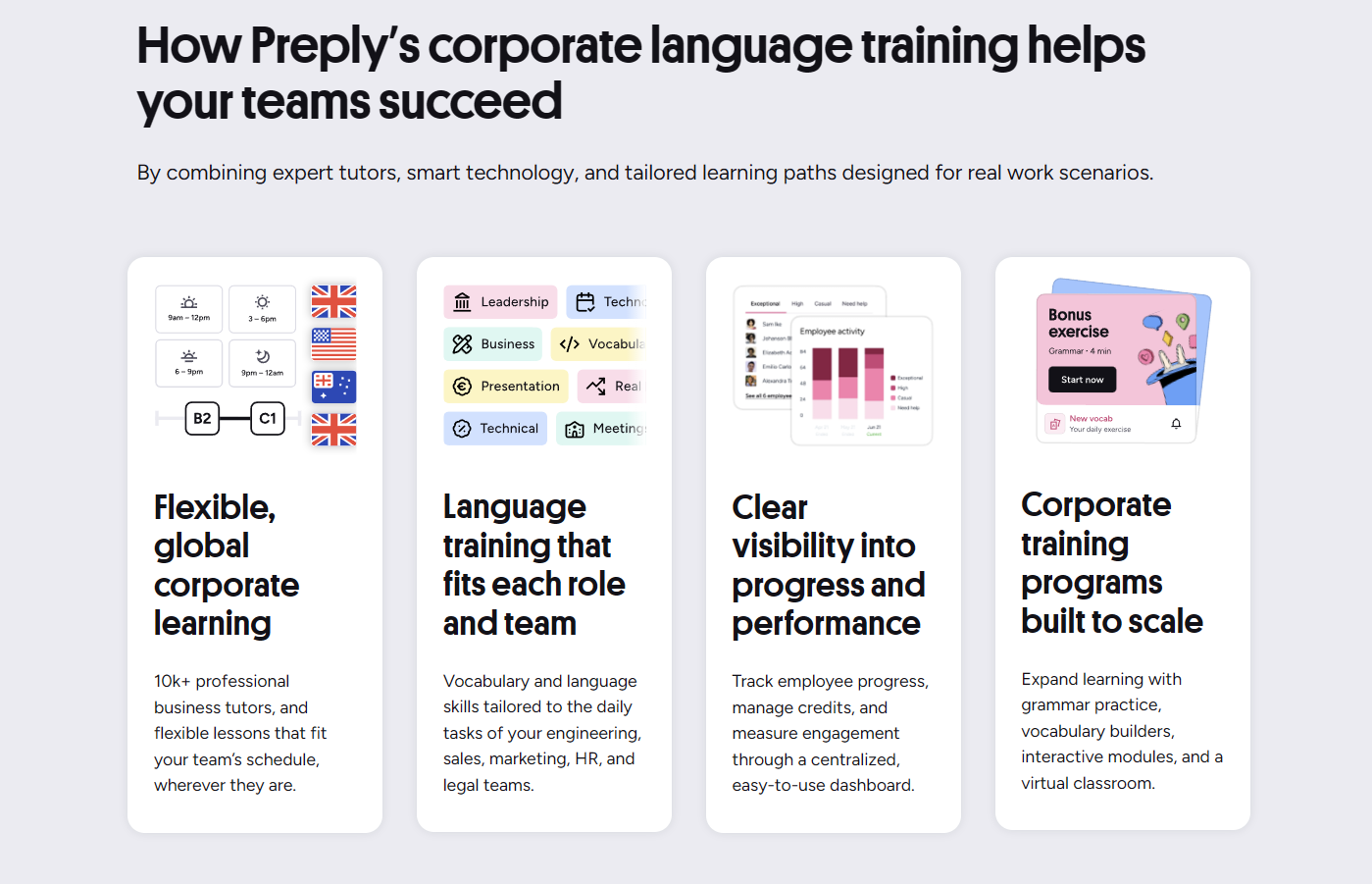
Companies looking to upskill their workforce often run into the same problem: traditional language programs are rigid, expensive, and hard to scale. Preply's corporate offering tries to solve that by combining a massive tutor marketplace with admin tools built for teams. This guide breaks down what the platform actually delivers, where it fits, and what to watch out for before you commit budget.
Contents
- 1. What Is Preply Corporate Language Training?
- 2. Key Features for Business Teams
- 3. How Preply for Business Works
- 4. Pricing and Plans for Enterprises
- 5. Languages and Tutor Availability
- 6. Admin Tools and Progress Tracking
- 7. Preply vs Other Corporate Language Solutions
- 8. Real Company Experiences and Case Studies
- 9. Potential Drawbacks to Consider
- 10. Getting Started with Preply Enterprise
- 11. Final Assessment of Preply Corporate Language Training
The core idea is straightforward. Instead of sending employees to a language school or buying generic self-study licenses, you give them access to Preply's network of tutors for live, one-on-one video lessons. The company side gets a dashboard to manage seats, track progress, and handle billing. It's a model that sits between consumer language apps and full-service corporate training vendors.
Preply started as a consumer marketplace. The business product layers organization features on top of that same tutor pool. That means your employees can choose from thousands of tutors across dozens of languages, but it also means the experience varies tutor to tutor. The platform doesn't enforce a standardized curriculum unless you build one yourself or pick tutors who already follow a structured approach.
What Is Preply Corporate Language Training?
Preply for Business is a team-oriented version of the consumer platform. It provides centralized billing, user management, and reporting while keeping the tutor marketplace intact. Companies purchase a pool of lesson credits or a subscription, then assign seats to employees. Each employee books lessons with any tutor on the platform, subject to any restrictions the admin sets.
- Access to tutors for 50+ languages including English, Spanish, German, French, Chinese, Japanese, and many less common options.
- Flexible scheduling across time zones — tutors are available 24/7.
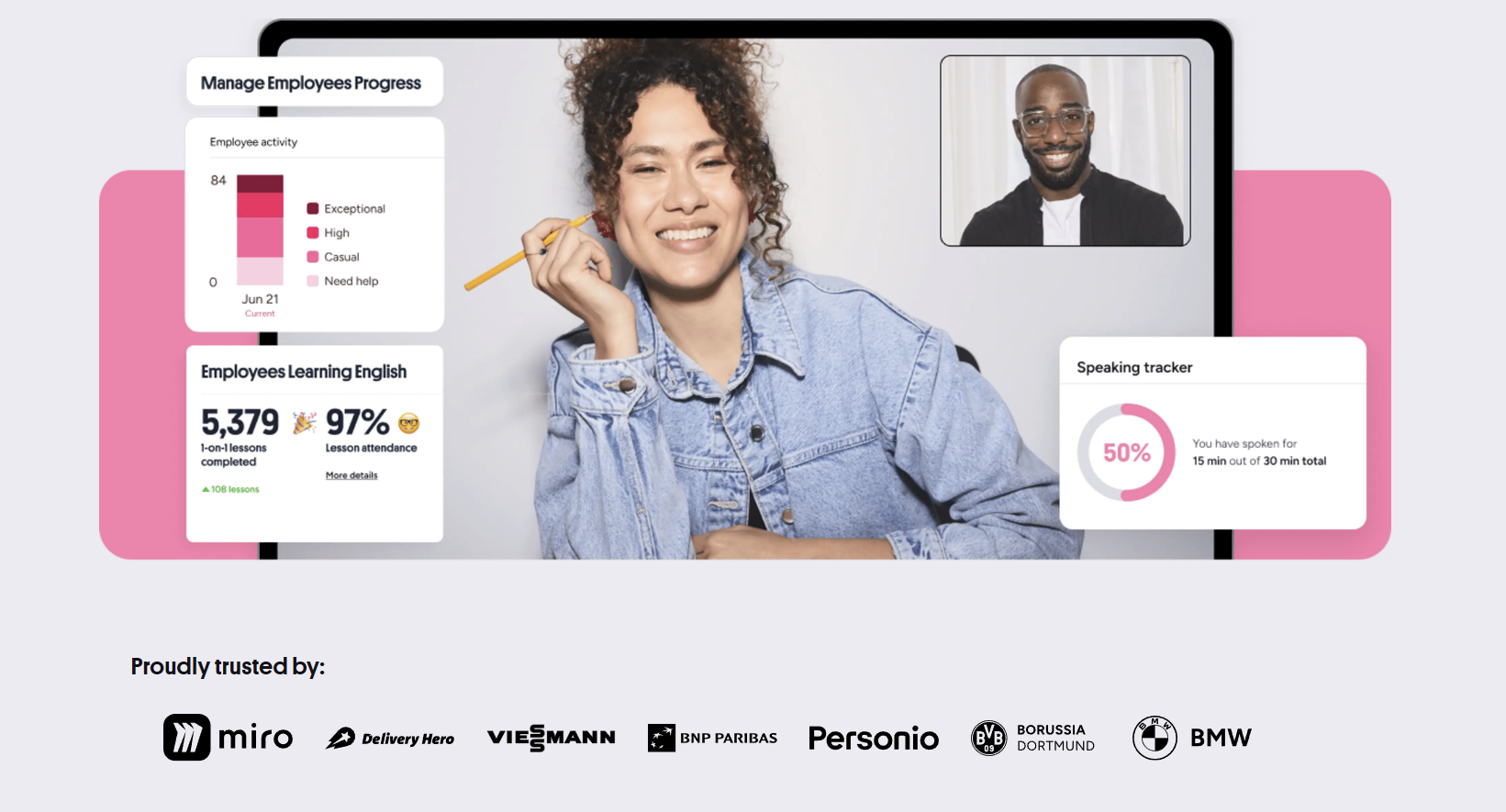
- Admin dashboard for seat allocation, usage tracking, and progress reports.
- Integration options with SSO providers and some HRIS systems.
- Dedicated account management for larger enterprise contracts.
The product targets mid-market companies and enterprises that need language training but don't want to manage multiple vendor relationships. It also works for smaller teams that need more structure than individual consumer accounts provide. The pricing model scales with the number of active learners, which makes it easier to pilot before rolling out company-wide.
One important distinction: Preply does not provide its own curriculum. Tutors create their own lesson plans or adapt to student requests. Some tutors specialize in business English, technical vocabulary, or exam prep, but there's no guaranteed consistency across the platform. If your company needs a standardized program — for example, every new hire completes the same 20-hour business English module — you'll need to either curate tutors carefully or supplement with external materials.
Key Features for Business Teams
The business tier adds several layers on top of the consumer experience. Most of these features live in the admin panel, which is separate from the learner interface. Here's what matters for day-to-day management.
- Seat management: Add, remove, or reassign licenses as employees join or leave. Unused seats can often be reclaimed depending on the contract.
- Usage analytics: See how many lessons each employee books, attendance rates, and total hours consumed. Reports can be exported for HR reviews.
- Budget controls: Set monthly or quarterly spending caps per team or individual. Alerts trigger when limits approach.
- Tutor filtering: Admins can restrict tutor selection by language, specialization, price range, or rating. This helps steer employees toward tutors with business experience.
- Progress tracking: Learners and managers can view lesson history, tutor feedback, and self-assessment scores. The platform also offers optional placement tests for English, Spanish, German, and French.
- Single sign-on: SAML and OIDC support for Okta, Azure AD, Google Workspace, and others. This simplifies onboarding and offboarding.
The placement test is a useful starting point. It gives a rough CEFR level for each employee so you can group learners by proficiency. However, it's not a substitute for a proper needs analysis. A test score doesn't tell you whether someone needs presentation skills, negotiation vocabulary, or just general fluency.
How Preply for Business Works
The workflow is designed to be low-friction for both admins and learners. After the contract is signed, the admin invites employees via email or SSO. Each learner creates a profile, takes the optional placement test, and starts browsing tutors. Lessons happen in Preply's built-in video classroom, which includes a whiteboard, file sharing, and chat.
- Admin purchases credits or a subscription plan.
- Employees receive invitation and set up accounts.
- Learners filter tutors by language, availability, price, and specialization.
- Lessons are booked in 30, 45, or 60-minute slots.
- Both parties join the video classroom at the scheduled time.
- After each lesson, tutors leave notes and homework in the platform.
- Admin monitors usage through the dashboard.
The video classroom works in browser — no separate download required for most users. There's also a mobile app for iOS and Android, which some employees prefer for flexibility. Lesson recordings are not available by default due to privacy policies, but tutors can share notes and materials through the chat history.
Cancellation policy is worth noting. The standard rule: lessons cancelled less than 4 hours before start time are charged in full. For corporate accounts, some contracts negotiate more flexible terms, but it's not guaranteed. Make sure your team understands the policy to avoid wasted budget.
Pricing and Plans for Enterprises
Preply doesn't publish fixed enterprise pricing. Quotes depend on number of seats, contract length, language mix, and support level. The general structure uses lesson credits that expire monthly or quarterly. Unused credits typically don't roll over, so forecasting matters.
Scroll horizontally to see all columns
| Tier | Seats | Commitment | Support level |
|---|---|---|---|
| Team | 5-50 | Monthly or annual | Email support, shared account manager |
| Business | 50-200 | Annual | Dedicated account manager, quarterly reviews |
| Enterprise | 200+ | Multi-year | Custom SLA, implementation support, API access |
Per-lesson costs vary by tutor. Tutors set their own rates, typically ranging from $10 to $40 per hour for common languages. Specialized business or exam prep tutors often charge more. The platform takes a commission, so the price you see includes platform fees. Some enterprise contracts include a credit allowance that covers a set number of hours per learner per month, which simplifies budgeting.
Languages and Tutor Availability
The tutor pool is the platform's strongest asset. For major languages — English, Spanish, French, German, Chinese, Japanese, Portuguese, Italian, Russian, Arabic — you'll find hundreds of tutors across every time zone. For less common languages like Dutch, Swedish, Polish, Turkish, Korean, or Hindi, the pool is smaller but usually sufficient for corporate needs.
- English: Largest pool, thousands of tutors with business, legal, medical, and technical specializations.
- Spanish: Strong representation from Spain and Latin America, good for regional dialect needs.
- German: Solid pool with many tutors experienced in corporate training.
- French: Good coverage including Canadian and African French variants.
- Asian languages: Chinese (Mandarin), Japanese, Korean have growing tutor bases, but fewer with explicit business focus.
- Niche languages: Availability depends on demand; may require advance booking.
Tutor quality is uneven. The platform shows ratings, review counts, and video introductions. For corporate use, filter for tutors with at least 100 reviews and a 4.9+ rating. Look for profiles mentioning corporate clients, business English certifications (like TEFL Business), or industry-specific experience. The platform doesn't vet tutors for corporate teaching ability beyond the standard onboarding.

Time zone coverage is excellent for global teams. Because tutors are independent contractors worldwide, you can usually find someone available during business hours in any region. This is a significant advantage over traditional language schools that operate on fixed schedules.
Admin Tools and Progress Tracking
The admin dashboard is functional but not sophisticated. It gives you visibility into utilization — who's booking, how often, and total hours — but it doesn't measure learning outcomes. You'll see attendance and lesson completion, not proficiency gains. For that, you'd need to rely on tutor assessments, external testing, or the platform's built-in progress checks which are optional and tutor-dependent.
- Utilization reports: Filter by team, date range, language. Export to CSV for finance or HR.
- Learner profiles: View individual lesson history, upcoming bookings, and tutor feedback.
- Budget alerts: Set thresholds for credit consumption. Get email notifications.
- Team grouping: Organize learners by department, region, or custom tags for reporting.
- Bulk actions: Invite, suspend, or reassign multiple users at once.
One gap: there's no built-in learning path or curriculum assignment. You can't say "Team A must complete Business English Level 1 before moving to Level 2." If you need structured pathways, you'll have to manage that externally — either by directing learners to specific tutors who follow a curriculum or by using a separate LMS alongside Preply.
The dashboard tells you if people are showing up. It doesn't tell you if they're improving. That's still on the manager to assess.
Preply vs Other Corporate Language Solutions
The market splits roughly into three categories: tutor marketplaces (Preply, italki for Business), structured platforms (Babbel for Business, Busuu, Rosetta Stone Enterprise), and full-service providers (EF Corporate, Berlitz, Learnlight). Each serves a different need.
Scroll horizontally to see all columns
| Category | Examples | Best for | Limitation |
|---|---|---|---|
| Tutor marketplace | Preply, italki Business | Flexible 1-on-1, many languages, custom schedules | No standardized curriculum, quality varies |
| Structured self-study + live | Babbel for Business, Busuu, Rosetta Stone | Scalable baseline training, consistent content | Less personalization, fewer languages |
| Full-service providers | EF, Berlitz, Learnlight | Managed programs, curriculum design, reporting | Higher cost, less scheduling flexibility |
Preply competes most directly with italki's business offering. Both are marketplaces. Preply's admin tools are more developed for team management; italki's business product is newer and lighter on reporting. If you need a managed program with guaranteed outcomes, look at the full-service tier. If you need 500 employees to complete the same compliance-oriented English course, a structured platform is more efficient.
Real Company Experiences and Case Studies
Preply publishes case studies from companies like Datadog, Revolut, and various tech startups. The common pattern: they use Preply for English upskilling across distributed teams, often supplementing with internal conversation clubs or mentorship. Results reported include improved meeting participation, faster onboarding for non-native hires, and higher retention of international talent.
What the case studies don't always show: the internal effort required to drive adoption. Companies that see results typically assign a program owner, set clear expectations (e.g., minimum 2 lessons per week), and review progress quarterly. Companies that treat it as a perk — "here's a budget, go learn" — often see low utilization after the first month.
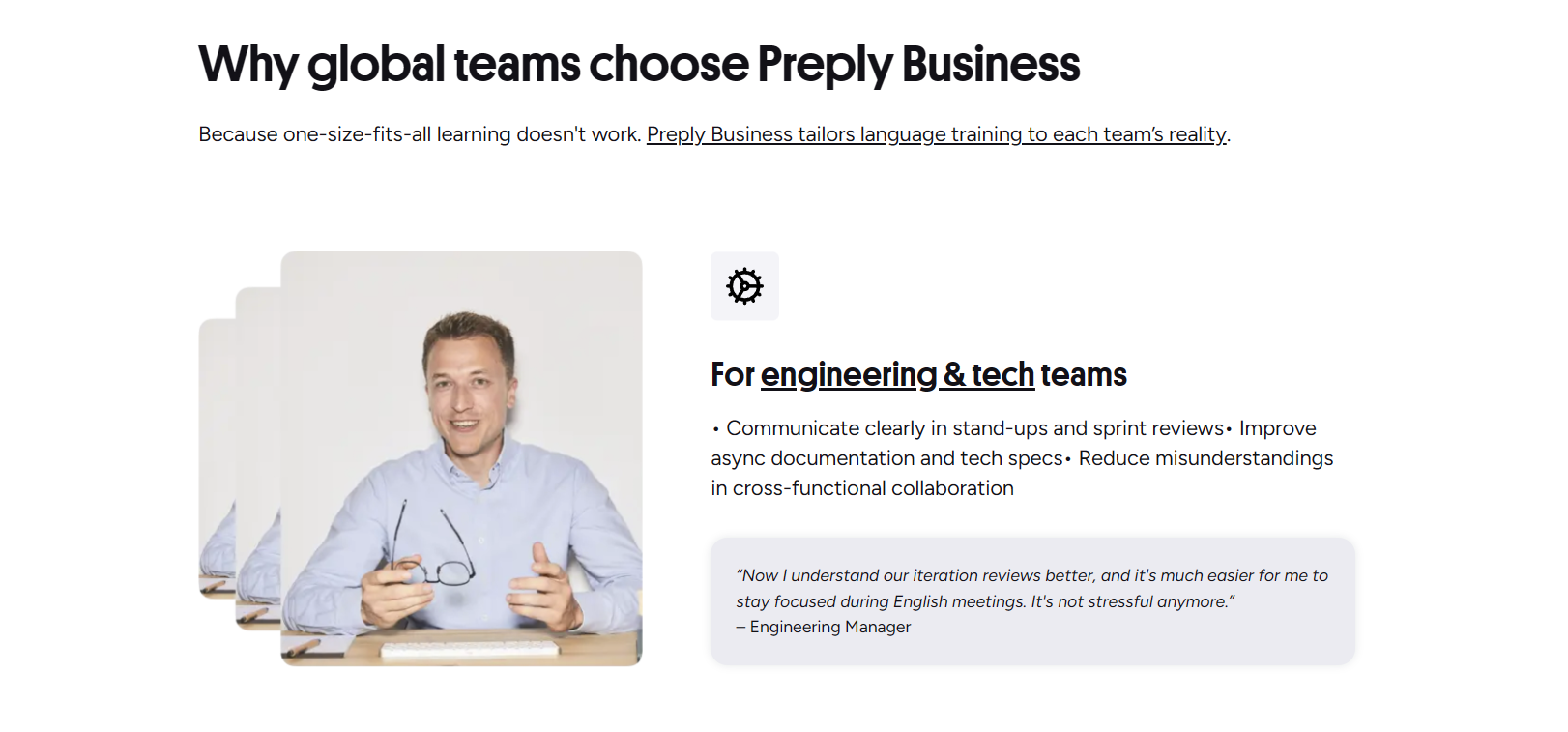
Anecdotal feedback from learning managers highlights two recurring themes. Positive: employees appreciate the flexibility and tutor choice. Negative: some tutors cancel frequently or lack business context. The platform's tutor replacement policy helps — you can switch tutors anytime — but it adds administrative overhead for the learner.
Potential Drawbacks to Consider
No platform is perfect. These are the friction points that come up most often in corporate rollouts.
- No curriculum standardization: Two employees learning business English may get completely different content depending on their tutors.
- Tutor turnover: Popular tutors raise prices or leave the platform. Employees may need to switch tutors mid-program.
- Credit expiration: Monthly/quarterly credit expiry creates "use it or lose it" pressure that can lead to low-quality booking just to spend credits.
- Limited outcome measurement: No built-in proficiency testing beyond optional placement tests. ROI tracking requires external tools.
- Admin granularity: You can't easily enforce lesson frequency, tutor specialization, or learning paths at the platform level.
- Data privacy: Lessons are not recorded by default. Some compliance regimes may require recording or detailed audit trails that Preply doesn't provide.
The credit expiry issue is worth emphasizing. If your contract uses monthly credits that don't roll over, you'll see a spike in bookings at month-end. Some companies negotiate quarterly or annual credit pools to smooth this out. It's a negotiable term — bring it up during contracting.
Getting Started with Preply Enterprise
The sales process is consultative. You'll typically start with a demo, then a pilot proposal. Expect to discuss: number of seats, target languages, current proficiency levels, success metrics, and integration requirements. The pilot usually runs 1-3 months with a subset of users.
- Define success criteria before pilot: utilization rate, employee satisfaction, manager feedback, proficiency improvement (if measurable).
- Select pilot participants across different roles, time zones, and proficiency levels.
- Assign an internal program champion to drive adoption and troubleshoot.
- Curate a shortlist of recommended tutors for each language to reduce decision paralysis.
- Set minimum engagement expectations (e.g., 4 lessons/month) and communicate them clearly.
- Schedule mid-pilot and end-of-pilot reviews with your Preply account manager.
Implementation timeline for a full rollout after pilot approval is typically 2-4 weeks for SSO setup, user provisioning, and communication. Larger enterprises with complex org structures may need longer for change management.
Final Assessment of Preply Corporate Language Training
Preply Corporate Language Training works best as a flexible, high-choice supplement to a broader language strategy. It excels when you have a distributed workforce, multiple language needs, and employees who value autonomy. It struggles when you need guaranteed curriculum alignment, rigorous outcome measurement, or hands-off administration. The tutor marketplace is genuine quality — many excellent instructors — but the platform leaves pedagogy to the tutors. If your organization can provide the structure (clear goals, tutor curation, engagement accountability), Preply delivers the supply side efficiently. If you expect the platform to provide the structure, you'll be disappointed. Treat it as a powerful tool that requires thoughtful deployment, not a turnkey solution.
Frequently Asked Questions
How many languages does Preply Corporate support?
Preply offers tutors for over 50 languages. Major languages have hundreds of tutors; less common languages may have fewer options but are usually available.
Can we enforce a specific curriculum across all employees?
Not directly. The platform does not enforce standardized curricula. You can curate tutors who follow specific programs or provide external materials, but there's no built-in curriculum assignment feature.
What happens to unused lesson credits at the end of the month?
Typically, monthly credits expire and do not roll over. Some enterprise contracts negotiate quarterly or annual credit pools with different expiry terms. This is a negotiable contract term.
Does Preply integrate with our HRIS or LMS?
Preply supports SSO via SAML/OIDC (Okta, Azure AD, Google Workspace). Direct HRIS/LMS integrations are limited; some enterprise plans offer API access for custom integrations.
How is tutor quality ensured for business English?
Tutors are vetted for platform onboarding but not specifically for corporate teaching. Filter by ratings (4.9+), review count (100+), and profile keywords like 'business English,' 'corporate training,' or industry experience.
Can we track ROI and proficiency gains?
The dashboard tracks utilization (lessons booked, hours used). Proficiency gains require external assessment or tutor-reported progress. Preply offers optional placement tests for some languages but no standardized outcome measurement.
What is the minimum contract size?
Team plans start at 5 seats. Enterprise contracts typically require 50+ seats with annual commitment. Pilots can be smaller.
Are lessons recorded for compliance?
No. Lessons are not recorded by default due to privacy policies. Tutors can share notes and files via chat, but there is no video/audio recording feature for corporate accounts.