

Language Learning
Preply English Idioms: Learn Common Expressions with Tutors
Master idiomatic English with native-speaking tutors on Preply's platform.
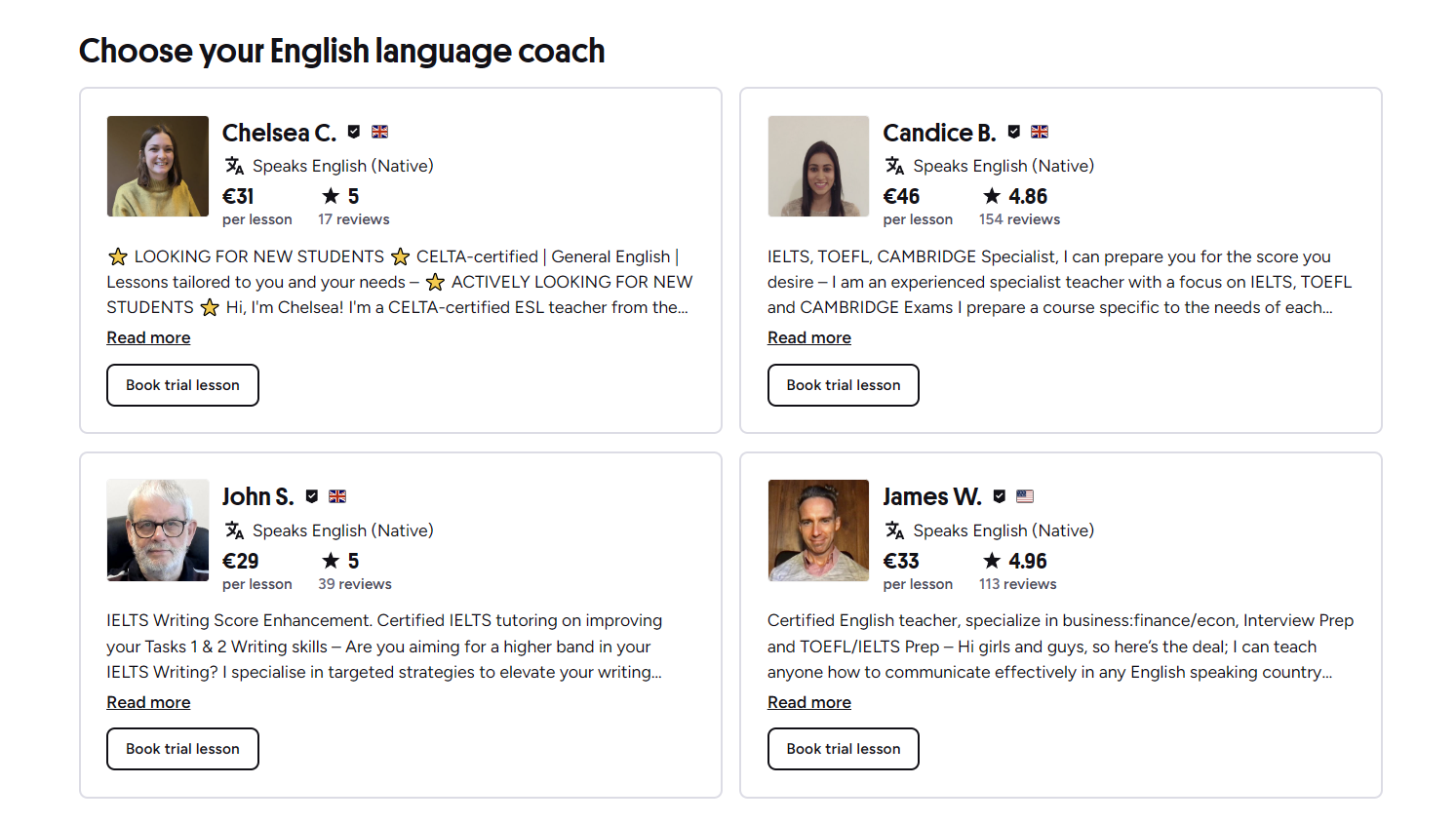
English idioms give conversations color and nuance, but they rarely translate literally. A phrase like "break the ice" or "hit the sack" confuses learners who only know the individual words. Preply connects students with tutors who explain these expressions in context, using real-life examples that match each learner's goals. The platform's one-on-one format lets tutors adjust explanations on the spot, which matters because idioms shift by region, register, and even generation.
Contents
- 1. Why Idioms Matter in Real Communication
- 2. Finding a Tutor Who Teaches Idioms Effectively
- 3. Lesson Structure for Idiom Mastery
- 4. Business English Idioms on Preply
- 5. Using the Preply App for Daily Idiom Practice
- 6. Tracking Progress with Idiom-Specific Metrics
- 7. Common Challenges and How Tutors Address Them
- 8. Pricing and Value for Idiom-Focused Learning
- 9. Supplementing Preply with External Resources
- 10. Preply English Idioms Compared to Alternatives
- 11. Getting Started with Idiom-Focused Lessons
- 12. Final Assessment of Preply for English Idioms
Most language apps drill vocabulary lists. Preply takes a different approach: tutors design lessons around the student's actual needs, whether that's business negotiations, casual chat, or academic writing. Idioms appear naturally in those contexts. A tutor might introduce "ballpark figure" during a mock meeting, then follow up with "back of the envelope" for rough estimates. The student practices both in a single session, getting immediate feedback on tone and appropriateness.
The platform hosts thousands of English tutors. Filters narrow the pool by specialty, accent, availability, and price. Someone preparing for a UK job interview can select a British tutor who knows workplace idioms like "get the ball rolling" or "touch base." Another learner aiming for American university life might choose a tutor familiar with campus slang such as "crash course" or "pull an all-nighter." This specificity separates Preply from generic phrasebooks.
Why Idioms Matter in Real Communication
Native speakers sprinkle idioms into everyday speech without thinking. Research suggests idiomatic expressions make up a significant portion of spoken English. Learners who ignore them miss subtle meanings, humor, and cultural references. They also risk sounding overly formal or robotic. Preply tutors address this gap by embedding idioms into conversation practice, role-plays, and reading materials that reflect authentic usage.
Consider the difference between "I'm tired" and "I'm beat." Both convey exhaustion, but the second signals informality and camaraderie. A tutor can explain when each fits, then have the student role-play a coffee break chat versus a status update to a manager. That practical contrast sticks better than memorizing a definition. The tutor also flags regional variants: "knackered" in the UK, "wiped out" in the US, "shattered" in Australia.
- Idioms convey cultural context that literal language misses.
- They signal fluency and social awareness in professional settings.
- Misunderstanding an idiom can derail a negotiation or joke.
- Learning them in isolation rarely leads to confident usage.
Preply's lesson notes feature lets tutors save idioms covered in each session. Students review them later with audio recordings, example sentences, and the tutor's own explanations. This builds a personal idiom bank tied to real lessons, not a static list. Over weeks, the collection grows into a reference the learner actually trusts because they practiced every entry.
The tutor search screen shows each instructor's video intro, hourly rate, and student reviews. Many tutors tag their profiles with specialties like "business English," "conversational fluency," or "exam prep." A learner focused on idioms can message tutors beforehand to ask how they teach figurative language. Some share sample materials or a quick demo during a trial lesson. That transparency helps avoid mismatched expectations.
Finding a Tutor Who Teaches Idioms Effectively
Not every tutor emphasizes idioms. Some stick to grammar drills or test prep. The profile description often reveals their approach. Look for phrases like "real-life English," "colloquial expressions," or "speak like a native." Reviews from other students provide clues too. Comments such as "taught me phrases I hear in movies" or "explained slang I didn't understand" signal a tutor comfortable with idiomatic language.
Trial lessons cost less than regular sessions and run 25 to 50 minutes. Use that time to ask directly: "How do you teach idioms?" A strong answer might include using news clips, TV scenes, or role-plays. A vague answer like "we'll cover them" suggests the tutor lacks a method. Preply allows booking trials with multiple tutors before committing to a package, so comparing approaches is practical.
After selecting a tutor, the first few lessons often involve a needs analysis. The tutor asks about the student's work, hobbies, and typical communication scenarios. From there, they curate idioms that appear in those domains. A software engineer might learn "debug," "patch," and "reinvent the wheel" in metaphorical senses. A marketing professional might focus on "low-hanging fruit," "move the needle," and "bandwidth." This relevance accelerates retention.
Lesson Structure for Idiom Mastery
A typical Preply lesson runs 50 minutes. Tutors often start with a warm-up chat, then introduce three to five target idioms through a short text, video, or dialogue. The student guesses meanings from context before the tutor confirms definitions. Next comes controlled practice: gap-fills, matching, or sentence transformation. The second half shifts to freer production — role-plays, debates, or storytelling where the student must use the idioms naturally.
Homework between sessions reinforces exposure. Tutors assign tasks like "watch this TED talk and note five idioms" or "write a paragraph using three expressions from today." The platform's chat feature lets students send questions anytime. A learner stuck on "by the skin of my teeth" can message the tutor for a quick clarification without waiting for the next lesson. That responsiveness keeps momentum.
Scroll horizontally to see all columns
| Phase | Duration | Activity |
|---|---|---|
| Warm-up | 5 min | Casual chat reviewing previous idioms |
| Presentation | 10 min | Tutor introduces new idioms via video clip |
| Guided Practice | 15 min | Gap-fill, matching, sentence creation |
| Free Production | 15 min | Role-play or discussion using target idioms |
| Wrap-up | 5 min | Error correction, homework assignment |
Error correction deserves attention. Some tutors interrupt immediately; others note mistakes and review them at the end. Both work, but the latter often feels less disruptive for flow. Preply's lesson notes capture corrections so students see patterns. A learner who repeatedly says "on the other side" instead of "on the other hand" gets a visual reminder. Over time, those patterns fade.
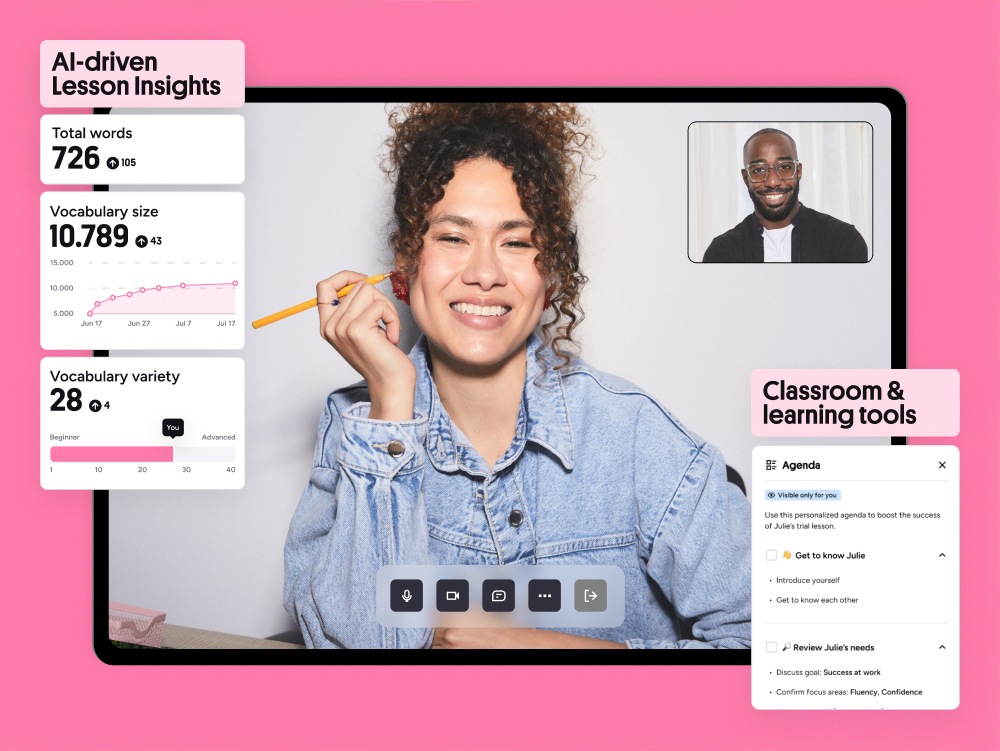
The virtual classroom includes a shared whiteboard, file uploads, and screen sharing. Tutors paste idiom-rich articles, highlight target phrases, and annotate meanings. Students can screenshot the board for later review. The platform records sessions if both parties agree, creating a personal library. Rewatching a lesson reveals nuances missed in the moment — intonation, hesitation, the tutor's facial cues when explaining "tongue in cheek."
Business English Idioms on Preply
Corporate learners form a large segment. Preply for Business offers team plans, progress dashboards, and admin controls. Idioms feature heavily in business English curricula because meetings, emails, and negotiations brim with them. "Circle back," "deep dive," "low-hanging fruit," and "move the goalposts" appear daily in international teams. Tutors with corporate backgrounds simulate these scenarios, letting learners practice responding to "Let's take this offline" without freezing.
One HR manager in Berlin described her experience: she needed to lead English-language performance reviews. Her Preply tutor built a six-week module around feedback idioms — "constructive criticism," "room for improvement," "hit the ground running." They role-played tough conversations, recorded them, and analyzed language choices. The manager reported feeling prepared when the real reviews arrived. That targeted preparation is hard to replicate in group classes.
- Business idioms often differ from general conversational ones.
- Tutors with industry experience teach sector-specific expressions.
- Role-plays mimic meetings, presentations, and negotiations.
- Progress tracking shows idiom acquisition over weeks.
Preply's corporate dashboard lets managers see which idioms each employee covered. That data informs internal training decisions. If the whole team struggles with "bandwidth" in the sense of capacity, a group workshop can address it. The platform also integrates with Slack and Microsoft Teams for scheduling reminders. These features matter for organizations scaling language training across time zones.
Using the Preply App for Daily Idiom Practice
The mobile app extends learning beyond scheduled lessons. It syncs lesson notes, vocabulary lists, and homework. A commuter can review "once in a blue moon" flashcards on the subway. The app sends push notifications for upcoming lessons and tutor messages. Some tutors post daily idiom challenges in the chat — "Use 'under the weather' in a sentence today." That micro-practice builds habit without feeling like study.
Offline mode downloads lesson materials so practice continues on flights or spotty connections. The app also includes a built-in dictionary and translation tool, though tutors encourage guessing from context first. Voice messages let students record pronunciation attempts. A tutor might reply with a voice note modeling the rhythm of "piece of cake" versus "hard nut to crack." That asynchronous feedback loop is unique to Preply's ecosystem.

The app's vocabulary section auto-populates from lesson notes. Each entry shows the idiom, definition, example sentence, and audio. Students mark items as "learning" or "mastered." The spaced-repetition algorithm schedules reviews at increasing intervals. A learner who masters "cost an arm and a leg" sees it again in three days, then two weeks, then a month. This systematic review combats the forgetting curve that plagues casual study.
Tracking Progress with Idiom-Specific Metrics
Preply's progress dashboard visualizes lesson frequency, vocabulary growth, and speaking time. For idiom learners, the vocabulary chart is most relevant. It shows total expressions learned, mastery distribution, and recent additions. Tutors set monthly targets — "20 new business idioms by June" — and the dashboard tracks completion. Students see a concrete number rather than a vague sense of improvement.
The speaking time metric reveals fluency development. Early lessons might show 60% tutor talk, 40% student. As idioms become familiar, the ratio shifts. A student comfortably weaving "that's the last straw" into a story speaks longer turns with fewer pauses. Tutors reference this data during check-ins: "Your speaking time jumped 15% this month — the idioms are sticking." That evidence-based feedback motivates.
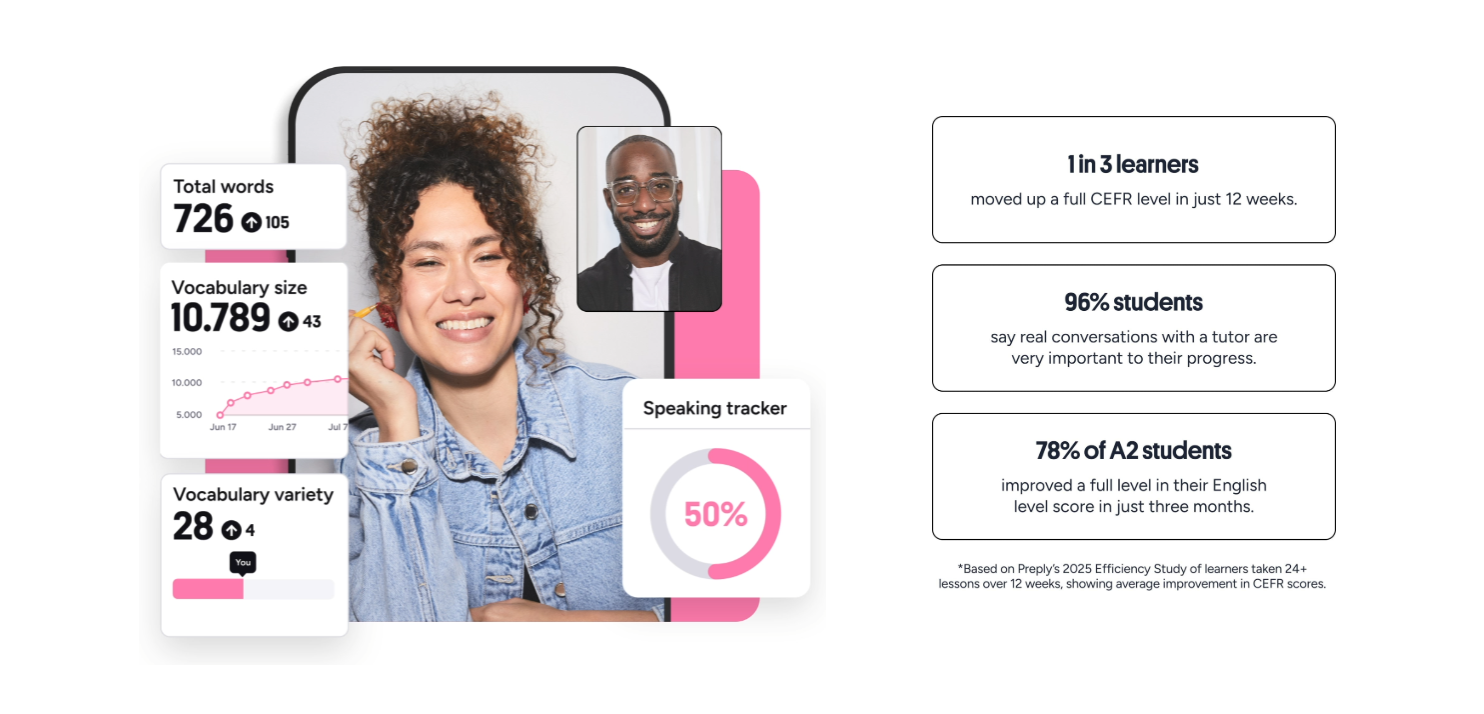
Preply also offers an English level test aligned with CEFR. While not idiom-specific, the test's reading and listening sections include idiomatic passages. Retaking it quarterly provides an external benchmark. A jump from B1 to B2 often correlates with idiom range expansion. Tutors use the results to adjust lesson difficulty, ensuring idioms stay challenging but not overwhelming.
Common Challenges and How Tutors Address Them
Learners often overuse newly learned idioms, forcing them into unsuitable contexts. A student might say "break a leg" before a dentist appointment. Tutors correct this by explaining register and collocation. They might contrast "break a leg" (performance) with "good luck" (general) and "fingers crossed" (hopeful). The student practices choosing the right one for different scenarios. This discrimination skill matters more than raw quantity.
Another challenge: idioms that look similar but differ in meaning. "Take off" (remove clothing, succeed rapidly, depart) and "take up" (start a hobby, occupy space, shorten) confuse even advanced learners. Tutors design minimal-pair exercises. The student sorts sentences into columns, then creates original examples. The tutor checks for subtle errors like "The business really took up" (should be "took off"). These targeted drills prevent fossilized mistakes.
Regional variation adds another layer. "Bob's your uncle" means "there you go" in the UK but draws blanks in the US. "Root for" (support) is American; "barrack for" serves the same function in Australia. Tutors clarify which idioms travel well and which mark a specific variety. A learner relocating to Toronto gets Canadian idioms like "double-double" (coffee with two creams, two sugars) and "toque" (winter hat). That cultural preparation eases transition.
Pricing and Value for Idiom-Focused Learning
Preply tutors set their own rates, typically ranging from $10 to $40 per hour. Specialized business English tutors often charge $25 to $60. Packages of 5, 10, or 20 lessons reduce the per-session cost. A learner budgeting for idiom mastery might book two 50-minute lessons weekly — roughly $200 to $400 monthly depending on tutor choice. Compared to intensive language schools charging $1,500+ per month for group classes, the one-on-one value is clear.
The platform takes a commission that decreases as tutors earn more. This incentivizes tutors to stay, reducing turnover. Students benefit from continuity — the same tutor tracks idiom progress for months. Preply also offers a satisfaction guarantee: if a trial lesson disappoints, the student gets a free replacement with another tutor. That policy lowers the risk of testing multiple instructors.
Scroll horizontally to see all columns
| Tutor Type | Hourly Rate (USD) | Best For |
|---|---|---|
| Community tutors | $10–$20 | Casual conversation, basic idioms |
| Professional teachers | $20–$40 | Structured idiom curricula, exam prep |
| Business specialists | $25–$60 | Corporate idioms, industry jargon |
| Native speaker experts | $30–$70 | Nuance, regional variants, advanced fluency |
Discounts appear periodically. New students often receive 50% off the first lesson. Seasonal promotions — back-to-school, New Year — offer package deals. The referral program grants free lesson credits when a friend signs up. These savings matter for long-term learners. A six-month idiom program at two lessons weekly totals 48 sessions; a 10% package discount saves hundreds of dollars.
Supplementing Preply with External Resources
Preply works best as a core speaking practice, not the sole input. Tutors recommend complementary materials: podcasts like "The English We Speak" (BBC), YouTube channels such as "English with Lucy," and idiom dictionaries like Oxford's. The tutor curates a list matched to the student's level and interests. A sports enthusiast gets "The Ball Is Round" podcast episodes; a tech worker gets "Lex Fridman" clips with transcribed idioms.
Reading builds passive recognition. Tutors assign articles from The Economist, Wired, or The Guardian — publications rich in idiomatic journalism. The student highlights unfamiliar expressions, brings them to the next lesson, and the tutor explains usage. This cycle turns authentic content into personalized curriculum. Over time, the learner develops an ear for idioms in the wild, not just in lessons.
- BBC Learning English: short idiom videos with transcripts.
- Merriam-Webster's "Idiom of the Day" email.
- TED Talks with interactive transcripts for mining expressions.
- Reddit's r/EnglishLearning for community questions.
Some learners worry about accent acquisition. Preply's tutor pool includes speakers from the US, UK, Canada, Australia, Ireland, South Africa, and non-native experts with C2 proficiency. A student can choose a tutor whose target accent matches their goal. The platform shows each tutor's nationality and often a short video where their accent is audible. This transparency helps learners align input with desired output.
Preply English Idioms Compared to Alternatives
Apps like Duolingo, Babbel, and Memrise include idiom modules, but they lack interactive feedback. A multiple-choice quiz cannot judge whether "spill the beans" fits a formal email. Preply's human tutor provides that judgment instantly. Language exchange apps (Tandem, HelloTalk) offer native speakers, but partners rarely have teaching skills. They correct grammar, not pragmatic nuance. Preply sits between: structured pedagogy plus authentic interaction.
Group classes at language schools cover idioms in fixed curricula. The pace serves the average, not the individual. A student who already knows "piece of cake" wastes time while another struggles. Preply's one-on-one format eliminates that inefficiency. The tutor skips known items, drills weak spots, and adjusts depth. For busy professionals, that time efficiency justifies the higher per-hour cost.
The difference between knowing an idiom and owning it is the number of times you've used it badly and got corrected.
That quote captures the Preply advantage. Safe failure with a supportive tutor builds the confidence to use idioms in high-stakes situations. A learner who fumbles "beat around the bush" in a lesson remembers the correction during a real negotiation. The emotional stakes are low in the lesson; the payoff is high in the boardroom.
Getting Started with Idiom-Focused Lessons
Sign-up takes minutes. The onboarding questionnaire asks about goals, level, and preferred schedule. Select "English" and add "idioms" or "colloquial English" in the interests field. The algorithm surfaces tutors who tag those specialties. Browse profiles, watch intros, read reviews. Book a trial with two or three candidates. Compare their idiom teaching style, then choose a package that fits your budget and timeline.
Before the first lesson, prepare a short list of situations where you need idioms: client calls, team stand-ups, social events, academic seminars. Share it with the tutor. That context lets them prepare relevant materials from day one. Also note any idioms you've encountered but couldn't use. The tutor can diagnose why — pronunciation, register, collocation — and design targeted practice.
Consistency beats intensity. Two 50-minute lessons weekly for six months yields better idiom retention than a two-week daily intensive. The spacing allows sleep-dependent consolidation. Preply's scheduling tool lets you set recurring slots with the same tutor. If conflicts arise, reschedule up to four hours before without penalty. That flexibility supports the regularity that language acquisition demands.
Frequently Asked Questions
How many idioms can I realistically learn per month on Preply?
Most students internalize 15–25 new idioms monthly with two weekly lessons and light self-study. Retention depends on review frequency and opportunities to use them.
Can I request a tutor who specializes in American vs. British idioms?
Yes. Filter by nationality or accent in the tutor search. Many tutors explicitly list regional idiom expertise in their profiles.
Are idiom lessons suitable for beginners?
Tutors adapt. Beginners start with high-frequency idioms like "how's it going" or "no worries." Complex expressions wait until the grammatical foundation supports them.
Does Preply provide idiom lists or flashcards?
The platform auto-generates flashcards from lesson notes. Tutors also share custom Quizlet sets or PDFs. There is no fixed universal idiom list.
What if my tutor doesn't teach idioms the way I expected?
Preply's satisfaction guarantee covers trial lessons. You can switch tutors anytime. Communicate your preferences clearly during the trial to avoid mismatch.
Can I use Preply for idiom preparation for IELTS or TOEFL?
Yes. Many tutors specialize in exam prep and include idiomatic language scoring criteria for speaking and writing sections.
How does the mobile app help with idiom review?
The app syncs lesson vocabulary, uses spaced repetition, and supports offline review. Tutors can send voice notes for pronunciation modeling.
Final Assessment of Preply for English Idioms
Preply delivers what apps and textbooks cannot: a human who notices when you say "the ball is in your court" during a job interview and gently suggests "the next move is yours" instead. The platform's strength lies in matching learners with tutors who treat idioms as living tools, not trivia. The combination of personalized curation, immediate feedback, and systematic review creates a path from recognition to ownership. For anyone serious about sounding natural in English — whether closing deals, making friends, or acing exams — Preply's idiom-focused lessons are a practical investment. The cost exceeds self-study apps, but the return in communicative confidence justifies it for most committed learners.