

Online Education Jobs
Preply Online Tutoring Jobs: Complete Guide for 2024
Requirements, application process, pay structure, and real tutor experiences explained.
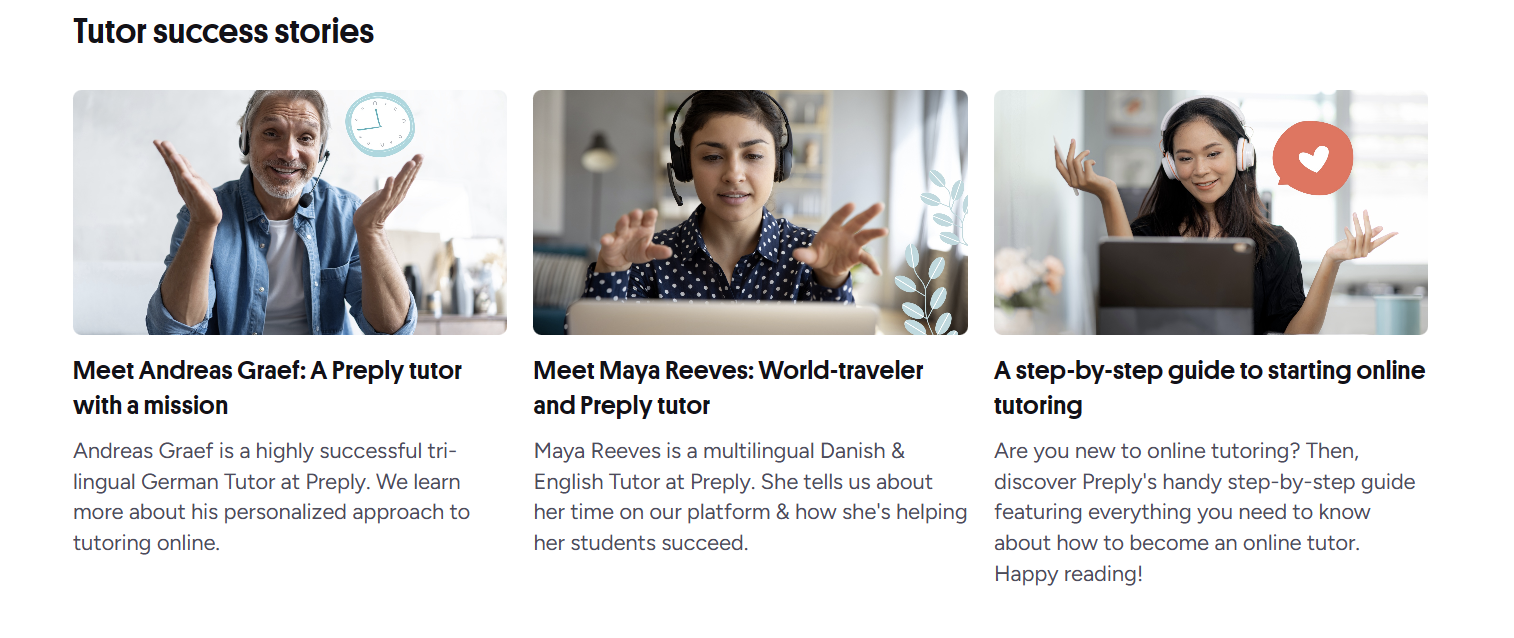
Preply has grown into one of the largest online tutoring marketplaces since its launch in 2012. The platform connects students with tutors across dozens of subjects, though language teaching remains its core business. For anyone considering Preply online tutoring jobs, the platform offers genuine flexibility but comes with trade-offs that aren't always obvious from the marketing materials.
Contents
- 1. What Preply Offers Tutors
- 2. Tutor Requirements and Eligibility
- 3. Application and Onboarding Process
- 4. Setting Your Rates and Earning Potential
- 5. Commission Structure and Fees
- 6. Scheduling and Calendar Management
- 7. Teaching Tools and Platform Features
- 8. Getting Students and Building a Profile
- 9. Pros and Cons Based on Tutor Feedback
- 10. Comparison with Other Tutoring Platforms
- 11. Tips for Success on Preply
- 12. Tax and Legal Considerations
- 13. Common Pitfalls for New Tutors
- 14. Preply for Business and Corporate Contracts
- 15. Final Assessment of Preply Tutoring Jobs
This guide covers the practical realities of tutoring on Preply in 2024. I've drawn on publicly available information, tutor discussions, and platform policies to give you a clear picture of what the work actually involves — from the application steps to the commission structure, scheduling realities, and the factors that determine whether you'll earn a meaningful income or struggle to fill your calendar.
The platform operates as a marketplace rather than an employer. You're an independent contractor setting your own rates and schedule. Preply provides the technology, payment processing, and student acquisition channel. In exchange, they take a commission on every lesson. That model creates both opportunity and friction, and understanding where the friction points lie will save you weeks of trial and error.
What Preply Offers Tutors
Preply's value proposition for tutors centers on three things: a steady stream of potential students, integrated teaching tools, and handled payments. The platform claims over 100,000 active tutors and millions of students worldwide. That scale means students are actively searching for tutors daily, which reduces the marketing burden compared to going completely independent.
The integrated classroom includes video calling, screen sharing, a collaborative whiteboard, and file sharing. You don't need to cobble together Zoom, Google Docs, and a separate payment processor. Lessons happen in the browser or through the mobile app. The platform also handles scheduling, reminders, timezone conversion, and cancellation policies automatically.
- Access to a global student base without advertising costs
- Built-in video classroom with teaching tools
- Automated scheduling and timezone management
- Payment processing with multiple withdrawal options
- Profile visibility in search results based on ratings and activity
- Optional training resources and tutor community forums
Preply for Business adds another dimension. Corporate clients book tutors for employee language training, often in bulk packages. These contracts can provide more stable income than individual students, though they're typically awarded to tutors with strong track records and specific qualifications like business English certification or corporate training experience.
The platform supports over 50 languages plus academic subjects like math, programming, and test preparation. English dominates demand, followed by Spanish, French, German, and Chinese. Niche languages can work well because competition is lower, but the student pool is also smaller. Subject tutors in STEM fields report decent demand, especially for exam prep and university-level coursework.
Tutor Requirements and Eligibility
Preply's formal requirements are surprisingly minimal. You must be at least 18 years old, have a reliable internet connection, a computer with webcam and microphone, and sufficient proficiency in the subject you want to teach. There's no degree requirement, no teaching certification mandate, and no native speaker requirement for languages. The platform relies on student reviews and ratings to surface quality rather than gatekeeping at entry.
That openness creates a crowded marketplace. Thousands of tutors compete for the same popular subjects. Having a degree, TEFL/TESOL certification, or specialized training doesn't guarantee students, but it helps your profile stand out in search results and justifies higher rates. Many successful tutors highlight specific credentials in their profile headlines and descriptions.
Scroll horizontally to see all columns
| Factor | Impact on Visibility | Impact on Rate Potential |
|---|---|---|
| Teaching certification (CELTA, TEFL, etc.) | High | High |
| University degree in subject | Medium | Medium |
| Native speaker status (languages) | Medium | Medium-High |
| Specialized niche (IELTS, business, kids) | High | High |
| Professional video introduction | High | Medium |
| Number of completed lessons | Very High | High |
| Average rating (4.8+) | Very High | High |
Background checks are not required by Preply, though some corporate clients may request them for business contracts. The platform does verify identity during onboarding — you'll submit a government-issued ID and a selfie. This verification badge appears on your profile and builds trust with potential students.
Application and Onboarding Process
The application takes 20-30 minutes if you have everything ready. You create a tutor profile with your subjects, hourly rate, availability, education, experience, and a written introduction. Then you record a short video introduction (1-2 minutes) where you speak directly to potential students. This video is mandatory and heavily influences whether students book trial lessons.
After submitting, Preply's team reviews your profile. Approval typically takes 1-3 business days. Rejection reasons usually involve video quality, incomplete profiles, or subjects where the platform currently has oversupply. If rejected, you can improve and reapply. Once approved, you complete a brief platform orientation covering the classroom tools, scheduling system, and policies.
- Create tutor account with email verification
- Select teaching subjects and set hourly rate
- Write profile description (200+ characters recommended)
- Upload professional photo and record video introduction
- Add education, certifications, and work experience
- Set weekly availability in your timezone
- Submit for review and wait 1-3 business days
- Complete platform orientation after approval
Your video introduction deserves real effort. Students watch these before booking. Speak clearly, show personality, explain your teaching approach, and mention any specialties. Record in good lighting with clear audio. A smartphone camera works fine if the lighting and sound are decent. Avoid reading from a script — natural delivery builds more trust.
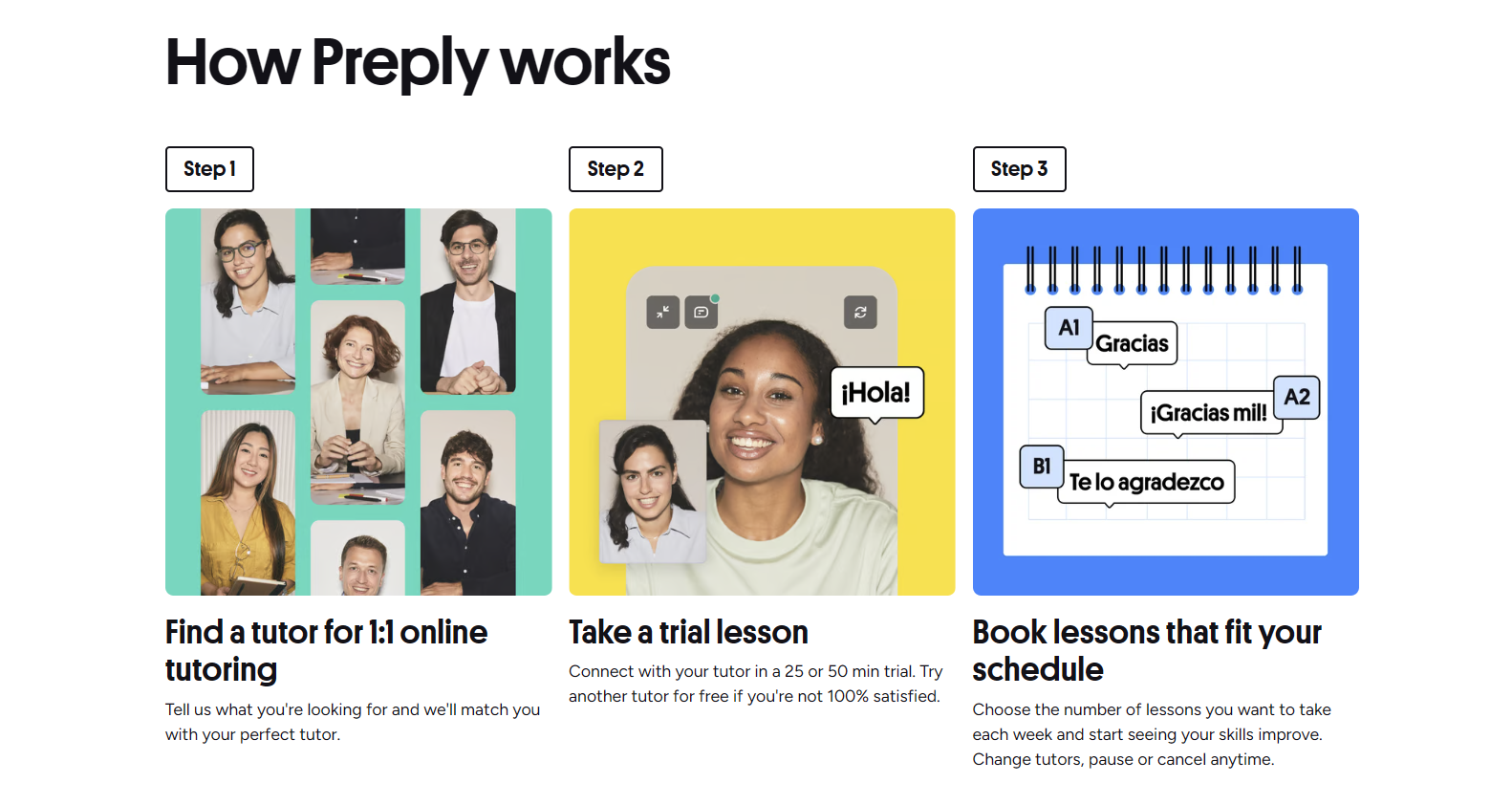
After approval, your profile goes live but won't immediately attract students. The algorithm favors active tutors with recent lessons and high ratings. New tutors often wait days or weeks for their first booking. Being proactive helps: keep availability wide initially, respond instantly to messages, and consider a slightly lower introductory rate for your first 10-20 lessons to build reviews quickly.
Setting Your Rates and Earning Potential
You set your own hourly rate in USD, with a minimum of $5/hour. Preply shows students your rate plus their commission, so the displayed price is higher than what you receive. Most English tutors charge $15-35/hour. Specialized niches — IELTS prep, business English, medical English, technical subjects — command $30-75/hour. Rates below $15/hour signal low quality to many students and make it harder to raise prices later.
Earnings vary wildly. A new tutor with a $20/hour rate and 10 weekly lessons earns roughly $160-180/week after commission (before taxes). Experienced tutors with strong profiles, 20+ weekly lessons, and $30-40/hour rates can earn $2,000-3,500/month. Top performers in high-demand niches report $4,000-6,000/month, but they're the exception. Most tutors treat this as supplemental income, not a full-time replacement.
Scroll horizontally to see all columns
| Scenario | Hourly Rate | Weekly Lessons | Est. Monthly Net |
|---|---|---|---|
| New tutor, general English | $18 | 8 | $450-550 |
| Established tutor, general English | $25 | 15 | $1,100-1,300 |
| Specialized niche (IELTS, business) | $40 | 12 | $1,500-1,800 |
| High-volume top performer | $35 | 25 | $2,800-3,300 |
| Part-time supplemental | $22 | 6 | $400-500 |
These estimates assume consistent bookings, which is the real challenge. Student demand fluctuates seasonally — January and September are peak months, December and August are slow. Timezone alignment matters too. Tutors in European and Asian timezones often capture more peak-hour slots for students in those regions. North American tutors compete for evening slots in Europe and morning slots in Asia.
The tutors who earn consistently aren't necessarily the best teachers — they're the ones who treat their profile like a small business, optimize for search, and show up reliably.
Commission Structure and Fees
Preply's commission is tiered based on your lifetime lesson count on the platform. This is the single most important financial detail to understand. Every tutor starts at 33% commission. After 20 completed lessons, it drops to 28%. After 100 lessons, 25%. After 300 lessons, 22%. After 500 lessons, 18%. The commission applies to the full lesson price including any package discounts students purchase.
Scroll horizontally to see all columns
| Lifetime Lessons | Commission Rate | Your Share at $25/hr |
|---|---|---|
| 0-19 | 33% | $16.75 |
| 20-99 | 28% | $18.00 |
| 100-299 | 25% | $18.75 |
| 300-499 | 22% | $19.50 |
| 500+ | 18% | $20.50 |
There are no monthly fees, subscription costs, or withdrawal fees for most methods. Preply deducts the commission automatically when a lesson is completed and paid for. Students pay upfront for lesson packages (5, 10, 15, or 20 hours). You're paid per lesson as they're completed. If a student cancels within 4 hours, you receive 50% of the lesson price. No-shows after 15 minutes pay full price.
Withdrawal options include PayPal, Payoneer, Wise (TransferWise), and direct bank transfer (availability varies by country). Minimum withdrawal is $30. Processing takes 1-3 business days. Currency conversion fees apply if withdrawing in a currency different from your account — these are charged by the payment processor, not Preply.
Scheduling and Calendar Management
You set weekly availability in 30-minute increments. Students see your open slots in their local timezone and book directly. The system prevents double-booking and handles timezone conversions automatically. You can block specific dates for holidays, adjust weekly patterns anytime, and set a maximum lessons-per-day limit to avoid burnout.
The catch: students expect flexibility. Tutors with narrow availability (e.g., only weekday evenings) get fewer bookings than those offering morning, afternoon, and weekend slots across multiple timezones. The most successful tutors maintain 20-30+ available hours per week, even if they only teach 10-15. Empty slots cost nothing; unavailable slots cost potential students.
- Set recurring weekly schedule in 30-minute blocks
- Block individual dates for time off
- Enable instant booking (students book without approval) or require confirmation
- Set 4-hour cancellation policy (students cancel free >4 hrs, pay 50% <4 hrs)
- Maximum 15-minute grace period for late students
- Auto-confirm recurring weekly lessons option
Timezone management is a daily reality. If you're in New York teaching a student in Tokyo, their 8 PM is your 6 AM. The platform shows both timezones, but mistakes happen. Double-check every booking. Some tutors use a separate calendar (Google Calendar, Notion) as a backup. Missed lessons due to timezone errors hurt your rating and can trigger platform penalties.
Teaching Tools and Platform Features
The Preply classroom runs in Chrome, Firefox, or Safari — no download required. It includes video/audio, screen sharing, a multi-page whiteboard with drawing tools, text chat, file upload/download, and a shared notes panel that persists between lessons. The mobile app supports teaching but the whiteboard is limited on phone screens; a tablet or desktop is strongly recommended.
Lesson materials can be uploaded beforehand or during class. The platform doesn't provide a curriculum — you bring your own materials or use Preply's library of conversation topics, grammar exercises, and reading texts. The library is decent for general English conversation but thin for specialized subjects. Most experienced tutors build their own material libraries over time.

Technical issues occur. Video freezes, audio drops, screen share fails. The platform has a troubleshooting guide and support chat, but in the moment you're on your own. Experienced tutors keep a backup plan: a secondary device logged in, Zoom link ready to share, or a phone hotspot for internet failures. Students generally tolerate brief issues if you communicate and recover quickly.
Getting Students and Building a Profile
Preply's search algorithm prioritizes tutors with high ratings, recent activity, complete profiles, and responsive messaging. New tutors start with zero reviews and zero lessons — the cold start problem. The platform gives a temporary visibility boost for the first two weeks, but after that you're competing on merit. Trial lessons (usually 30-60 minutes at a discounted rate) are the primary conversion mechanism.
Your profile is your storefront. The headline (one line under your name) should state your specialty clearly: "IELTS Expert | 5+ Years | Band 7+ Guarantee" beats "Experienced English Teacher." The description should address student pain points, explain your method, and include social proof ("Helped 50+ students pass IELTS"). Photos matter — professional headshot, friendly expression, good lighting.
- Headline: specific specialty + credibility marker
- Description: student-focused, method-oriented, quantified results
- Video: 60-90 seconds, clear audio, shows personality
- Photo: professional, approachable, well-lit
- Tags: select all relevant specializations (IELTS, business, kids, etc.)
- Availability: wide initial schedule, instant booking enabled
- Response time: reply to messages within 1 hour when possible
Trial lessons are where you convert browsers into regulars. Prepare a structured 30-minute session: 5 minutes rapport/needs analysis, 15 minutes sample teaching, 5 minutes feedback/plan, 5 minutes next steps. Don't wing it. Have diagnostic materials ready for your specialty. Follow up within 24 hours with a personalized message summarizing the lesson and proposing a package.
Students don't buy tutoring — they buy outcomes. Your profile should answer: what specific result will this student get, and why are you the one to deliver it?
Pros and Cons Based on Tutor Feedback
Aggregating feedback from tutor forums, reviews, and discussions reveals consistent patterns. The platform isn't universally loved or hated — it's a tool with specific strengths and weaknesses that align differently with different tutor goals.
Scroll horizontally to see all columns
| Pros | Cons |
|---|---|
| Large student pool, global reach | High starting commission (33%) |
| Set your own rates and schedule | Algorithm favors established tutors |
| Integrated classroom and payments | No curriculum provided |
| No degree/certification required | Intense competition in popular subjects |
| Corporate contracts for top tutors | Student no-shows and late cancellations |
| Flexible part-time or full-time | Income instability, seasonal fluctuations |
| Supportive tutor community | Limited support for disputes |
The commission structure draws the most criticism. 33% is high compared to some competitors, and the tiered reduction requires hundreds of lessons to reach the lowest rate. Tutors also note that Preply occasionally runs student promotions (discounted trial lessons, package deals) that reduce tutor earnings without prior notice. The platform argues these promotions increase overall volume, but tutors bear the margin hit.
Comparison with Other Tutoring Platforms
Preply sits in a crowded market. Understanding alternatives helps you decide whether to focus exclusively here or diversify. Each platform has different economics, student demographics, and operational models.
Scroll horizontally to see all columns
| Platform | Commission | Rate Control | Student Source | Best For |
|---|---|---|---|---|
| Preply | 18-33% (tiered) | Full | Marketplace search | Language specialists, flexible schedule |
| iTalki | 15% flat | Full | Marketplace search | Language tutors, lower fees |
| Cambly | Fixed pay ($10.20/hr) | None | Platform assigned | Casual conversation, no prep needed |
| VIPKid | Fixed pay ($14-22/hr) | None | Platform assigned | Kids English, structured curriculum |
| Outschool | 30% flat | Full | Marketplace search | Group classes, K-12 subjects |
| Wyzant | 25% flat | Full | Marketplace search | Academic subjects, US-based tutors |
iTalki's flat 15% commission is attractive, but their student base skews more toward casual learners and less toward exam prep or business English. Cambly and VIPKid remove rate-setting freedom but guarantee students — a trade-off many tutors accept for stability. Outschool's group class model scales differently (one hour teaches 3-10 students) but requires curriculum design and classroom management skills. Wyzant focuses on US academic tutoring and requires US work authorization.
Many experienced tutors maintain profiles on 2-3 platforms simultaneously. This diversifies income and reduces dependence on any single algorithm. The downside is calendar management across platforms and diluted review accumulation. If you're starting fresh, pick one platform, build momentum, then expand.
Tips for Success on Preply
After analyzing what separates struggling tutors from consistent earners, several patterns emerge. None are secrets, but they require consistent execution.
- Specialize visibly: "Business English for Tech Professionals" attracts better students than "English Teacher"
- Price for sustainability: set rates so your net after 33% commission covers your time, prep, and taxes
- Front-load availability: 25+ hours/week initially, narrow later once you have regulars
- Master the trial lesson: structured, diagnostic, outcome-focused, with clear next-step proposal
- Collect reviews systematically: ask every satisfied student for a review after 3-5 lessons
- Respond fast: message response time affects search ranking; aim for under 1 hour
- Invest in materials: build a reusable library of level-appropriate, goal-oriented content
- Track your metrics: lessons/week, conversion rate, retention rate, hourly net — optimize weekly
Retention beats acquisition. A student who stays for 50 lessons is worth 10 who take one trial and leave. Build progression into your teaching: clear milestones, visible progress tracking, varied activities. Use Preply's shared notes for lesson summaries and homework. Send brief progress updates monthly. Students who see progress renew packages.
The tutors who last are the ones who stop thinking like freelancers and start thinking like small business owners. They track conversion, optimize their funnel, and treat every student as a potential long-term client.
Tax and Legal Considerations
As an independent contractor, you're responsible for all taxes. Preply does not withhold income tax, social security, or any other deductions. You'll receive a 1099-K (US tutors) or equivalent annual earnings statement if you cross reporting thresholds. Track every expense: internet, equipment, software subscriptions, teaching materials, professional development, home office portion. These reduce taxable income.
Quarterly estimated tax payments are required in the US if you expect to owe $1,000+ annually. Many tutors set aside 25-30% of every withdrawal. International tutors should research their local tax treaty with the US (where Preply is incorporated) and local self-employment obligations. The platform provides no tax guidance — consult a professional.
- Track all income and expenses from day one
- Set aside 25-30% of net earnings for taxes
- Deduct: internet, computer, webcam, headset, software, materials, courses
- Home office deduction if you have a dedicated workspace
- Quarterly estimated payments (US) or local equivalent
- Keep records for 3-7 years depending on jurisdiction
Common Pitfalls for New Tutors
The same mistakes appear repeatedly in tutor forums. Avoiding them won't guarantee success, but it eliminates the most predictable failures.
- Setting rates too low ($10-12/hr) — attracts price-sensitive students who leave, makes raising rates awkward
- Narrow availability (only 5-10 hrs/week) — algorithm deprioritizes you, students can't book
- Generic profile ("I love teaching!") — fails to differentiate, students scroll past
- Winging trial lessons — no structure, no needs analysis, no conversion plan
- Ignoring messages for hours — kills search ranking, students book elsewhere
- Taking every student — mismatched levels/goals lead to bad reviews and frustration
- No backup plan for tech failures — one bad lesson can cost a long-term student
- Expecting immediate full schedule — most tutors need 2-3 months to build steady flow
The timeline expectation is worth emphasizing. Preply's own data suggests new tutors average 3-5 lessons in month one, 8-12 in month two, and 15+ by month three — if they stay active. Many quit in month one because the empty calendar feels like failure. It's not. It's the normal ramp period for a marketplace where trust is earned lesson by lesson.
Preply for Business and Corporate Contracts
Preply's B2B division sells language training packages to companies. Tutors don't apply directly — the platform matches corporate students with tutors based on specialization, ratings, and availability. Business English, technical English, and industry-specific language (medical, legal, finance, IT) are the main categories. These contracts often involve group lessons (2-6 students) at higher per-lesson rates but require more preparation and classroom management.
Corporate students tend to be more reliable — they're mandated by employers, have fixed schedules, and rarely cancel last-minute. The downside: less flexibility (set schedules), more administrative overhead (progress reports, attendance tracking), and students who may not be intrinsically motivated. Some tutors love the stability; others find it drains the autonomy that drew them to freelancing.
Corporate contracts smooth the income curve but they're not passive. You're delivering a service to a client with expectations, reporting requirements, and HR departments. Treat them like consulting engagements, not casual tutoring.
Final Assessment of Preply Tutoring Jobs
Preply works best for tutors who want marketplace access without building their own marketing funnel, who can tolerate a 33% starting commission in exchange for student flow, and who are willing to invest 2-3 months building a review base before expecting meaningful income. It works poorly for tutors who need immediate full-time income, who refuse to specialize, or who expect the platform to hand them students without profile optimization and responsive communication.
The platform is legitimate, pays reliably, and provides functional tools. Its flaws — high initial commission, algorithmic opacity, promotional discounts that cut tutor pay — are typical of marketplace models. Whether those flaws are acceptable depends on your alternatives. If you have an existing student network or strong personal brand, going independent (or using a lower-commission platform like iTalki) may net more per hour. If you're starting from zero, Preply's student acquisition engine is a real asset.
My assessment: Preply is a viable entry point for online tutoring and a sustainable long-term platform for specialists who build strong profiles. It is not a quick-cash scheme. Treat it like a business — track metrics, optimize your funnel, invest in materials, and plan for the commission tier climb — and it can produce solid part-time or full-time income. Treat it like a gig app and you'll earn gig-app money.
Frequently Asked Questions
How long does it take to get approved as a Preply tutor?
Profile review typically takes 1-3 business days after submission. If rejected, you can improve your profile and reapply immediately.
Do I need a degree or teaching certificate to tutor on Preply?
No. Preply requires only that you're 18+, have reliable internet and equipment, and demonstrate subject proficiency. Credentials help attract students but aren't mandatory.
What is Preply's commission rate for new tutors?
New tutors start at 33% commission. This decreases to 28% after 20 lessons, 25% after 100, 22% after 300, and 18% after 500 completed lessons.
Can I set my own hourly rate on Preply?
Yes, you set your rate in USD with a $5/hour minimum. Students see your rate plus Preply's commission. Most English tutors charge $15-35/hour; specialized niches command $30-75/hour.
How do I get my first students on Preply?
Enable wide availability, use instant booking, price competitively for your first 10-20 lessons, respond to messages within an hour, and deliver structured trial lessons that convert to packages.
What happens if a student cancels or doesn't show up?
Cancellations more than 4 hours before the lesson are free for students. Within 4 hours, you receive 50% of the lesson price. No-shows after 15 minutes pay the full lesson price.
How and when do I get paid?
Earnings are available for withdrawal after each completed lesson. Minimum withdrawal is $30. Options include PayPal, Payoneer, Wise, and bank transfer. Processing takes 1-3 business days.
Can I tutor on Preply while working a full-time job?
Yes. Many tutors work part-time around other commitments. You control your schedule completely. Just ensure your available hours align with student demand in your target timezones.