
Language Learning
Preply English Grammar Test: Complete Guide and Assessment
Understand the test format, scoring, and how to improve your grammar skills with personalized lessons.
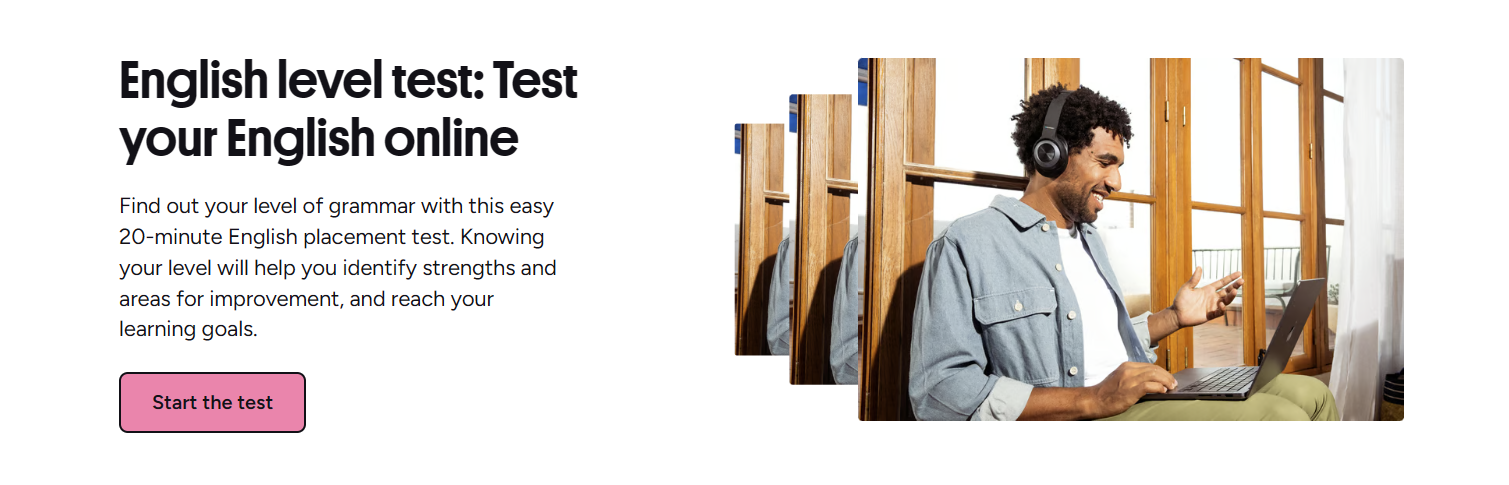
The Preply English grammar test serves as a starting point for learners who want to understand their current proficiency before committing to lessons. Unlike generic placement exams, this assessment connects directly to the platform's tutor marketplace, meaning your results can immediately inform which instructors might suit your needs. The test evaluates core grammatical structures — verb tenses, sentence construction, article usage, prepositions, and more — through a series of multiple-choice and fill-in-the-blank questions that adapt based on your responses.
Contents
- 1. How the Preply Grammar Test Works
- 2. What the Test Measures and What It Doesn't
- 3. CEFR Levels and What They Mean for Grammar
- 4. Using Results to Choose the Right Tutor
- 5. Retaking the Test: When and Why
- 6. Common Grammar Gaps by Native Language Background
- 7. Supplementing the Test with Self-Study Resources
- 8. Grammar Courses vs. One-on-One Lessons
- 9. Tracking Progress Beyond the Test Score
- 10. Limitations and Criticisms of the Assessment
- 11. Preparing for the Test: Practical Tips
- 12. How the Grammar Test Fits Into Preply's Learning Ecosystem
- 13. Pricing and Access: What's Free vs. Paid
- 14. Comparing Preply's Test to Other Placement Options
- 15. Final Assessment of the Preply English Grammar Test
Many learners approach grammar testing with anxiety, expecting a rigid pass-or-fail outcome. The Preply version works differently. It produces a CEFR-aligned level estimate (A1 through C2) and highlights specific areas where you struggle. That granularity matters because two students at the same overall level often have completely different weak spots. One might handle complex conditionals but stumble on article usage; another might master perfect tenses but confuse preposition collocations. The test tries to surface those differences.
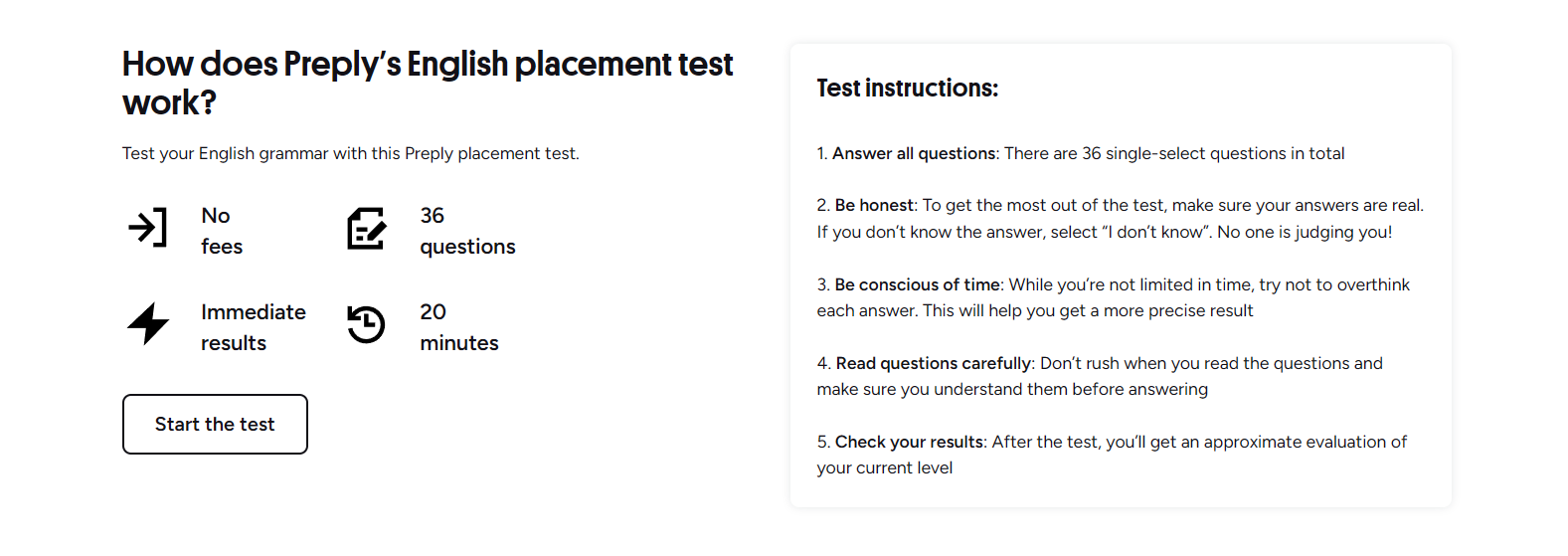
You can access the grammar test directly from the Preply dashboard after creating a free account. No payment information is required, and there's no obligation to book lessons afterward. The assessment takes roughly 15 to 20 minutes, though there's no strict time limit. You can pause and resume later if needed. Results appear immediately upon completion, along with a breakdown by grammar category and suggested next steps — including tutor recommendations filtered by your identified weaknesses.
How the Preply Grammar Test Works
The test uses computer-adaptive technology. Your first question sits at an intermediate difficulty. Answer correctly, and the next item increases in complexity. Answer incorrectly, and it drops. This approach narrows in on your true level faster than a fixed-form test with the same number of questions. The algorithm draws from a large item bank covering the full CEFR spectrum, so repeat attempts (allowed after a cooldown period) won't simply recycle the same questions.
Question formats vary. Some present a sentence with a missing word and four options. Others ask you to identify the error in a highlighted segment. A third type requires reordering words to form a grammatically correct sentence. This variety prevents test-taking strategies from inflating scores — you can't just memorize patterns. The system also tracks response time, though speed doesn't directly affect your level estimate. Unusually fast correct answers on difficult items may flag potential cheating, but that's mainly for platform integrity rather than your personal report.
After finishing, you receive a detailed report. The top section shows your overall CEFR level with a confidence range — for example, B1+ (B1 to B2). Below that, a radar chart breaks performance across categories: verb forms, sentence structure, modifiers, determiners, and so on. Hovering any segment reveals the specific questions you missed and the correct answers with brief explanations. This is where the test becomes actionable. Instead of a vague "study more grammar," you see exactly which structures need work.
What the Test Measures and What It Doesn't
The assessment focuses on grammatical accuracy in written contexts. It evaluates your ability to recognize and produce standard English structures. It does not measure speaking fluency, listening comprehension, vocabulary breadth, or pragmatic competence — the ability to use language appropriately in social situations. A high grammar score doesn't guarantee you can hold a conversation. Conversely, someone with modest test results might communicate effectively in real life through compensation strategies, vocabulary, and confidence.
The test also doesn't assess writing production beyond sentence-level manipulation. There's no essay component, no paragraph construction, no evaluation of coherence or cohesion. This is a deliberate design choice. Preply positions the grammar test as a diagnostic tool for tutor matching, not a comprehensive proficiency certificate. If you need a formal qualification for university admission or visa purposes, you'll still need IELTS, TOEFL, Cambridge exams, or similar.
CEFR Levels and What They Mean for Grammar
The Common European Framework of Reference provides the backbone for Preply's level reporting. Each band represents a cluster of grammatical competencies. At A1, learners handle present simple, basic imperatives, and simple prepositions of place. A2 adds past simple, future with "going to," comparatives, and basic modal verbs. B1 introduces present perfect, conditionals (zero and first), reported speech basics, and a wider range of prepositions. B2 expects control over all conditionals, passive voice, relative clauses, and nuanced modal usage. C1 and C2 involve subtle distinctions — mixed conditionals, inversion, ellipsis, and register-appropriate structure selection.
Scroll horizontally to see all columns
| Level | Key Grammar Milestones |
|---|---|
| A1 | Present simple, basic imperatives, prepositions of place, simple questions |
| A2 | Past simple, future with going to, comparatives, basic modals (can, must) |
| B1 | Present perfect, zero/first conditionals, reported speech basics, phrasal verbs |
| B2 | All conditionals, passive voice, relative clauses, modal nuances, gerunds/infinitives |
| C1 | Mixed conditionals, inversion, ellipsis, advanced clause linking, register control |
| C2 | Near-native structural flexibility, idiomatic grammar, subtle meaning distinctions |
Your Preply report maps each grammar category to these levels independently. You might score B2 overall but show A2 in prepositions and C1 in verb forms. That profile tells a tutor far more than a single letter. It also helps you prioritize self-study. If prepositions drag your average down, targeted exercises on collocations and spatial/temporal usage will yield faster improvement than reviewing verb tenses you already control.
Using Results to Choose the Right Tutor
Preply's tutor filtering system incorporates your test data. After completing the assessment, the platform surfaces instructors who specialize in your weak areas. A tutor tagged "grammar" and "prepositions" with experience teaching your native language group will appear higher in recommendations. You can also manually filter by "grammar focus," "exam preparation," or "business English" depending on your goals. The test results don't lock you into any tutor — they just make the search more efficient.
When reviewing tutor profiles, look for specific mentions of grammar teaching methodology. Some tutors prefer explicit rule explanation followed by drills. Others use a more inductive approach — guiding you to discover patterns through examples and controlled practice. Neither is inherently better, but matching your learning style matters. Read reviews from students with similar starting levels. A tutor praised by advanced learners for nuanced feedback might overwhelm a beginner who needs clear, structured scaffolding.
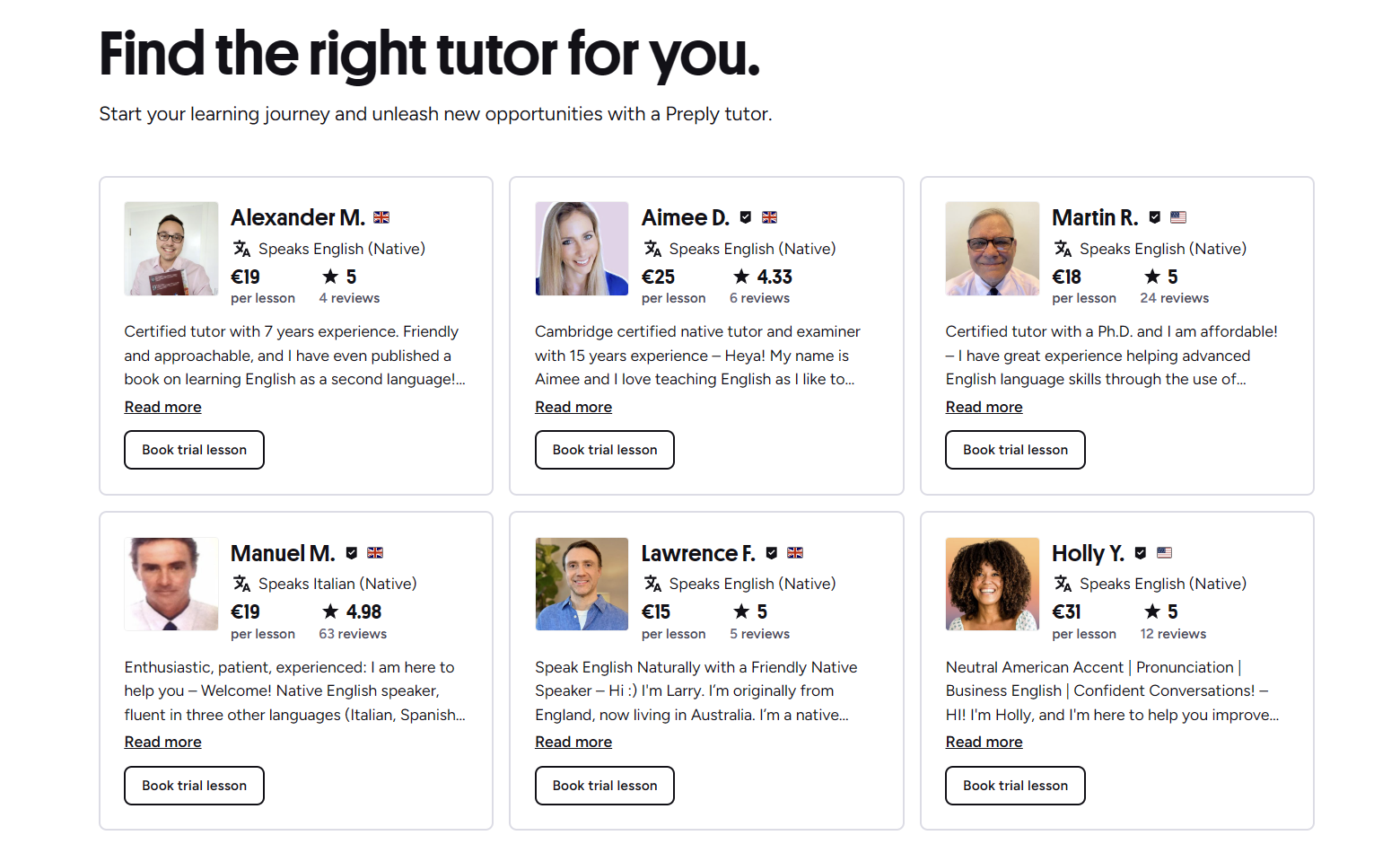
Consider booking a trial lesson with two or three tutors before committing to a package. Use the first session to discuss your test results directly. Share the category breakdown and ask how they'd structure a program to address your gaps. A competent tutor will reference specific items from your report — "I noticed you struggled with third conditional forms; we'll start there" — rather than proposing a generic grammar syllabus. That specificity signals they'll tailor lessons to your actual needs.
Retaking the Test: When and Why
Preply allows retakes after a 30-day cooldown. This interval exists for a reason. Grammar acquisition isn't linear, and short-term fluctuations — a good night's sleep, a bad day, recent exposure to certain structures — can shift scores by half a level without reflecting real progress. The cooldown encourages meaningful study between attempts. Most learners see measurable improvement after 20 to 30 hours of guided practice, though individual variation is wide.
Retaking serves two purposes. First, it validates progress. Seeing your preposition score climb from A2 to B1 provides concrete motivation that lesson-by-lesson feedback sometimes lacks. Second, it updates tutor recommendations. As your profile changes, the algorithm surfaces different instructors — perhaps ones specializing in advanced nuances rather than foundational repair. You can also retake individual category modules if you've focused intensely on one area and want to confirm mastery before moving on.
Common Grammar Gaps by Native Language Background
The test's category breakdown often reveals patterns tied to a learner's first language. Spanish speakers frequently struggle with subject-verb agreement in complex noun phrases and the distinction between "make" and "do." Mandarin speakers often find articles (a/an/the) and plural marking challenging because their language lacks both. Arabic speakers may overuse present continuous where English prefers simple forms. Russian speakers tend to omit auxiliary verbs in questions and negatives. These aren't universal — individual variation within language groups is huge — but they appear often enough that experienced Preply tutors anticipate them.
Scroll horizontally to see all columns
| Native Language | Typical Difficulty Areas |
|---|---|
| Spanish | Subject-verb agreement, make/do, preposition collocations |
| Mandarin | Articles, plural marking, tense-aspect system |
| Arabic | Present simple vs continuous, verb patterns, relative clauses |
| Russian | Auxiliary verbs, articles, perfective/imperfective mapping |
| Japanese | Articles, prepositions, passive voice, conditionals |
| Portuguese | Phrasal verbs, present perfect, question formation |
Knowing these tendencies helps you interpret your own results. If you're a Mandarin speaker and articles show as your weakest category, that's expected — not a personal failing. It means you need a tutor who understands the structural reason behind the error and has proven strategies for that specific transfer issue. Many Preply tutors list the native languages they've taught most. Matching with someone familiar with your L1 interference patterns accelerates progress.
Supplementing the Test with Self-Study Resources
Preply offers a grammar guide and exercise library accessible from the learning resources section. These materials align with the test's category framework, so you can drill exactly what your report flagged. The guide presents rules with clear examples and common error warnings. Exercises range from controlled gap-fills to short production tasks. They're not a substitute for tutor feedback — especially for speaking-oriented grammar — but they reinforce patterns between lessons.
External resources can fill gaps too. The British Council's LearnEnglish site, Cambridge's Grammar in Use series (particularly the intermediate and advanced volumes), and Purdue OWL's mechanics section all provide reliable explanations and practice. When using outside materials, cross-reference with your Preply category labels. If the test flags "determiners," search for "determiners exercises B2" rather than generic "grammar practice." Targeted work beats broad review.
Grammar study works best when it's narrow, frequent, and immediately applied in conversation. A tutor who assigns three focused exercises on your weakest structure beats one who assigns a textbook chapter.
Grammar Courses vs. One-on-One Lessons
Preply also sells structured grammar courses — self-paced modules with video explanations, quizzes, and progress tracking. These suit learners who prefer autonomy and have consistent study habits. The courses follow a logical sequence from basic to advanced within each topic. However, they lack real-time correction. You might complete a module on relative clauses feeling confident, only to discover in conversation that you still hesitate between "which" and "that" in restrictive clauses. A tutor catches that hesitation; a course quiz usually doesn't.
The hybrid approach works well for many. Use courses for initial exposure and rule consolidation. Bring questions and persistent errors to your tutor for clarification and spoken practice. Some tutors even assign specific course modules as homework between sessions. This blends the efficiency of structured self-study with the responsiveness of live feedback. Check whether your tutor is open to this model — some prefer to design all materials themselves.
Tracking Progress Beyond the Test Score
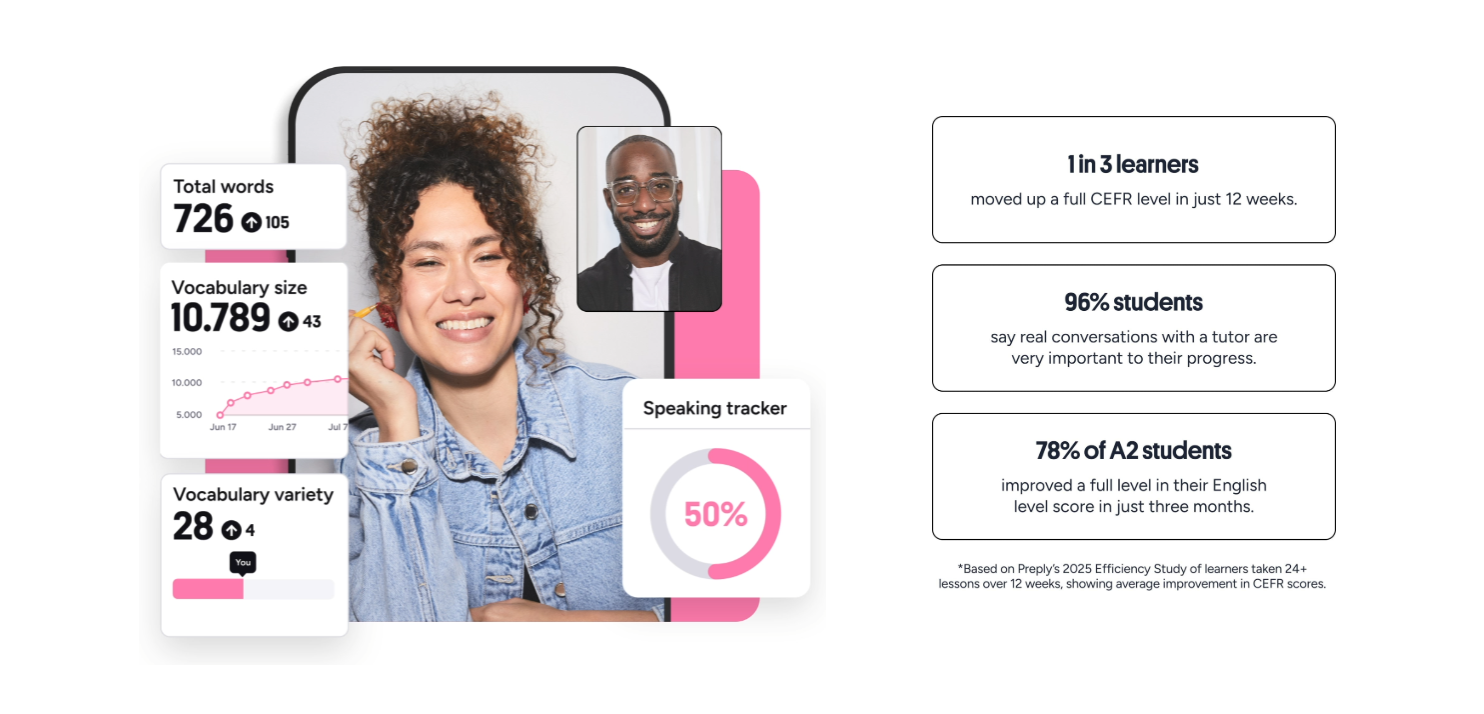
The grammar test provides a snapshot. Real progress shows up in lesson dynamics — fewer corrections on target structures, faster self-correction, ability to explain a rule to someone else. Preply's progress tracking dashboard logs lesson frequency, vocabulary added, and tutor ratings over time. It doesn't auto-update your grammar level; that requires a retake. But the lesson notes and tutor feedback create a qualitative record that often reveals improvement before the test does.
Ask your tutor for a brief written summary every 8 to 10 lessons. A paragraph noting "consistent control of second conditional in spontaneous speech" or "still omitting articles in complex noun phrases" gives you actionable information the test's category labels can't. Over time, these summaries form a narrative of your development that's more useful than a level letter for deciding what to tackle next.
Limitations and Criticisms of the Assessment
No test is perfect. The Preply grammar assessment has known limitations. Adaptive algorithms can mislevel test-takers who guess correctly on several difficult items early on, inflating the initial estimate. The item bank, while large, may not fully represent certain dialects or register variations. Some users report that the test feels easier or harder than their actual lesson experience suggests — a discrepancy often explained by the gap between recognition (test) and production (speaking).
The test also doesn't account for fossilized errors — mistakes so ingrained that a learner recognizes the correct form on a multiple-choice question but consistently produces the error in speech. These require targeted intervention, not just more exposure. A good tutor will identify fossilization patterns within the first few sessions and design specific unlearning exercises. The test alone won't flag them.
A placement test tells you where to start. A tutor tells you why you're stuck. The second is far more valuable for long-term progress.
Preparing for the Test: Practical Tips
You don't need to study for a placement test — its purpose is to measure your current state, not your potential. But a few practical steps ensure the result reflects your actual knowledge. Take the test when you're alert, not after a night shift or in a noisy café. Use a desktop or laptop rather than a phone; the larger screen reduces misclicks on drag-and-drop items. Close other tabs to avoid distractions. Have a glass of water nearby. These sound trivial, but a 15-minute assessment deserves the same conditions you'd want for any evaluation.
- Choose a quiet time with 25 uninterrupted minutes
- Use a computer with stable internet
- Don't use dictionaries, translators, or grammar references
- Answer honestly — guessing inflates your level temporarily
- Note questions you're unsure about for later tutor discussion
Resist the urge to look up answers. The test's value depends on accuracy. If you guess right on a structure you don't actually know, you'll be matched with tutors expecting higher proficiency, and early lessons will feel frustrating. An honest lower score connects you with tutors skilled at building foundations — often a better experience than struggling through material you're not ready for.
How the Grammar Test Fits Into Preply's Learning Ecosystem
The grammar test isn't an isolated feature. It's the entry point to a system that includes level tests for other skills (vocabulary, reading, listening), a tutor marketplace with specialization filters, structured courses, a progress dashboard, and a mobile app for on-the-go practice. The vocabulary test, for instance, often reveals a different profile than grammar. A learner might test B2 in grammar but B1 in vocabulary — common for those who studied formally but lack exposure. Taking both gives a fuller picture.
The mobile app syncs test results and lesson notes, so you can review your grammar category breakdown while commuting. The app also pushes micro-exercises based on your weak areas — a single question on prepositions while waiting for coffee. These spaced repetitions complement deeper lesson work. The ecosystem works best when you engage multiple components: test, tutor, course, app, progress review. Each reinforces the others.
Pricing and Access: What's Free vs. Paid
The grammar test itself is free with a Preply account. No subscription, no trial period, no credit card required. You can retake after 30 days at no cost. The grammar guide and basic exercises in the learning resources section are also free. What costs money: tutor lessons (priced per hour, set by individual tutors), structured grammar courses (one-time purchase or subscription), and the progress tracking dashboard's advanced analytics (part of Preply's premium features for some account types).
Scroll horizontally to see all columns
| Feature | Access Level |
|---|---|
| Grammar placement test | Free |
| Category breakdown report | Free |
| Grammar guide and basic exercises | Free |
| Tutor matching with grammar filters | Free |
| One-on-one grammar lessons | Paid (per hour) |
| Structured grammar courses | Paid (course price varies) |
| Advanced progress analytics | Premium subscription |
Tutor rates for grammar-focused lessons typically range from $10 to $40 per hour, depending on the tutor's qualifications, experience, and location. Native speakers with teaching certifications (CELTA, DELTA, TESOL) and specialization in grammar instruction tend toward the higher end. Many offer package discounts — 5, 10, or 20 lessons prepaid at a reduced rate. The test helps you avoid wasting money on mismatched tutors, which is its own form of value.
Comparing Preply's Test to Other Placement Options
Other platforms offer grammar assessments. Cambridge's free online test is shorter and less granular. British Council's test focuses more on general level than category breakdown. Duolingo's placement is quick but opaque — you get a course starting point, not a diagnostic report. EF SET provides a full CEFR certificate but takes 50 minutes and doesn't link to tutors. Preply's advantage is the direct pipeline from diagnosis to instructor. The disadvantage: it's tied to one marketplace. If you prefer a different platform's tutors, you'll need their assessment or a recognized certificate.
For learners already committed to Preply, the test is the logical first step. For those comparing platforms, take multiple free assessments and compare the category feedback. Do they identify the same weaknesses? Consistency across tests increases confidence in the results. Discrepancies suggest one test's item bank or algorithm may not suit your particular error profile. In that case, a trial lesson with a tutor on each platform — sharing both test reports — often clarifies which environment fits better.
Take two or three free placement tests. If they agree on your weak areas, trust the consensus. If they disagree, a tutor's live diagnosis beats any algorithm.
Frequently Asked Questions
How long does the Preply English grammar test take to complete?
Most learners finish in 15 to 20 minutes. There's no strict time limit, and you can pause and resume later if needed.
Is the Preply grammar test free to take?
Yes, the test is completely free with a Preply account. No payment information is required, and retakes after the 30-day cooldown are also free.
Can I use the Preply grammar test results for university applications or visa requirements?
No. The test provides a CEFR-aligned estimate for tutor matching only. It's not a certified proficiency exam like IELTS, TOEFL, or Cambridge qualifications.
How often can I retake the grammar test?
You can retake the full test after a 30-day waiting period. Individual category modules may be available sooner for targeted practice.
Does the test assess speaking or writing skills?
No. The test evaluates grammatical knowledge through recognition and sentence-level production tasks only. It does not measure speaking fluency, listening, or extended writing.
How do I use my test results to find a suitable tutor?
After completing the test, Preply automatically highlights tutors specializing in your weak grammar areas. You can also manually filter by grammar focus, student level, and native language experience.
What if I disagree with my test result?
Test results are estimates. Discuss your concerns with a tutor during a trial lesson — their live assessment often provides a more accurate picture than any automated test.
Final Assessment of the Preply English Grammar Test
The Preply English grammar test does what a placement tool should: it gives you a clear, category-specific snapshot of your structural knowledge and connects that data directly to tutors who can address your gaps. It's not a proficiency certificate, and it doesn't replace the nuanced diagnosis a skilled tutor provides in conversation. But as a free, low-stakes entry point that informs your first hiring decision on the platform, it earns its place. The adaptive design keeps it efficient. The category breakdown makes it actionable. The tutor integration makes it practical. If you're considering Preply for grammar improvement, take the test before browsing tutors — it's the fastest way to turn a vague "I need grammar help" into a targeted learning plan.