
Online Tutoring
Preply Chemistry Tutors: Finding the Right Match for Your Goals
A practical guide to choosing chemistry tutors on Preply for every level and budget.
Chemistry sits at an awkward intersection. It demands memorization like biology but requires the problem-solving rigor of physics. Most students hit a wall somewhere between balancing equations and understanding why orbitals hybridize. A good tutor doesn't just re-explain the textbook. They spot the specific conceptual gap, adjust their language, and give you enough practice to make the pattern stick.
Contents
- 1. How Preply Structures Chemistry Tutoring
- 2. Specialties and What They Mean for Your Search
- 3. Price Tiers and What You Get
- 4. Reading Reviews Without Getting Misled
- 5. The Trial Lesson: What to Actually Test
- 6. Scheduling Realities and Time Zones
- 7. Using the Preply Classroom for Chemistry
- 8. Progress Tracking and Accountability
- 9. Common Pitfalls When Choosing a Chemistry Tutor
- 10. When Preply Works Well — and When It Doesn't
- 11. Comparing Preply to Alternatives for Chemistry
- 12. Practical Search Strategy: Step by Step
- 13. What to Expect in the First Month
- 14. Cost Projection for a Typical Semester
- 15. Red Flags During Ongoing Lessons
- 16. Special Situations: MCAT, AP, and Professional Needs
- 16.1. MCAT Chemistry/Physics
- 16.2. AP Chemistry
- 16.3. Professional Refreshers
- 17. Final Assessment of Preply Chemistry Tutors
Preply hosts several hundred chemistry tutors. The range is wide: former high school teachers, graduate researchers, industry chemists, and test-prep specialists. Prices span roughly $10 to $80 per hour. The platform's filters let you narrow by specialty, availability, and budget, but the sheer volume of profiles can feel overwhelming. This guide walks through how to evaluate tutors efficiently, what different price tiers actually deliver, and where the platform helps or hinders the search.
I spent time reviewing tutor profiles, student reviews, and the platform's own data presentations to map out what a typical search looks like. The goal isn't to sell you on Preply. It's to help you cut through the noise and find someone who can actually explain stereochemistry without making you want to quit.
How Preply Structures Chemistry Tutoring
Preply operates as a marketplace. Tutors set their own rates, schedules, and cancellation policies. The platform takes a commission that decreases the longer a student stays with the same tutor. Lessons happen in Preply's built-in video classroom, which includes a whiteboard, file sharing, and screen sharing. There's no proprietary curriculum. Each tutor brings their own materials or works with whatever the student provides.
For chemistry, this flexibility matters. A student struggling with AP Chemistry needs different support than someone preparing for the MCAT or a professional brushing up on analytical methods for a job. The marketplace model accommodates that range, but it also means quality control is decentralized. Preply verifies identity and education credentials, but teaching ability is judged almost entirely through student reviews.
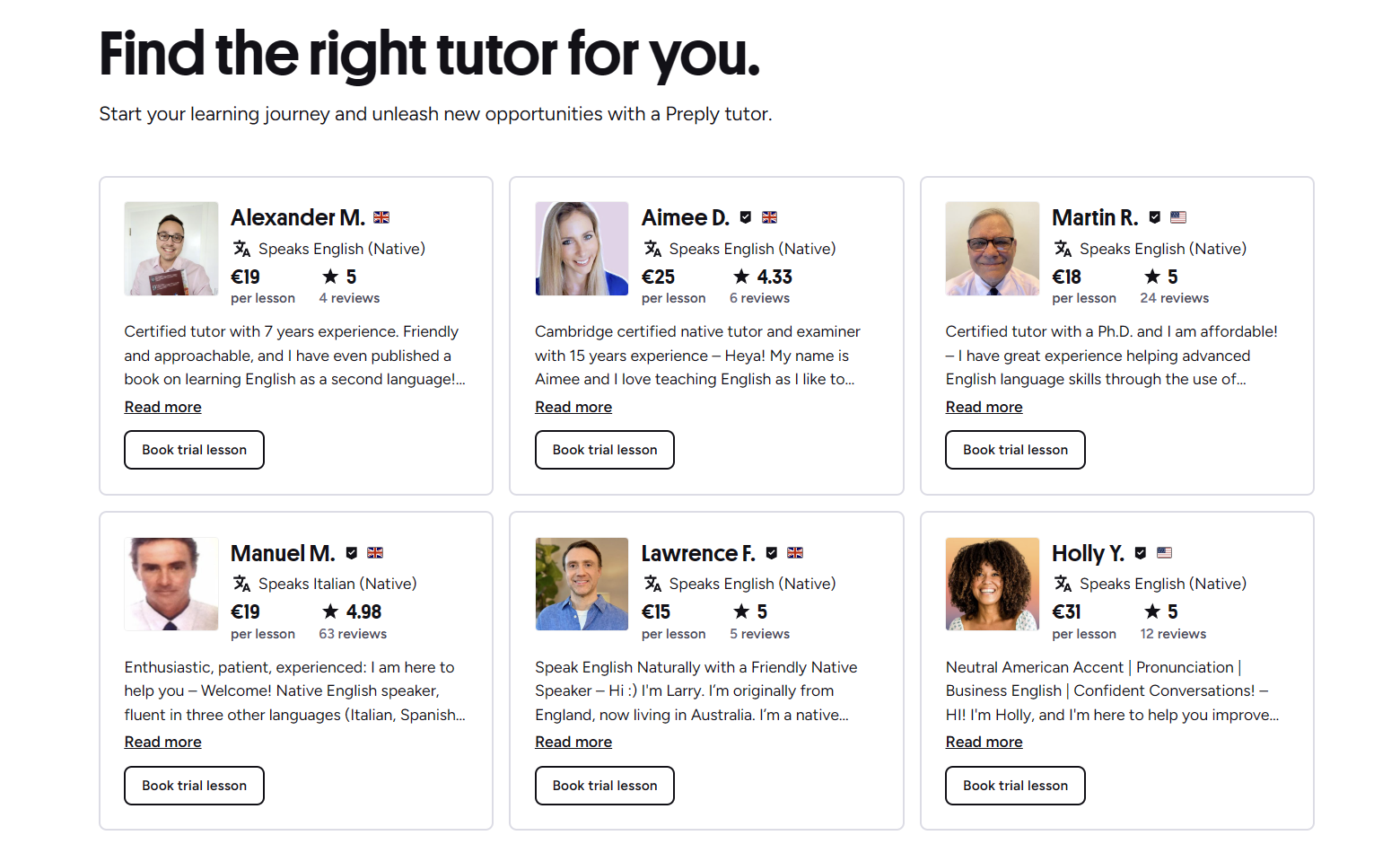
The search interface defaults to showing tutors with the highest ratings and most reviews. You can filter by subcategory — general chemistry, organic, inorganic, physical, analytical, biochemistry — and by level: elementary, high school, university, or professional. There's also a toggle for native speakers if you need instruction in a specific language. Most chemistry tutors teach in English, but a meaningful minority offer lessons in Spanish, Russian, Arabic, and other languages.
Specialties and What They Mean for Your Search
Chemistry tutors on Preply cluster around a few recognizable specialties. General chemistry and organic chemistry dominate. Physical chemistry and analytical chemistry appear less frequently but tend to attract tutors with stronger academic credentials. Biochemistry sits at the biology interface and often draws tutors with medical or pharmaceutical backgrounds.
- General chemistry: stoichiometry, atomic structure, periodic trends, bonding, states of matter, basic thermodynamics. High school and first-year college.
- Organic chemistry: reaction mechanisms, synthesis, spectroscopy, stereochemistry. The notorious weed-out course for pre-med and chemistry majors.
- Physical chemistry: quantum mechanics, thermodynamics, kinetics, statistical mechanics. Math-heavy. Usually upper-level undergrad or grad.
- Analytical chemistry: spectroscopy, chromatography, electrochemistry, method validation. Lab-focused. Relevant for industry roles.
- Biochemistry: metabolism, enzyme kinetics, molecular biology overlap. Common for MCAT prep and life-science majors.
- Inorganic chemistry: coordination compounds, organometallics, solid-state chemistry. Less common on the platform, more specialized tutors.
When you filter by specialty, pay attention to how tutors describe their experience. A tutor listing "organic chemistry" might mean they've taught the full two-semester sequence at a university, or it might mean they helped a few students with nomenclature. Look for specifics: "taught organic chemistry I and II at State University for three years" carries more weight than "expert in organic chemistry."
Price Tiers and What You Get
Preply chemistry tutors generally fall into three price bands. These aren't official categories, but they reflect clear patterns in tutor backgrounds and what the lesson experience tends to look like.
Scroll horizontally to see all columns
| Price Range | Typical Background | Best For |
|---|---|---|
| $10–$25/hr | Undergrad/grad students, newer tutors, non-native English speakers | Homework help, concept review, budget-conscious students |
| $25–$50/hr | Experienced teachers, PhD candidates, industry professionals | Course-long support, exam prep, structured learning plans |
| $50–$80+/hr | University professors, specialized researchers, elite test-prep coaches | Advanced topics, MCAT/GRE/AP intensive prep, research mentoring |
The lower band isn't automatically low quality. Many graduate students are excellent explainers because the material is fresh and they remember what confused them. The tradeoff is usually less polished lesson structure and fewer prepared materials. They're often learning to teach while they teach you.
The middle band is where most serious students settle. These tutors typically have hundreds of hours on the platform, refined explanations for common sticking points, and a library of practice problems. They can diagnose a knowledge gap in five minutes and have a worksheet ready for the next session.
The upper band exists for specific high-stakes situations. If you're retaking the MCAT and need to move your chemistry score from the 10th to the 90th percentile in eight weeks, a tutor who writes MCAT questions for a living may be worth the premium. For a typical college course, the marginal benefit over a strong mid-tier tutor rarely justifies the cost.
Price correlates with polish, not necessarily with the ability to make a specific concept click. A $15 tutor who clicks with your learning style beats a $60 tutor who doesn't.
Reading Reviews Without Getting Misled
Preply displays two review metrics: a star rating (out of 5) and a written review count. Most chemistry tutors sit between 4.8 and 5.0 stars. The distribution is heavily skewed because students rarely leave negative reviews unless something went seriously wrong. A 4.9 with 200 reviews is more meaningful than a 5.0 with 12.
Read the written reviews for patterns. Look for mentions of:
- Responsiveness to questions between lessons
- Willingness to adapt to the student's textbook or professor's style
- Preparedness — did they show up with materials or wing it?
- Ability to explain the same concept in multiple ways
- Reliability with scheduling and technical setup
Beware of reviews that only say "great tutor" or "very helpful." They're genuine but not informative. The most useful reviews describe a specific struggle — "I couldn't grasp SN1 vs SN2 mechanisms" — and how the tutor resolved it. Also note the reviewer's level. A high school student praising a tutor for patience doesn't tell you much about that tutor's ability to teach graduate-level physical chemistry.
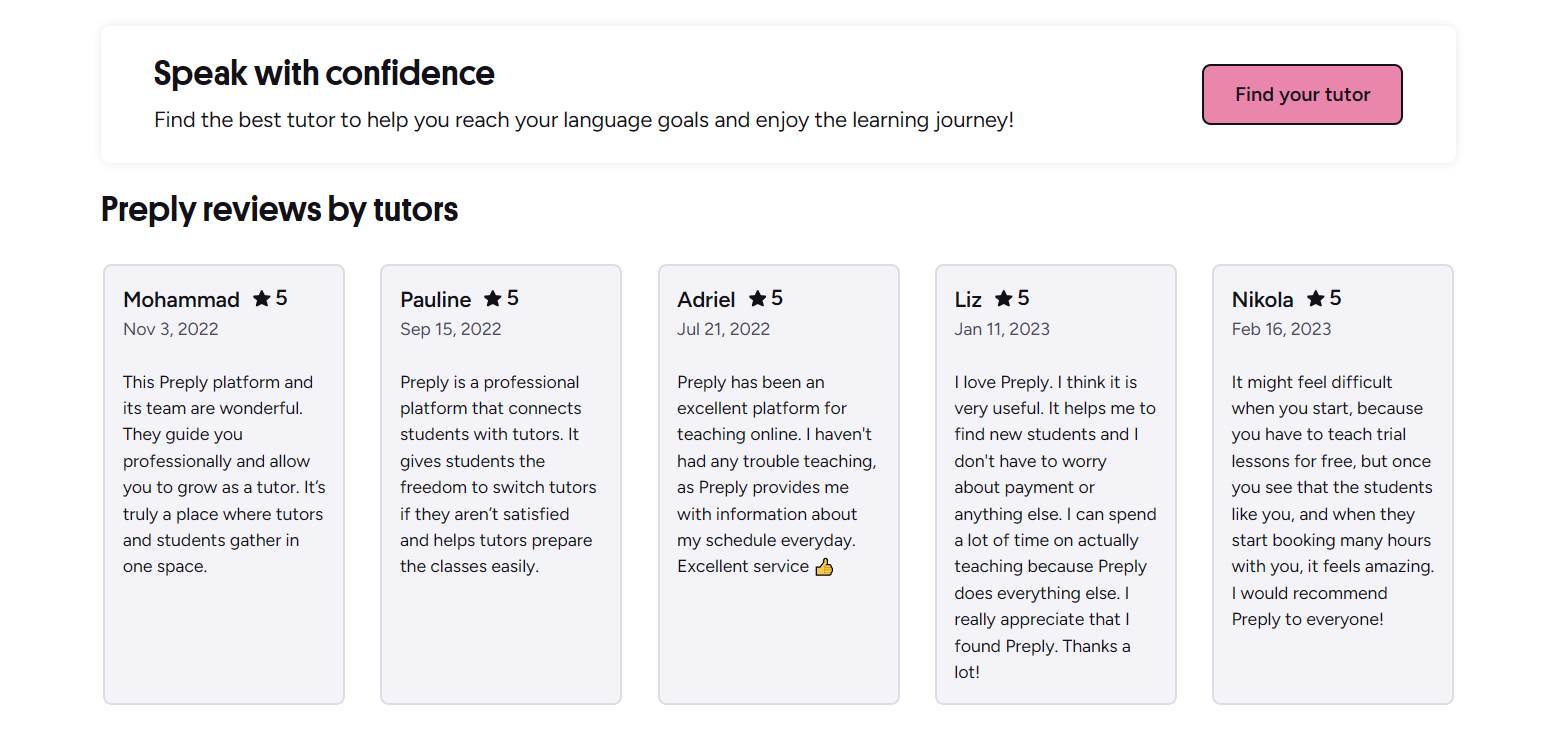
Preply also shows a "response time" metric and a "lessons completed" count. Tutors with thousands of lessons have survived the platform's natural selection. They know how to use the whiteboard efficiently, manage the 50-minute hour, and handle the occasional connection hiccup. That operational smoothness matters more than people realize.
The Trial Lesson: What to Actually Test
Preply offers a discounted trial lesson (usually 50% off the tutor's regular rate) or a full refund if you're not satisfied after the first session. Use this strategically. Don't treat it as a casual chat. Come with a specific problem or concept that's been giving you trouble.
- Send the tutor your syllabus, textbook, or problem set 24 hours before the trial.
- Ask them to explain the concept you've struggled with most.
- Watch how they use the whiteboard. Do they draw structures clearly? Label axes? Show stepwise mechanisms?
- Note whether they check for understanding or just lecture.
- See if they give you a concrete next step or practice problem before the lesson ends.
A good trial lesson feels like a working session, not a demo. The tutor should diagnose quickly, teach the gap, and leave you with something to practice. If they spend 20 minutes talking about their credentials, that's a red flag. Credentials belong on the profile. The lesson is for teaching.
Scheduling Realities and Time Zones
Preply shows tutor availability in your local time zone. That's convenient but can mask a mismatch. A tutor based in Eastern Europe showing 7 PM slots for a US East Coast student is teaching at 1 AM their time. Some tutors maintain those hours long-term. Others burn out and become unreliable. Check the tutor's profile location and do the mental time-zone math.
Consistency beats intensity. One 60-minute lesson per week for a semester produces better retention than two 90-minute sessions crammed before an exam. Most tutors offer package discounts for booking 5, 10, or 20 lessons upfront. The discount typically ranges from 5% to 15%. If you're confident after the trial, a 10-lesson package locks in the rate and guarantees the tutor's slot.
Cancellation policy varies by tutor. The platform default is 4 hours notice for a full refund. Some tutors require 24 hours. A few are stricter. Read the policy before booking a package. Life happens. A rigid policy with no exceptions becomes frustrating fast.
Using the Preply Classroom for Chemistry
The built-in classroom is where the teaching happens. For chemistry, the whiteboard is the critical tool. It supports freehand drawing, text, shapes, and image upload. Tutors who've taught chemistry on the platform for a while develop workflows: they pre-load periodic tables, common functional group templates, and mechanism arrow templates. New tutors often draw everything from scratch, which eats lesson time.
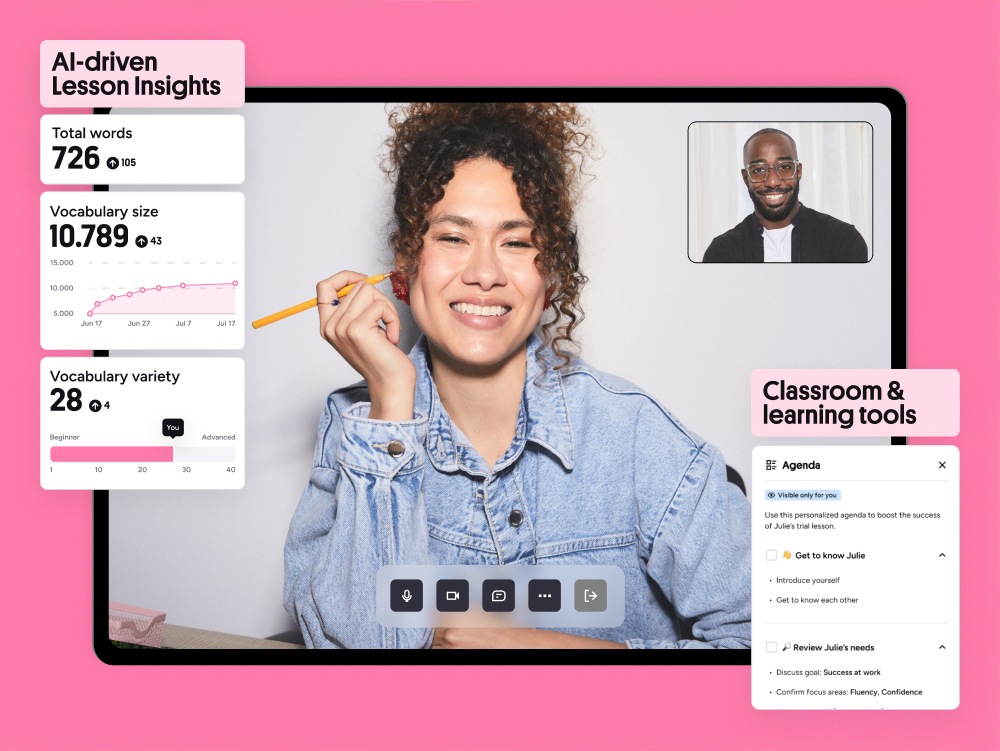
Screen sharing works for showing simulation outputs, spectral databases, or molecular modeling software. File sharing lets you upload problem sets, past exams, or lab reports before the lesson. The platform records lessons automatically if both parties consent. Recordings are useful for review, especially for mechanism-heavy organic chemistry where you want to replay the arrow-pushing logic.
One limitation: the whiteboard doesn't have built-in chemical structure recognition. You can't type "ethanol" and get a structure. You draw it. For complex molecules, some tutors use external tools like ChemDraw or MolView, screen-share the result, then paste screenshots onto the whiteboard. It works but adds friction. Ask during the trial how they handle structure drawing.
Progress Tracking and Accountability
Preply provides a basic progress dashboard showing lessons completed, hours studied, and a self-assessment slider for confidence. It's lightweight. Don't expect detailed analytics like "mastery of electrophilic aromatic substitution: 73%." The platform leaves pedagogical tracking to the tutor.
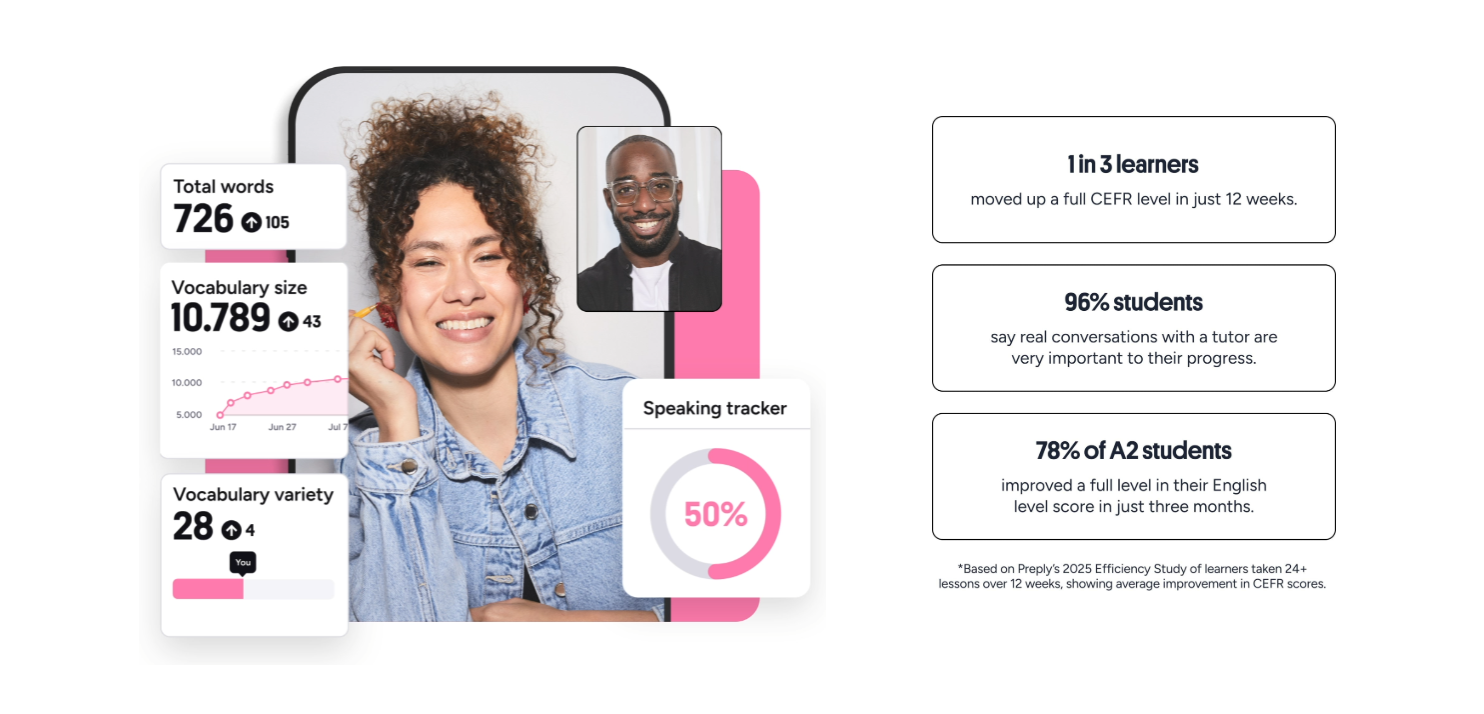
Effective tutors build their own tracking: shared Google Docs with topic checklists, spaced-repetition question banks, or periodic diagnostic quizzes. Ask a prospective tutor how they track progress. A vague answer ("we'll see how it goes") suggests they'll react to problems rather than prevent them. A concrete answer ("I give a 10-question diagnostic every four lessons and adjust the plan") signals a structured approach.
Common Pitfalls When Choosing a Chemistry Tutor
The most frequent mistake is optimizing for the wrong variable. Students often prioritize the highest degree (PhD > master's > bachelor's) or the lowest price. Neither predicts teaching effectiveness for your specific need. A PhD in computational chemistry may struggle to explain VSEPR theory to a high schooler. A $15 tutor may be a gifted teacher who's new to the platform.
- Overvaluing credentials: A degree proves content knowledge, not teaching skill.
- Ignoring communication style: Some tutors are brilliant but talk too fast, use jargon without defining it, or get impatient with basic questions.
- Skipping the trial: The 50% discount exists for a reason. Use it.
- Booking a package with an untested tutor: Lock in only after 2–3 successful lessons.
- Assuming native English equals better teaching: Many non-native tutors explain technical concepts more clearly because they've had to learn the terminology deliberately.
Another pitfall: treating the tutor as a homework machine. "Can you do these 20 problems for me?" is not tutoring. It's cheating, and most tutors will refuse. The productive frame: "I attempted these 20 problems. Here are the three I got stuck on. Can we work through the reasoning?" That's what tutors are for.
When Preply Works Well — and When It Doesn't
Preply excels for one-on-one concept clarification, exam preparation, and filling gaps from a missed or poorly taught class. The flexibility of scheduling, the range of specialties, and the ability to switch tutors without penalty make it strong for students who know what they need.
It works less well for:
- Students who need external accountability to show up. No one chases you.
- Lab-heavy courses where hands-on technique matters. Virtual labs exist but aren't a substitute.
- Highly structured curriculum needs. If you want a pre-built AP Chemistry course with pacing guides, graded assignments, and a final exam, a dedicated course platform fits better.
- Group study dynamics. Some students learn better explaining to peers. Preply is strictly 1:1 (though you can book consecutive slots for a study group).
Preply is a tool, not a curriculum. It amplifies a good study habit. It cannot create one.
Comparing Preply to Alternatives for Chemistry
The main alternatives fall into three categories: other tutor marketplaces (Wyzant, TutorMe, Varsity Tutors), course platforms (Khan Academy, Coursera, edX, specialized chemistry sites like Master Organic Chemistry), and local/in-person tutoring.
Scroll horizontally to see all columns
| Option | Strength | Weakness |
|---|---|---|
| Preply | Wide specialty range, flexible scheduling, global tutor pool, trial lessons | No standardized curriculum, quality varies, platform fees |
| Wyzant | US-focused, strong vetting, in-person option, good for test prep | Higher average prices, fewer international tutors |
| Khan Academy / free resources | Free, self-paced, comprehensive video library | No feedback, no personalization, easy to stall |
| Specialized chemistry sites (e.g., Master Organic Chemistry) | Expert-curated content, mechanism-focused, practice problems | No live interaction, subscription model, limited scope |
| Local in-person tutor | Physical presence, can oversee lab work, local curriculum knowledge | Limited pool, higher cost, scheduling rigidity |
Many students use Preply alongside free resources. Khan Academy for initial exposure, Preply for the stuck points. That hybrid approach often costs less and works better than relying on either alone.
Practical Search Strategy: Step by Step
If you're starting from zero, here's a sequence that avoids wasted time:
- Define the goal precisely: "AP Chemistry exam in May," "Organic Chemistry I final in three weeks," "MCAT chem/phys section target 128+."
- Filter Preply for your specialty and level. Set price ceiling at your sustainable weekly budget × 4.
- Sort by rating × review count (mental math: 4.9 × 150 > 5.0 × 12).
- Open 5–7 profiles in tabs. Scan for: teaching experience matching your level, specific course familiarity, clear lesson structure description, recent activity (lessons in the last month).
- Shortlist 3. Message each with your goal, timeline, and current struggle. Note response time and specificity.
- Book trials with the top 2. Use the trial checklist.
- Decide. Book a 5- or 10-lesson package with the winner.
The messaging step matters. A tutor who replies with "I've taught AP Chem for 5 years, here's how I'd structure our first month" is signaling professionalism. A tutor who replies "Yes I can help" is signaling nothing. You're buying their communication as much as their chemistry knowledge.
What to Expect in the First Month
The first lesson is diagnosis. The second and third are where the tutor builds a mental model of your knowledge gaps and learning pace. By lesson four, a good tutor has a provisional roadmap: "We'll hit thermodynamics this month, kinetics next month, equilibrium before the midterm."
Expect friction early. You'll discover the tutor explains kinetics well but struggles with quantum numbers. Or you realize you need more practice problems than they provide. That's normal. The test is whether the tutor adapts. If they stick to their prepared slides while you're drowning, switch. The platform makes switching frictionless — no awkward conversations, just book someone else.
Most students settle into a rhythm by week three. The tutor knows your notation preferences (arrow-pushing style, sig fig habits, unit-tracking method). You know their scheduling quirks. The lessons become efficient. That's the target state.
If you're not at that rhythm by lesson 5, something's off. Could be the tutor. Could be that your goal needs refining ("I want to understand chemistry" is not a goal). Could be that you're not doing the between-lesson practice. Honest self-assessment saves money.
Cost Projection for a Typical Semester
A concrete example helps. Assume a university student taking General Chemistry II, meeting a tutor weekly for 14 weeks at $35/hr with a 10% package discount on a 10-lesson pack, then paying per lesson for the remaining four.
Scroll horizontally to see all columns
| Item | Cost |
|---|---|
| Trial lesson (50% off) | $17.50 |
| 10-lesson package at $35/hr with 10% discount | $315.00 |
| 4 individual lessons at $35/hr | $140.00 |
| Total for 15 lessons | $472.50 |
That's roughly $31.50 per lesson effective rate. Compare to a university tutoring center (often free but limited hours, peer tutors) or a local private tutor ($60–$100/hr). Preply sits in a practical middle. The cost scales linearly with frequency. Two lessons a week doubles it. Biweekly halves it.
Red Flags During Ongoing Lessons
Even after a good start, watch for drift. These patterns suggest it's time to switch tutors:
- Frequent rescheduling or last-minute cancellations.
- Repeating the same explanation after you've said you don't understand.
- No visible preparation — they open the textbook for the first time during the lesson.
- Dismissing your textbook or professor's approach as "wrong" without offering a coherent alternative.
- Running over time consistently (your 50 minutes becomes 40 because they started late).
- Reluctance to use the whiteboard for structures, preferring to talk through mechanisms verbally.
Chemistry is visual. A tutor who refuses to draw mechanisms, orbital diagrams, or titration curves is handicapping you. Verbal-only organic chemistry explanations rarely work.
If you can't see the electrons moving, you're not learning the mechanism. You're memorizing a story.
Special Situations: MCAT, AP, and Professional Needs
High-stakes exams deserve specific mention because the tutor requirements shift.
MCAT Chemistry/Physics
The MCAT tests chemistry in passage-based, reasoning-heavy formats. Content knowledge is necessary but insufficient. You need a tutor who understands the AAMC question style: how they trap you with unit conversions, how they disguise familiar concepts in unfamiliar contexts, how they test experimental reasoning. Look for tutors who explicitly mention MCAT experience, ideally with student score improvements they can reference (anonymized). Many charge $60–$100/hr. For a 3-month prep window, 12–16 lessons at that rate is a significant investment but standard for serious test prep.
AP Chemistry
AP Chemistry has a defined curriculum and predictable question patterns. The best tutors are current or recent AP Chemistry teachers. They know the College Board's phrasing quirks, the lab questions that appear every year, the calculator policy nuances. A university professor who hasn't seen an AP exam in 15 years may teach the content beautifully but miss the test-specific strategy. Target tutors with "AP Chemistry" in their specialty tags and verify they've taught the current curriculum (post-2014 redesign).
Professional Refreshers
Professionals returning to chemistry for a certification, career pivot, or job requirement have different constraints: limited time, specific knowledge gaps, no need for pedagogical hand-holding. They often prefer tutors with industry experience who can connect concepts to real applications. The conversation shifts from "explain this concept" to "I need to understand HPLC method validation for a GLP audit next month." These engagements are often shorter (4–6 lessons) and more expensive per hour, but the total cost stays low because the scope is narrow.
Frequently Asked Questions
How do I know if a Preply chemistry tutor is qualified for my specific course?
Check their profile for explicit mention of your course level (AP, IB, general chemistry I/II, organic I/II, MCAT). Message them with your textbook and syllabus before booking. A qualified tutor will confirm familiarity or honestly say it's outside their wheelhouse.
What if the tutor's English isn't perfect but their chemistry knowledge is strong?
Many excellent chemistry tutors are non-native English speakers. For technical subjects, precise terminology often matters more than conversational fluency. Use the trial lesson to judge: can you follow their explanations? Do they write clearly on the whiteboard? If yes, accent rarely blocks learning.
Can I get help with lab reports and data analysis on Preply?
Yes. Many tutors assist with lab report structure, error analysis, spectroscopy interpretation, and Excel/Origin graphing. Screen sharing works well for this. Clarify during the trial that you need lab support, not just concept review.
How does Preply handle payments and refunds if a tutor cancels?
Preply holds payment until the lesson is confirmed complete. If a tutor cancels, you get a full refund to your Preply balance or original payment method. If you cancel within the tutor's notice window (usually 4 hours), you're charged. Read each tutor's specific policy.
Is it worth paying more for a tutor with a PhD in chemistry?
Not automatically. A PhD signals deep content knowledge but not teaching skill. For advanced topics (physical chemistry, research-level questions), it matters. For general or organic chemistry, an experienced teacher with a master's often explains better than a researcher who hasn't taught undergraduates in years.
Can I switch tutors mid-semester without losing progress?
Yes. Export your lesson notes and any shared documents. Brief the new tutor on what you've covered and where you're stuck. The first lesson with the new tutor will be partly recalibration, but you don't start from zero. Preply's lesson history helps.
Does Preply offer group chemistry lessons?
Preply is designed for 1:1 lessons. You can book back-to-back slots for a study group, but each student needs their own account and lesson. There's no built-in group classroom. For group learning, consider a dedicated course platform or local study group with a tutor you hire independently.
Final Assessment of Preply Chemistry Tutors
Preply works for chemistry because the subject rewards individualized explanation. A stuck student doesn't need another lecture video. They need someone to watch them draw a mechanism, spot the backward arrow, and ask "what's the nucleophile here?" That interaction happens well on the platform when the tutor is competent and the student comes prepared. The marketplace model means you'll kiss a few frogs. The trial lesson system makes that cheap. The review system, while inflated, still surfaces patterns if you read past the stars. The sweet spot for most students: a mid-tier tutor ($25–$50) with 200+ lessons, a 4.9+ rating, and a trial lesson that felt like work, not a sales pitch. Book the package. Show up. Do the practice problems. That's the part no platform automates.