
Language Learning
Preply English Vocabulary Guide: Build Your Word Power
A practical guide to using Preply for vocabulary building with tutors, tests, and learning resources.
Building a strong English vocabulary takes more than memorizing word lists. It requires context, repetition, feedback, and the chance to use new words in real conversation. Preply connects learners with tutors who can provide exactly that combination. This guide walks through how the platform supports vocabulary growth, from initial assessment to long-term retention strategies.
Contents
- 1. How Preply Structures Vocabulary Learning
- 2. Finding the Right Vocabulary Tutor on Preply
- 3. Preply English Vocabulary Test and Assessment
- 4. Vocabulary Learning Methods Used by Preply Tutors
- 5. Using the Preply App for Vocabulary Practice
- 6. Business English Vocabulary on Preply
- 7. Tracking Vocabulary Progress Over Time
- 8. Common Vocabulary Challenges and Solutions
- 9. Preply Vocabulary Resources Beyond Lessons
- 10. Cost Considerations for Vocabulary-Focused Lessons
- 11. Student Experiences with Vocabulary Building
- 12. Final Assessment of Preply English Vocabulary Guide
Most learners hit a plateau because they study words in isolation. A tutor changes that dynamic by introducing vocabulary through topics that matter to you — business negotiations, academic writing, travel situations, or casual conversation. The words stick because they attach to situations you actually encounter.
Preply's approach differs from self-study apps in a fundamental way. Apps drill recognition. Tutors drill usage. Both have value, but the platform lets you blend them. You might use flashcards between sessions, then bring those words into a lesson for pronunciation practice, collocation work, and spontaneous speaking exercises.
How Preply Structures Vocabulary Learning
The platform doesn't enforce a single curriculum. Instead, it gives tutors tools to build personalized vocabulary plans. When you start, you'll typically discuss goals, take a level assessment, and identify priority areas. A business professional might need phrasal verbs for meetings. A student might need academic word families. Someone preparing for IELTS needs topic-specific lexical sets.
Tutors on Preply often use the CEFR framework as a loose scaffold. They'll introduce B2-level vocabulary if you're at B1, pushing slightly beyond comfort zone without overwhelming. The advantage over fixed courses is flexibility — if you suddenly need vocabulary for a job interview next week, the next lesson shifts focus immediately.
Lesson structure varies by tutor, but a typical vocabulary-focused session includes review of previous words, introduction of 8-12 new items with context, controlled practice exercises, and freer speaking where you're encouraged to use the new vocabulary naturally. Homework often involves writing sentences, recording yourself, or completing targeted exercises on the platform.
Finding the Right Vocabulary Tutor on Preply
The tutor search filters let you narrow by specialty, price, availability, and student ratings. For vocabulary work, look for tutors who mention specific approaches: lexical approach, collocation focus, spaced repetition integration, or exam vocabulary specialization. Read their video introductions — tutors who speak clearly about methodology usually deliver more structured lessons.
- Check whether they teach your target variety (British, American, Australian, etc.)
- Look for tutors with experience in your field — legal, medical, tech, finance vocabulary differs significantly
- Read recent reviews for mentions of vocabulary building, not just general conversation
- Consider tutors who share materials between sessions — shared documents, Quizlet sets, Anki decks
- Trial lessons are essential — test whether their teaching style matches how you learn words best
Price doesn't always correlate with vocabulary teaching skill. Some of the most effective vocabulary tutors charge mid-range rates because they're building their student base. Filter by "English for work" or "Exam preparation" categories to find tutors who explicitly teach vocabulary systems rather than just chatting.
Preply English Vocabulary Test and Assessment
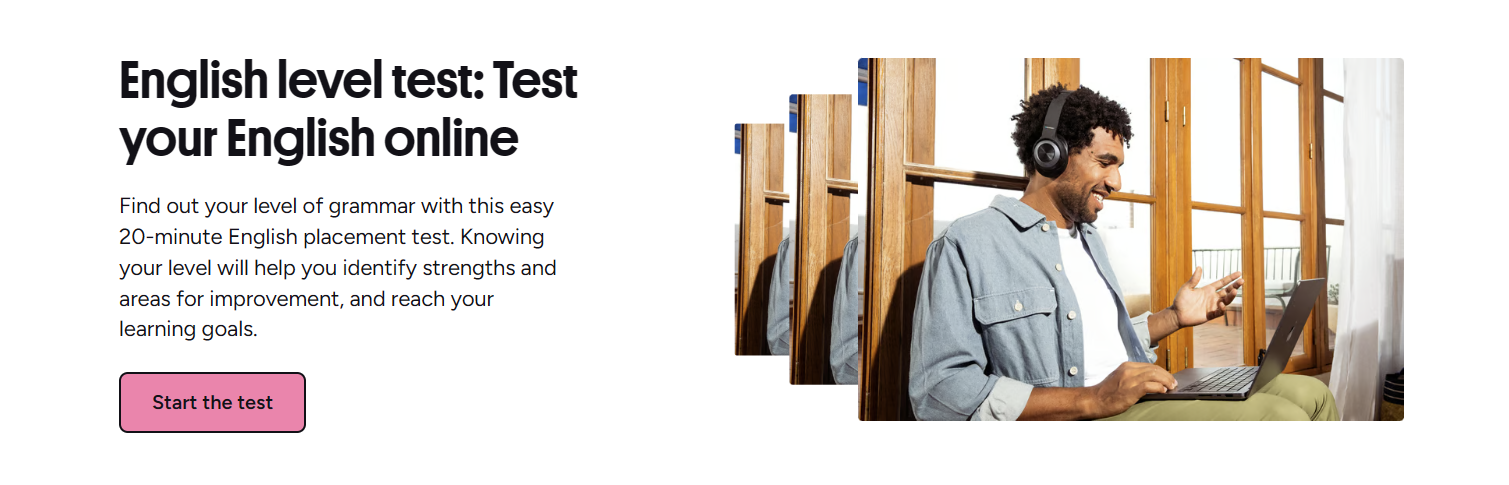
The platform offers a free English level test that includes vocabulary assessment. It adapts to your responses, presenting progressively harder words and contexts. The result gives a CEFR estimate and highlights lexical gaps. Many tutors ask new students to take this before the first lesson so they can prepare appropriate materials.
Beyond the initial test, some tutors use their own diagnostic tools — vocabulary size tests, collocation knowledge checks, or topic-specific word audits. These informal assessments often reveal more useful information than the standardized test because they target your specific needs. A business English tutor might test your knowledge of meeting phrases, negotiation language, and email conventions separately.
Vocabulary Learning Methods Used by Preply Tutors
Effective tutors rarely rely on a single technique. They combine approaches based on what works for each student. The lexical approach emphasizes learning words in chunks — collocations, phrases, and fixed expressions — rather than individual words. This mirrors how native speakers actually store and retrieve language.
Scroll horizontally to see all columns
| Method | Focus | Best For |
|---|---|---|
| Lexical chunks | Collocations and phrases | Natural fluency |
| Spaced repetition | Long-term retention | Large vocabulary goals |
| Contextual guessing | Inference skills | Reading comprehension |
| Word formation | Prefixes, suffixes, roots | Academic vocabulary |
| Semantic mapping | Word relationships | Conceptual organization |
Spaced repetition systems (SRS) appear frequently in tutor recommendations. Many create shared Anki or Quizlet decks aligned with lesson content. You review between sessions; the tutor checks retention at the start of the next lesson. This division of labor — tutor handles introduction and usage, app handles memorization — works well for busy learners.
Using the Preply App for Vocabulary Practice
The mobile app extends vocabulary work beyond lesson time. You can review tutor-shared word lists, complete practice exercises, and access the platform's vocabulary courses. The app syncs with your lesson history, so words introduced on Tuesday appear in Thursday's review session automatically.
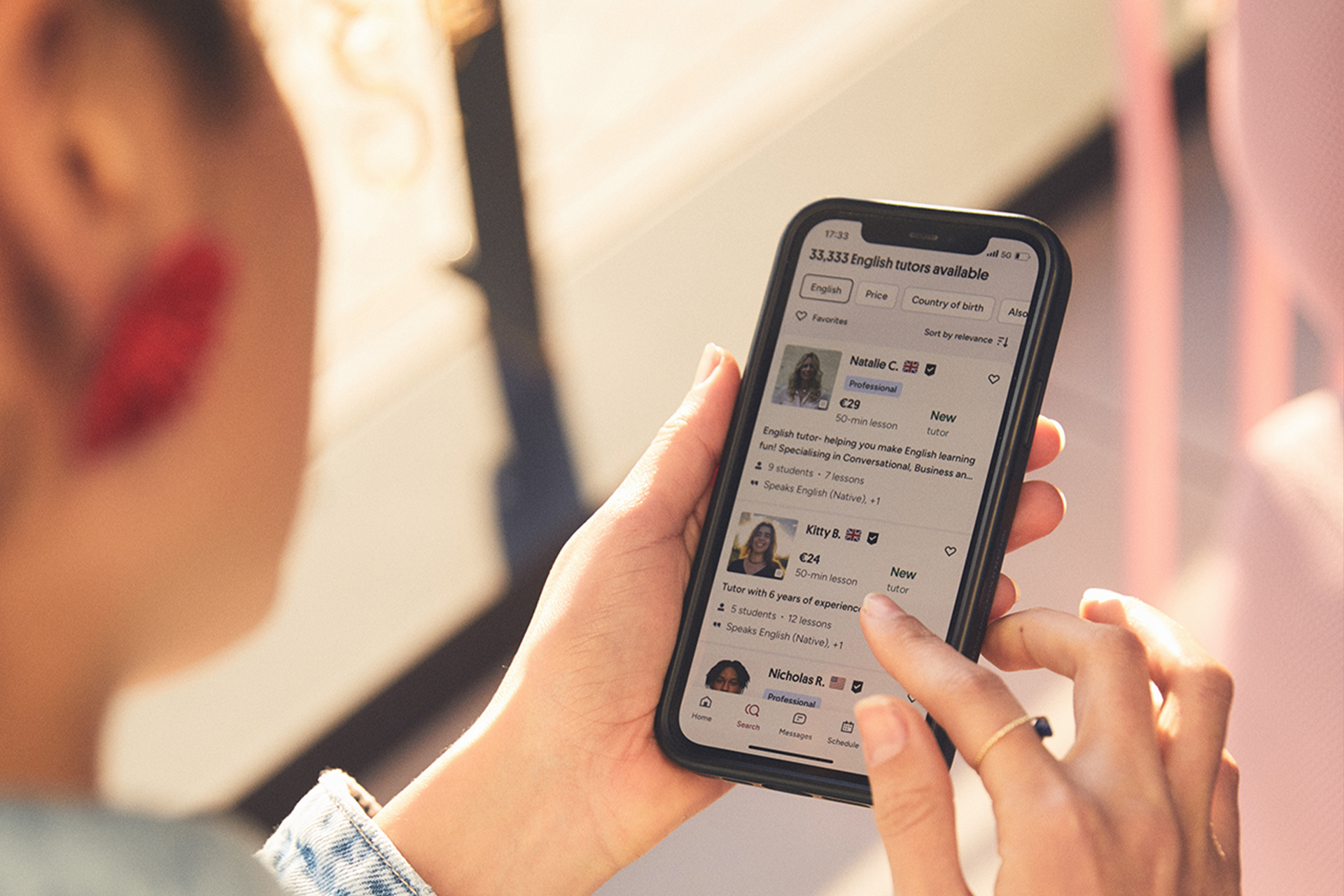
The app's vocabulary section includes themed courses — business, travel, exam prep, general English — with spaced repetition built in. These aren't a replacement for tutor-guided learning but serve as solid supplementary material. Some tutors assign specific app modules as homework, then test the words in the following lesson.
Business English Vocabulary on Preply
Business vocabulary demands precision. The wrong preposition in a contract clause or the wrong register in an email creates real consequences. Preply has a deep pool of tutors with corporate backgrounds — former managers, HR professionals, consultants — who teach the actual language used in their industries, not textbook approximations.
Many companies use Preply Business for team vocabulary training. The admin dashboard tracks progress across employees, and tutors can align lessons with company-specific terminology. If your employer offers this, the vocabulary curriculum often includes your organization's actual documents, presentations, and communication samples.
Tracking Vocabulary Progress Over Time
Progress tracking matters because vocabulary growth feels invisible day to day. Preply's dashboard shows lesson count, hours studied, and tutor ratings. For vocabulary specifically, the most useful metrics come from your tutor — periodic reassessments, writing samples compared over months, or speaking tasks recorded at intervals.
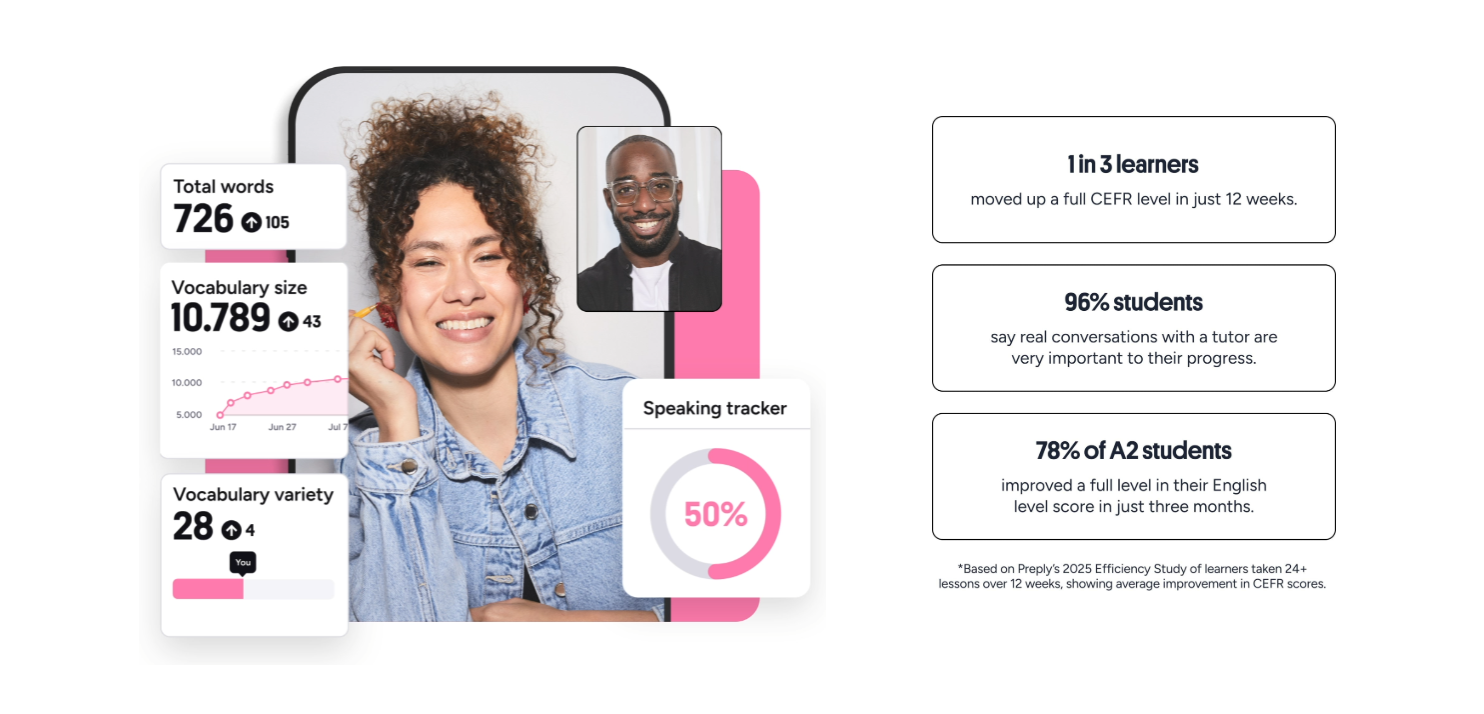
Some tutors maintain a shared vocabulary log — a running document of every word introduced, its context, and whether you've demonstrated active recall. After 20 lessons, this becomes a personalized dictionary. Reviewing it quarterly shows patterns: which topics you've mastered, which word types (phrasal verbs, idioms, academic vocabulary) need more work.
Common Vocabulary Challenges and Solutions
Every learner hits specific vocabulary walls. Recognizing them early lets you and your tutor adjust approach before frustration sets in.
- Passive recognition without active recall — you understand words when reading but can't produce them in speech. Solution: forced output exercises, timed speaking tasks, writing with target vocabulary.
- Collocation errors — knowing a word but pairing it with wrong partners ("make a decision" not "do a decision"). Solution: corpus-based examples, chunk drilling, error correction logs.
- Register confusion — using academic words in casual chat or slang in formal emails. Solution: context-labeled vocabulary lists, role-play across registers.
- Fossilized mistakes — wrong word forms or meanings that persist despite correction. Solution: focused contrastive practice, spaced retrieval of correct forms.
- Vocabulary plateau at intermediate level — the 3,000-word comfort zone. Solution: deliberate topic expansion, extensive reading with tutor discussion, academic word list integration.
Preply Vocabulary Resources Beyond Lessons
The platform's learning resources section includes vocabulary-specific materials that complement tutor-led sessions. These range from themed word lists to interactive exercises. They're not a curriculum but a library you and your tutor can draw from.
Scroll horizontally to see all columns
| Resource Type | Description | Typical Use |
|---|---|---|
| Themed word lists | Curated sets by topic (business, travel, exams) | Pre-lesson prep or review |
| Interactive exercises | Gap-fill, matching, multiple choice | Homework between sessions |
| Vocabulary courses | Structured multi-lesson modules | Self-study supplement |
| Pronunciation guides | Audio for target vocabulary | Speaking practice |
| Progress quizzes | Short assessments by level | Monthly check-ins |
The vocabulary test feature (separate from the level test) lets you check knowledge of specific word sets. Tutors sometimes assign these as diagnostic tools before starting a new topic — business idioms, academic word list sublists, or phrasal verb clusters.
Cost Considerations for Vocabulary-Focused Lessons
Preply tutors set their own rates, typically $10-40 per hour for English. Vocabulary specialists don't necessarily charge more, but tutors with corporate backgrounds or exam expertise often sit at the higher end. Package discounts (5, 10, 20 lessons) reduce per-lesson cost. For vocabulary building, consistency matters more than intensity — one 60-minute lesson weekly beats two 90-minute sessions monthly.
Some learners alternate: one week with a vocabulary-focused tutor, next week with a conversation tutor for fluency practice. This splits the budget while covering both systematic vocabulary building and activation. Discuss this with potential tutors — some prefer this arrangement, others want full curriculum control.
Student Experiences with Vocabulary Building
Reviews consistently highlight tutor personalization as the differentiator. Students who treat lessons as collaborative vocabulary projects — bringing their own texts, asking about words they encountered, requesting specific topic coverage — report better outcomes than those expecting the tutor to simply "teach vocabulary."
The students who progress fastest treat vocabulary as a joint project. They bring the words they're struggling with; I provide the system to learn them.
Negative reviews often cite tutors who chat without structure or who recycle the same generic materials regardless of student level. The platform's review system helps avoid these, but the trial lesson remains your best filter. Pay attention to whether the tutor asks about your vocabulary goals, assesses your current level, and proposes a concrete plan.
Final Assessment of Preply English Vocabulary Guide
Preply works for vocabulary building when you approach it as a partnership. The platform provides access to tutors, assessment tools, practice materials, and progress tracking. The tutor provides methodology, feedback, personalization, and accountability. The app provides spaced repetition and between-session practice. None of these components alone builds vocabulary efficiently. Together, they create a system that addresses the main failure points of self-study: lack of feedback, no speaking practice, poor retention, and generic content.
The main limitation is tutor variability. Unlike a standardized course, quality depends entirely on the individual tutor's skill and preparation. This makes the selection phase critical. Invest time in trials. Read reviews for vocabulary-specific comments. Be explicit about your goals. A tutor who knows you need C1-level academic vocabulary for a master's program will prepare differently than one who thinks you want general conversation practice.
For learners with clear goals and willingness to do between-session work, Preply offers the most flexible vocabulary-building environment among major platforms. For those wanting a fully guided, no-decision-required curriculum, a structured course might fit better. The platform's strength is adaptability — your vocabulary plan evolves as your needs change, without switching providers or restarting a curriculum.
Frequently Asked Questions
How many vocabulary words can I realistically learn per week with a Preply tutor?
Most learners actively acquire 8-15 new words per week with one weekly lesson and consistent review. Passive recognition grows faster. The key is spaced repetition between sessions — without it, retention drops sharply after 48 hours.
Does Preply have its own vocabulary curriculum or do tutors create their own?
Tutors create their own materials, though the platform provides resource libraries they can draw from. This means vocabulary content varies significantly between tutors. Discuss curriculum approach during trial lessons.
Can I use Preply just for vocabulary without speaking practice?
The platform is built around live lessons. Vocabulary work happens through speaking, writing, and tutor interaction. If you only want self-study vocabulary drills, dedicated apps like Anki or Memrise are more efficient and cheaper.
How does the Preply vocabulary test differ from the general English level test?
The level test assesses overall proficiency including vocabulary. The vocabulary test targets specific word sets — academic, business, topic-based. Tutors often use both: level test for placement, vocabulary test for topic diagnostics.
What's the best way to track vocabulary progress on Preply?
Combine the platform's lesson history with a tutor-maintained vocabulary log. Request quarterly reassessments using the same test format. Record yourself speaking on a topic every 4-6 weeks — vocabulary growth shows clearly in spontaneous speech samples.
Are there tutors who specialize in specific vocabulary areas like medical or legal English?
Yes. Filter by specialty or search keywords like "medical English," "legal English," "IELTS vocabulary." Many tutors list professional backgrounds in their profiles. Trial lessons confirm whether their expertise matches your specific terminology needs.
How much should I budget for 3 months of vocabulary-focused lessons?
At one 60-minute lesson weekly ($15-30 typical range), expect $180-360 for 12 lessons. Add package discounts (usually 5-15% off for 10+ lessons). The app and resources are included. Total depends entirely on tutor rate selection.