
Language Learning
Preply English Grammar Guide: Complete Overview
A practical breakdown of Preply's grammar learning tools, tutor options, and course structure for English learners.
Preply has grown into one of the larger online tutoring marketplaces, and its English grammar offerings sit at the center of what many learners use the platform for. The company does not publish a single textbook or curriculum called a grammar guide. Instead, it provides a combination of live tutors, structured courses, placement tests, and practice materials that together function as a comprehensive grammar learning environment. Understanding how those pieces fit together helps you decide whether the platform matches your goals, budget, and preferred learning style.
Contents
- 1. What Preply Offers for Grammar Learning
- 2. Finding the Right Grammar Tutor
- 3. Preply English Grammar Courses Structure
- 4. Using the Preply English Level Test
- 5. Grammar Practice Tools Outside Lessons
- 6. Business English Grammar Options
- 7. Pricing and Subscription Management
- 8. Student Progress Tracking
- 9. Pros and Limitations
- 10. Comparing Preply to Alternatives
- 11. Getting Started: Practical First Steps
- 12. Common Questions About Preply Grammar Learning
- 13. Final Assessment of Preply English Grammar Guide
Most people arrive at Preply with a specific grammar problem: they struggle with verb tenses, prepositions, conditionals, or the subtle differences between similar structures. Others need grammar for a concrete purpose — passing IELTS, writing professional emails, or preparing for a university entrance exam. The platform's design tries to serve both groups by letting you filter tutors by specialty, choose from ready-made grammar courses, and track progress through periodic level tests. The result is less a fixed syllabus and more a toolkit you assemble around your own weaknesses.
This article walks through each component of that toolkit. It covers how to find a tutor who actually teaches grammar rather than just conversation, what the pre-built grammar courses include, how the level test works, what practice tools exist outside of lessons, and where the platform falls short. The goal is to give you a clear picture before you spend money on a trial lesson or a subscription.
What Preply Offers for Grammar Learning
Preply's grammar support splits into three main layers: one-on-one tutoring, self-paced courses, and assessment tools. The tutoring layer is the core product. You browse tutor profiles, filter for English and grammar-related tags, read reviews, and book a trial lesson. Tutors set their own hourly rates, typically ranging from $10 to $40, though some specialists charge more. During lessons, you can share screens, use a collaborative whiteboard, and upload documents — useful for working through specific exercises or editing written work.
The course layer consists of structured lesson sequences that tutors can assign or that you can work through independently. Preply's English grammar courses cover topics like verb tenses, passive voice, reported speech, modal verbs, and sentence structure. Each course breaks into modules with video explanations, interactive exercises, and review quizzes. Tutors often use these courses as a backbone for lessons, supplementing with their own materials when a student needs extra practice on a particular point.
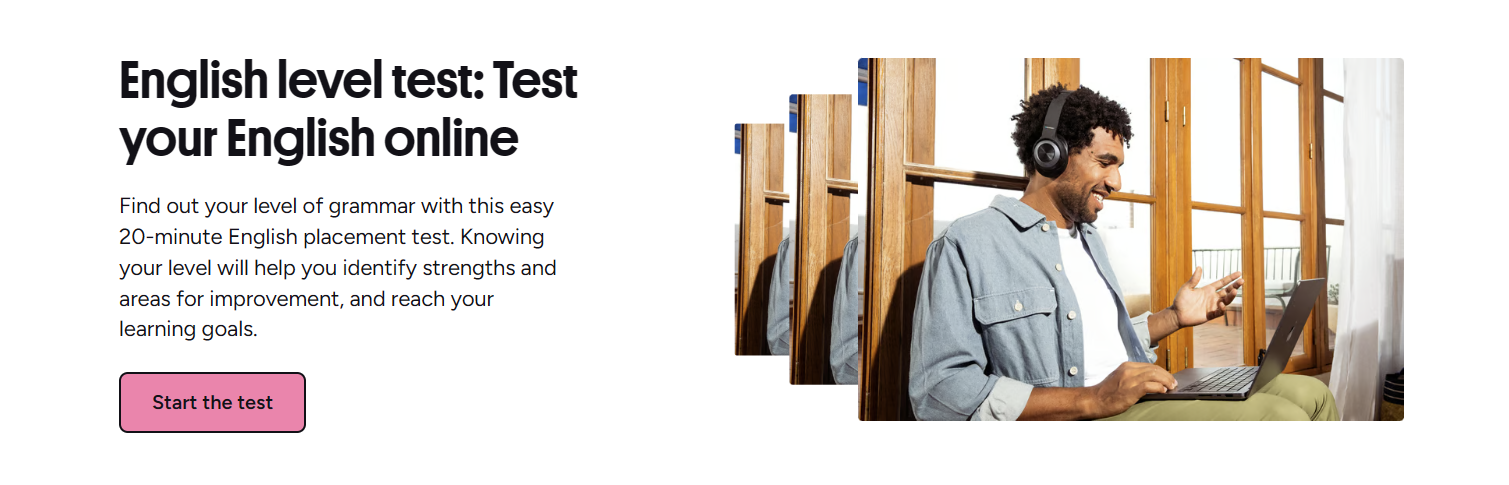
The assessment layer includes the Preply English Level Test and the more specific English Grammar Test. The level test evaluates overall proficiency across reading, listening, grammar, and vocabulary, placing you on the CEFR scale from A1 to C2. The grammar test zooms in on structural knowledge — identifying errors, choosing correct forms, and completing sentences. Both tests can be retaken periodically to measure improvement, and results help tutors tailor lesson plans to your current level.
Beyond these three layers, the platform includes a vocabulary builder, speaking practice prompts, writing exercises, and a progress dashboard that aggregates lesson notes, test scores, and tutor feedback. The mobile app mirrors most desktop features, so you can review flashcards or complete course modules between live sessions. For learners who want grammar practice without a tutor every time, the self-study materials provide a reasonable supplement, though they lack the corrective feedback that makes live tutoring valuable.
Finding the Right Grammar Tutor
The tutor marketplace is where most grammar progress happens, but the sheer number of profiles can be overwhelming. Preply lists thousands of English tutors, and many mark grammar as a teaching specialty. The filter system lets you narrow by price range, availability, native speaker status, and additional languages spoken. A more useful filter for grammar learners is the "specialties" tag — look for tutors who explicitly list grammar, exam preparation, academic writing, or business English among their focus areas.
Reading reviews requires some interpretation. A tutor with hundreds of five-star reviews for "great conversation practice" may not be the best choice if you need systematic grammar correction. Look for reviews that mention specific grammar improvements: "helped me master conditionals," "corrected my article usage," or "prepared me for the IELTS writing section." Video introductions also reveal teaching style — some tutors explain rules clearly with examples, others prefer discovery-based approaches where you figure out patterns through guided practice.
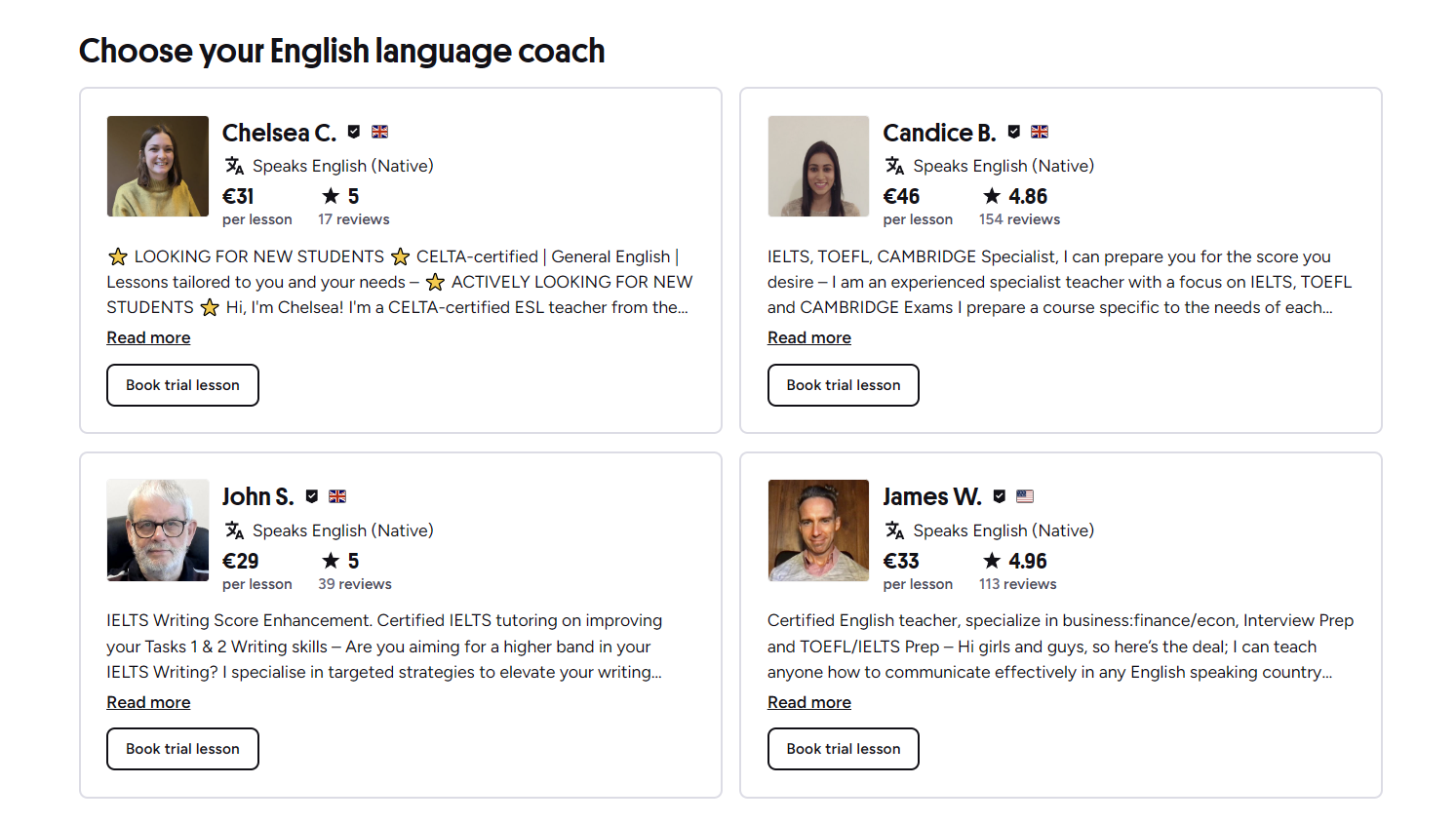
Trial lessons are the only reliable way to test fit. Preply offers discounted or free trial lessons with most tutors (typically 25 or 50 minutes). Use the trial to assess three things: whether the tutor identifies your grammar gaps quickly, whether their explanations make sense to you, and whether they assign relevant homework or practice between sessions. A good grammar tutor will give you a rough roadmap after the first lesson — not a rigid curriculum, but a sense of which topics need work and in what order.
Preply English Grammar Courses Structure
Preply's grammar courses follow a modular design. Each course targets a CEFR level range — for example, A2-B1 or B2-C1 — and contains 8 to 15 modules. A typical module includes a short video lesson (5-10 minutes), interactive exercises with immediate feedback, a downloadable PDF summary, and a quiz. Topics progress logically: present tenses before perfect tenses, simple sentences before complex clauses, common patterns before exceptions.
The course library covers the standard grammar syllabus you would find in any reputable ESL textbook: verb forms (simple, continuous, perfect, perfect continuous), future forms, conditionals, passive voice, reported speech, modal verbs, relative clauses, gerunds and infinitives, articles, prepositions, and sentence variety. There are also specialized modules for business grammar, academic writing conventions, and common error patterns for speakers of specific native languages (Spanish, Russian, Arabic, Japanese, and others).
Scroll horizontally to see all columns
| CEFR Range | Core Topics | Module Count |
|---|---|---|
| A1-A2 | Present simple/continuous, past simple, basic future, imperatives, basic questions | 10-12 |
| A2-B1 | Present perfect, past continuous, future forms, modals, comparatives, basic conditionals | 12-14 |
| B1-B2 | Perfect tenses, passive, reported speech, conditionals 2/3, relative clauses, gerunds/infinitives | 14-16 |
| B2-C1 | Advanced conditionals, inversion, cleft sentences, subjunctive, nuance in modal use, academic style | 10-12 |
Courses can be used in two ways. Some learners work through them independently, completing exercises and reviewing explanations on their own schedule. Others ask their tutor to follow the course structure, using lesson time for clarification, speaking practice, and personalized error correction. The second approach tends to produce faster results because the tutor catches mistakes the automated exercises miss — especially in writing and speaking where grammar interacts with vocabulary and pronunciation.
Using the Preply English Level Test
The level test serves as both a placement tool and a progress benchmark. It takes 20-30 minutes and adapts to your responses — questions get harder or easier based on performance. The grammar section presents multiple-choice questions, error identification, and sentence completion tasks. At the end, you receive a CEFR level overall and a breakdown by skill: grammar, vocabulary, reading, listening. The grammar subscore is particularly useful for deciding which course level to start with or what to ask a tutor to prioritize.
Retaking the test every 8-12 weeks gives a rough measure of improvement, though the test has limitations. It assesses receptive knowledge (recognizing correct forms) more than productive ability (using grammar correctly in speech and writing). A learner might score B2 on the test but still make basic article errors in conversation. Tutors often supplement the test with their own diagnostic during the first lesson — a short writing sample or structured speaking task reveals productive gaps the multiple-choice format cannot.
The level test tells you what you recognize. A tutor shows you what you actually produce.
Grammar Practice Tools Outside Lessons
Preply's self-study section includes several practice formats that support grammar retention between lessons. The vocabulary builder uses spaced repetition flashcards, but you can create custom decks for grammar patterns — irregular verbs, preposition collocations, phrasal verbs, or sentence frames for specific structures. The writing practice tool provides prompts (describe a graph, write a formal email, argue an opinion) with a basic grammar checker that flags common errors. It does not replace tutor feedback, but it helps you notice recurring mistakes before a lesson.
Speaking practice prompts appear as timed recording tasks. You see a question, prepare for 30 seconds, then record a 1-2 minute response. The system does not grade grammar automatically, but you can share recordings with your tutor for asynchronous feedback. Some tutors use this to assign speaking homework focused on a target structure — for example, "record yourself explaining a past event using past perfect and past simple correctly."
- Custom flashcard decks for verb forms, prepositions, phrasal verbs
- Writing prompts with automated error highlighting
- Speaking recording tasks for tutor review
- Course module quizzes repeatable for mastery
- Progress dashboard showing test trends and lesson completion
The mobile app makes these tools accessible during commutes or breaks. Flashcard review works well in short sessions. Writing and speaking tasks require more focus, so they suit longer sittings. The app syncs with the desktop version — progress, bookmarks, and tutor messages stay consistent across devices. Offline mode lets you download course videos and flashcards, which is helpful if your internet connection is unreliable.
Business English Grammar Options
Preply for Business adds a layer of administrative features — team management, usage analytics, centralized billing — but the grammar content itself overlaps with the consumer side. Business English tutors filter the same marketplace, and the course library includes modules on formal correspondence, report writing, meeting language, negotiation phrases, and presentation structure. The grammar focus shifts from general accuracy to register-appropriate structures: passive voice for reports, modal verbs for diplomacy, conditional forms for hypothetical scenarios, and cleft sentences for emphasis.
Companies typically purchase seat licenses and assign learners to tutors or let employees choose. Progress reports aggregate at the team level, showing average level test improvement, lesson attendance, and course completion rates. For individual professionals paying out of pocket, the business label matters less than finding a tutor with corporate training experience. Many tutors who teach business English also prepare students for BEC, TOEIC, or Linguaskill exams, which have specific grammar requirements.
Pricing and Subscription Management
Preply operates on a subscription model. You purchase a package of lesson hours per month (4, 8, 12, or more), which determines your per-lesson cost — larger packages lower the effective hourly rate. Tutors set their own base prices, so the same package costs different amounts depending on which tutor you choose. Unused hours roll over for one month, then expire. You can pause a subscription, but the pause duration counts toward your billing cycle.
Trial lessons are priced separately — usually 50% off the tutor's regular rate or a flat promotional price. After the trial, you must subscribe to continue with that tutor. Switching tutors mid-subscription is allowed; your remaining hours apply to the new tutor's rate, which may change how many lessons you can afford. The platform shows a cost estimator when you browse tutors while logged into a subscription.
Scroll horizontally to see all columns
| Monthly Hours | Typical Per-Lesson Cost Range | Best For |
|---|---|---|
| 4 hours | $15-35/hour | Casual maintenance, one lesson per week |
| 8 hours | $12-30/hour | Steady progress, two lessons per week |
| 12+ hours | $10-25/hour | Intensive preparation, exam deadlines |
Promo codes for new users typically offer 20-50% off the first month or a free trial lesson. These change frequently. The platform also runs seasonal promotions — back-to-school, New Year, Black Friday. If you plan to start, checking the promotions page or searching for a current code can reduce the initial cost. Refunds for unused hours are possible within 7 days of purchase if you have not used any lessons, but after that the policy becomes restrictive.
Student Progress Tracking
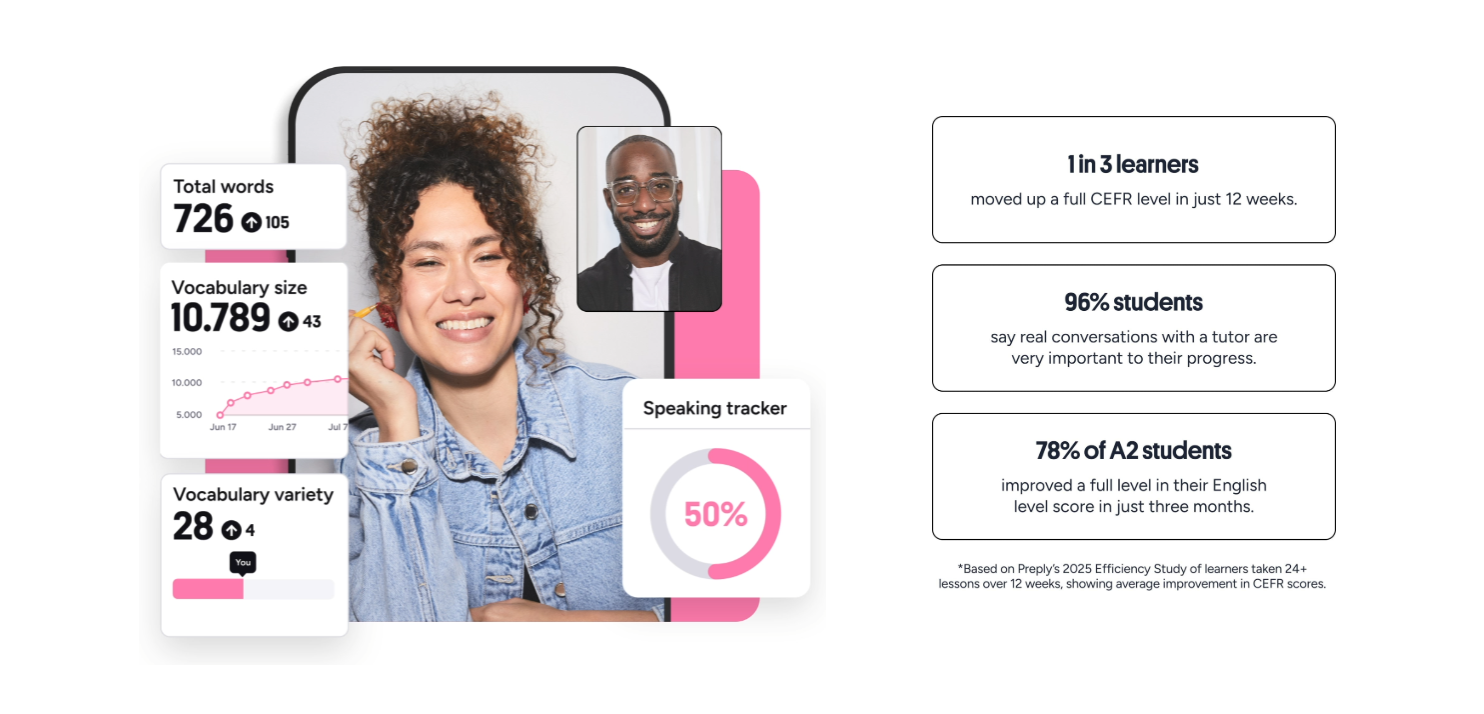
The progress dashboard aggregates data from three sources: level test results, course completion, and tutor lesson notes. After each lesson, tutors can log topics covered, homework assigned, and specific grammar points addressed. These notes build a timeline that shows which structures you have worked on and how recently. The dashboard also tracks vocabulary growth (words learned via flashcards) and speaking practice minutes.
For grammar specifically, the most useful metric is the grammar subscore trend from repeated level tests. A rising line suggests your receptive knowledge is improving. However, the dashboard does not automatically track productive accuracy — whether you actually use the grammar correctly in speaking and writing. Some tutors maintain their own error logs or use external tools (Google Docs, Notion) to document recurring mistakes and mastery milestones. Ask your tutor during the trial whether they keep such records; it makes a noticeable difference over months of study.
Dashboard metrics show exposure. Tutor notes show mastery. You need both.
Pros and Limitations
The main strength of Preply for grammar learning is flexibility. You can combine structured courses with targeted tutor support, adjust intensity week to week, and switch tutors if the fit is wrong. The marketplace model means you can find specialists for niche needs — legal English grammar, medical writing, aviation English, academic publishing conventions. The level test and course library provide a backbone so lessons do not drift into aimless chat.
The limitations are real. Quality varies significantly between tutors because Preply does not standardize teaching methodology. A tutor may call themselves a grammar expert but rely on outdated rules or oversimplified explanations. The platform's review system rewards friendliness and punctuality as much as pedagogical skill. Self-study materials, while decent, lack the depth of dedicated grammar platforms like Cambridge's Grammar in Use series or the British Council's LearnEnglish site. The subscription model pressures you to use hours even when life gets busy, and the rollover policy is strict.
- Tutor quality inconsistent — no standardized certification check
- Subscription model penalizes irregular schedules
- Self-study materials supplement but cannot replace a good textbook
- Level test measures recognition, not production
- No built-in spaced repetition for grammar patterns (only vocabulary)
- Business features add cost without adding grammar content
Comparing Preply to Alternatives
If your primary goal is grammar mastery, three alternatives deserve consideration. Dedicated grammar platforms (Cambridge, Oxford, British Council) offer deeper, more systematic self-study content for a fraction of the cost — but no live feedback. Language schools (online or physical) provide structured curricula and certified teachers, usually at higher prices and fixed schedules. AI-powered tools (Grammarly, LanguageTool, ChatGPT) give instant correction on writing but cannot explain why a rule applies or guide speaking practice. Preply sits in the middle: more structure than a language exchange, more flexibility than a school, more human interaction than software.
Scroll horizontally to see all columns
| Option | Structure | Live Feedback | Cost Range | Best For |
|---|---|---|---|---|
| Preply | Moderate (courses + tutor) | Yes (tutor) | $40-300/month | Personalized guidance + flexibility |
| Grammar textbooks/sites | High (fixed syllabus) | No | $0-50 one-time | Self-disciplined learners |
| Online language school | High (fixed curriculum) | Yes (teacher) | $150-500/month | Certificate seekers, rigid schedule OK |
| AI writing tools | Low (reactive only) | Partial (writing only) | $0-30/month | Writing accuracy checks |
Getting Started: Practical First Steps
If you decide to try Preply for grammar, start with the free level test before booking any trials. The result gives you a baseline and helps you filter tutors by appropriate level — some tutors specialize in beginners, others in advanced refinement. Next, browse the grammar course library (accessible without payment) to see which topics align with your gaps. Pick two or three tutors whose profiles match your needs, watch their intro videos, and book trial lessons with each. Space the trials a day or two apart so you can compare.
During trials, bring a writing sample or a list of specific grammar questions. A tutor who asks to see your writing before diagnosing is usually more systematic than one who jumps straight to conversation. After trials, choose the tutor whose explanations clicked and whose homework style matches how you actually study. Start with the smallest subscription (4 hours) for the first month. You can upgrade later if the rhythm works.
Common Questions About Preply Grammar Learning
Learners often ask whether native speakers make better grammar tutors. Not necessarily. Non-native tutors who have learned English formally often explain rules more clearly because they studied the same structures explicitly. Native speakers may rely on intuition — "it just sounds wrong" — which helps with fluency but not with understanding the underlying system. The best tutor is one who can articulate the rule, give clear examples, and anticipate errors typical for your native language.
Another frequent question: can you prepare for IELTS or TOEFL grammar solely on Preply? Yes, if you choose a tutor with exam-specific experience. The platform has many tutors who specialize in IELTS writing and speaking criteria, which include grammatical range and accuracy as explicit scoring categories. They know the band descriptors and can target the structures that move you from 6.0 to 7.0. However, you still need to practice full mock tests under timed conditions, which Preply does not provide — you will need official practice materials for that.
Some wonder whether the grammar courses alone are enough without a tutor. For receptive knowledge — recognizing correct forms in reading and listening — the courses work well if you are disciplined. For productive mastery — using grammar accurately in speaking and writing — most learners need corrective feedback. The courses' automated exercises accept only predefined answers. They cannot evaluate whether your original sentence uses the target structure naturally. A tutor fills that gap.
Frequently Asked Questions
Does Preply have a dedicated English grammar guide or textbook?
No. Preply does not publish a single grammar guide. Instead, it offers a combination of live tutors, structured grammar courses, level tests, and practice tools that together cover grammar comprehensively.
How do I find a tutor who specializes in grammar on Preply?
Use the specialty filters for grammar, exam preparation, academic writing, or business English. Read reviews for mentions of specific grammar improvements. Watch tutor intro videos for explanation style. Book trial lessons to test fit.
What does the Preply English Grammar Test measure?
The grammar test assesses receptive knowledge — recognizing correct forms, identifying errors, and completing sentences. It does not measure productive ability (using grammar correctly in speech and writing).
Can I use Preply grammar courses without a tutor?
Yes. The courses include video lessons, interactive exercises, PDFs, and quizzes you can complete independently. However, they lack corrective feedback on your own writing and speaking.
How often should I retake the Preply level test?
Every 8-12 weeks is reasonable. More frequent retakes show noise rather than progress. The grammar subscore trend is the most useful metric for tracking structural improvement.
Are native English speakers better grammar tutors?
Not necessarily. Non-native tutors with formal training often explain rules more systematically. Native speakers may rely on intuition. The best tutor articulates rules clearly and anticipates errors from your native language.
Can Preply prepare me for IELTS or TOEFL grammar requirements?
Yes, if you choose a tutor with exam-specific experience. They can target the grammatical range and accuracy criteria. You still need official mock tests for timed practice, which Preply does not provide.
What happens to unused lesson hours in my subscription?
Unused hours roll over for one month, then expire. You can pause a subscription, but the pause duration counts toward your billing cycle.
Final Assessment of Preply English Grammar Guide
Preply functions as a grammar guide only in the broad sense — it assembles the components (tutors, courses, tests, practice tools) that a motivated learner can combine into a personal grammar curriculum. It does not hand you a finished map. The platform works best when you treat it as a marketplace for expertise rather than a course you enroll in. That means doing the work to vet tutors, articulating your specific grammar goals, and using the self-study materials consistently between lessons. If you want a linear, turnkey program with guaranteed outcomes, a traditional course or textbook series serves you better. If you value flexibility, personalized feedback, and the ability to pivot when your needs change, Preply's toolkit is worth the effort to assemble.