
Language Learning
Preply Language Tests: Placement, Level Checks, and Progress Tracking
A practical guide to Preply's English, Spanish, German, and other language assessments.
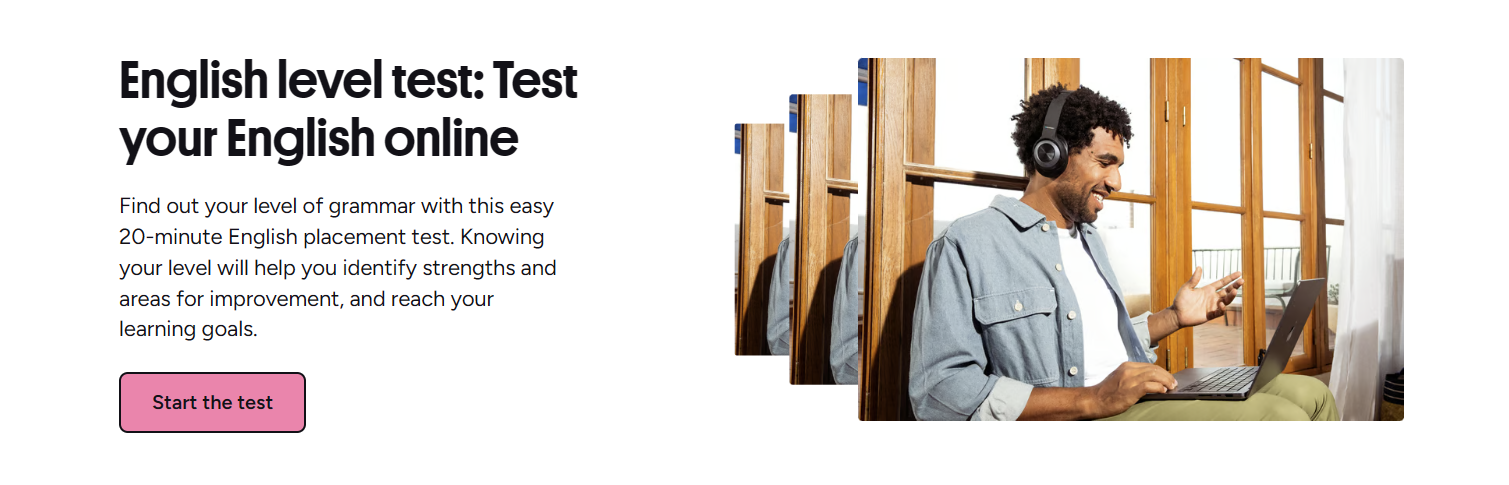
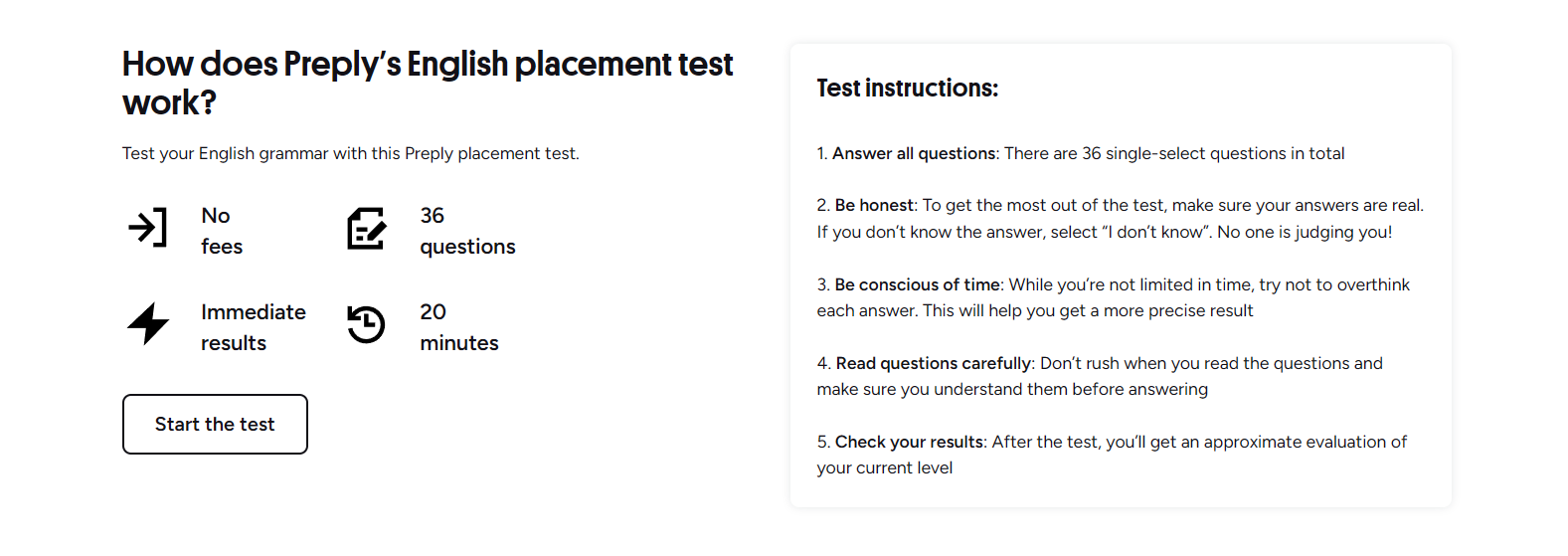
Preply offers a suite of language tests designed to give learners a quick snapshot of their current ability. The tests are free, take roughly 20 minutes, and cover English, Spanish, German, French, Italian, and several other languages. Results map to the CEFR scale from A1 to C2, which helps the platform suggest tutors who match your level and goals.
The placement test is usually the first thing a new student sees after signing up. It adapts as you answer, so the difficulty shifts based on performance. That adaptive design keeps the test short while still producing a reliable level estimate. You can retake it later if you feel the result no longer reflects your ability.
How Preply Placement Tests Work
Each test starts with a few demographic questions — native language, learning goals, preferred lesson frequency — then moves into the adaptive section. Questions mix multiple-choice grammar, vocabulary gap-fills, reading comprehension, and a short listening segment. The algorithm weights recent answers more heavily, so a strong finish can nudge the final level up a notch.
- Adaptive difficulty adjusts in real time
- Covers grammar, vocabulary, reading, and listening
- Takes 15–25 minutes depending on language
- Instant CEFR result with sub-level breakdown
- Option to share result with prospective tutors
The English version is the most polished because it has the largest question bank. Spanish and German tests are solid but have fewer items, so the margin of error is slightly wider. For less common languages the test may fall back to a shorter fixed-form version.
English Level Test Details
Preply's English level test is the flagship assessment. It draws from a pool of several thousand items tagged by CEFR level and skill area. The listening portion uses short audio clips with native speakers from the US, UK, Australia, and other varieties. Reading texts range from everyday emails to short news excerpts.
After finishing, you see an overall level like B1.2 plus a skill breakdown: grammar, vocabulary, reading, listening. That granularity helps tutors plan the first lesson. The platform also stores the result so you can compare it with a retake after a month of lessons.
Vocabulary and Grammar Components
Vocabulary questions test both breadth and depth. Breadth items check whether you recognize high-frequency words; depth items ask for collocations, register awareness, or nuance differences. Grammar items target structures that typically appear at each CEFR band — present perfect at B1, conditionals at B2, inversion at C1, and so on.
Scroll horizontally to see all columns
| Skill | Approx. Weight | Question Types |
|---|---|---|
| Grammar | 30% | Multiple choice, error correction |
| Vocabulary | 30% | Gap fill, matching, collocation |
| Reading | 20% | Short texts, comprehension questions |
| Listening | 20% | Audio clips, multiple choice |
The weighting is not published officially; the table above reflects community observations and tutor feedback. Preply does not disclose the exact algorithm, so treat the numbers as indicative.
Spanish and German Placement Tests
The Spanish test follows the same adaptive model but leans more heavily on verb morphology — subjunctive, past tense distinctions, ser vs. estar. German tests case endings, verb position, and separable prefixes. Both include listening with standard European accents; regional varieties like Mexican Spanish or Swiss German are not separately tested.
If you are preparing for a specific exam — DELE, Goethe-Zertifikat, IELTS — the placement test is not a substitute for a mock exam. It measures general proficiency, not exam-specific skills. Tutors often use the result as a starting point and then run their own diagnostic in the first lesson.
Using Test Results to Find a Tutor
When you browse tutors, the platform highlights those who teach your level. A B1 learner sees tutors tagged B1–C2; a C1 learner sees C1–C2 specialists. You can also filter by specialty — business, exam prep, conversation — and the level badge stays visible on each profile.
Some tutors ask you to retake the test if they suspect the score is off. That's normal — adaptive tests can misplace learners who guess well or have test anxiety. A quick conversation usually clarifies things faster than a second test.
Tracking Progress Over Time
Preply encourages retaking the placement test every 4–6 weeks. The dashboard plots your CEFR history on a simple line chart. Movement of 0.5 sub-levels per month is typical for students taking two lessons a week plus self-study. Faster jumps often mean the first test underestimated you.
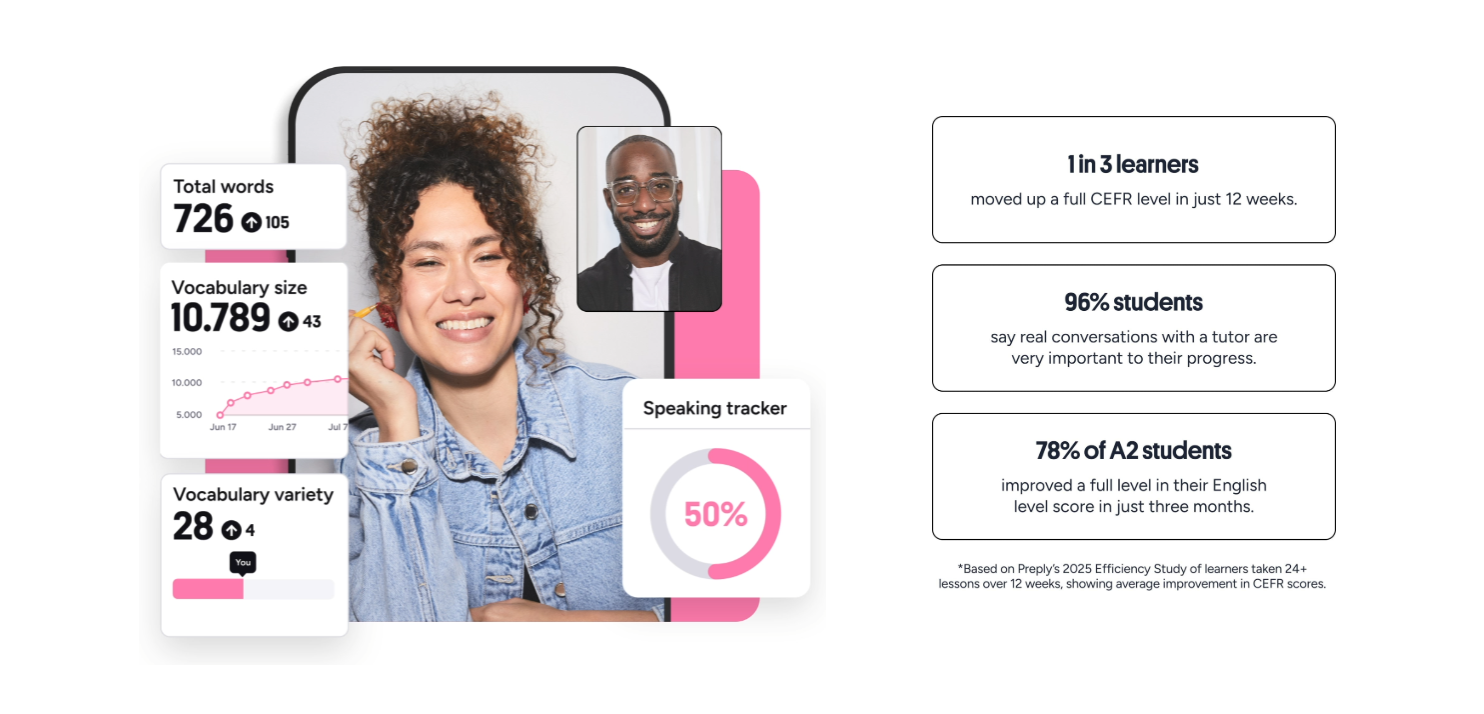
The chart also flags skill-specific trends. If grammar rises but listening stalls, you and your tutor can adjust the lesson mix. That data-driven tweak is one of the platform's stronger features compared to purely conversational marketplaces.
The progress chart turns vague feelings of improvement into something you can point at during a lesson review.
Retakes are free and unlimited. The question pool is large enough that you rarely see identical items, though familiar formats appear. Preply does not publish reliability coefficients, so treat the chart as a rough guide rather than a certified measurement.
Limitations and Considerations
No 20-minute adaptive test can replace a full proficiency exam. Speaking and writing are not assessed. The listening section uses clear, slow speech — real-world speed and noise are absent. Cultural nuance, pragmatics, and extended discourse are also outside the scope.
- No speaking or writing evaluation
- Listening audio is slower than natural conversation
- Regional varieties not distinguished
- No official certification or certificate issued
- Results not accepted for visa or university admission
For high-stakes needs — immigration, university entry, professional licensing — you still need IELTS, TOEFL, DELE, Goethe, or similar. Preply's test is a placement tool, not a credential.
Frequently Asked Questions
Is the Preply placement test free?
Yes, all language tests on Preply are free for registered users.
Can I retake the test if I think the result is wrong?
You can retake it anytime. The platform recommends waiting a few weeks between attempts unless a tutor suggests otherwise.
Does the test give a certificate?
No. It provides a CEFR level estimate for internal tutor matching only.
Which languages have placement tests?
English, Spanish, German, French, Italian, Portuguese, Russian, Japanese, Korean, Chinese, Arabic, and several others. The list grows over time.
How accurate is the adaptive algorithm?
It correlates reasonably with standard exams for reading, grammar, and vocabulary. Speaking and writing are not measured, so the overall level may differ from a full four-skill test.
Can tutors see my test result automatically?
Only if you share it. The result is private by default; you can send the summary link when messaging a tutor.
Does the test adapt to business or academic English?
The general test covers everyday and workplace topics. Specialized business or academic modules are not separate; tutors handle that in lessons.
Final Assessment of Preply Language Tests
Preply's language tests do what they promise: a fast, free, adaptive level check that feeds directly into tutor matching. They are not a substitute for certified exams, and they omit speaking and writing entirely. For a marketplace that lives on matching students with tutors, that trade-off makes sense. Use the test to start, retake it to track trends, and rely on your tutor for the skills the test cannot measure.