
Language Learning
Preply English Pronunciation Courses: Improve Your Accent with
A detailed guide to Preply's pronunciation training, tutor selection, and learning tools for better English speaking.
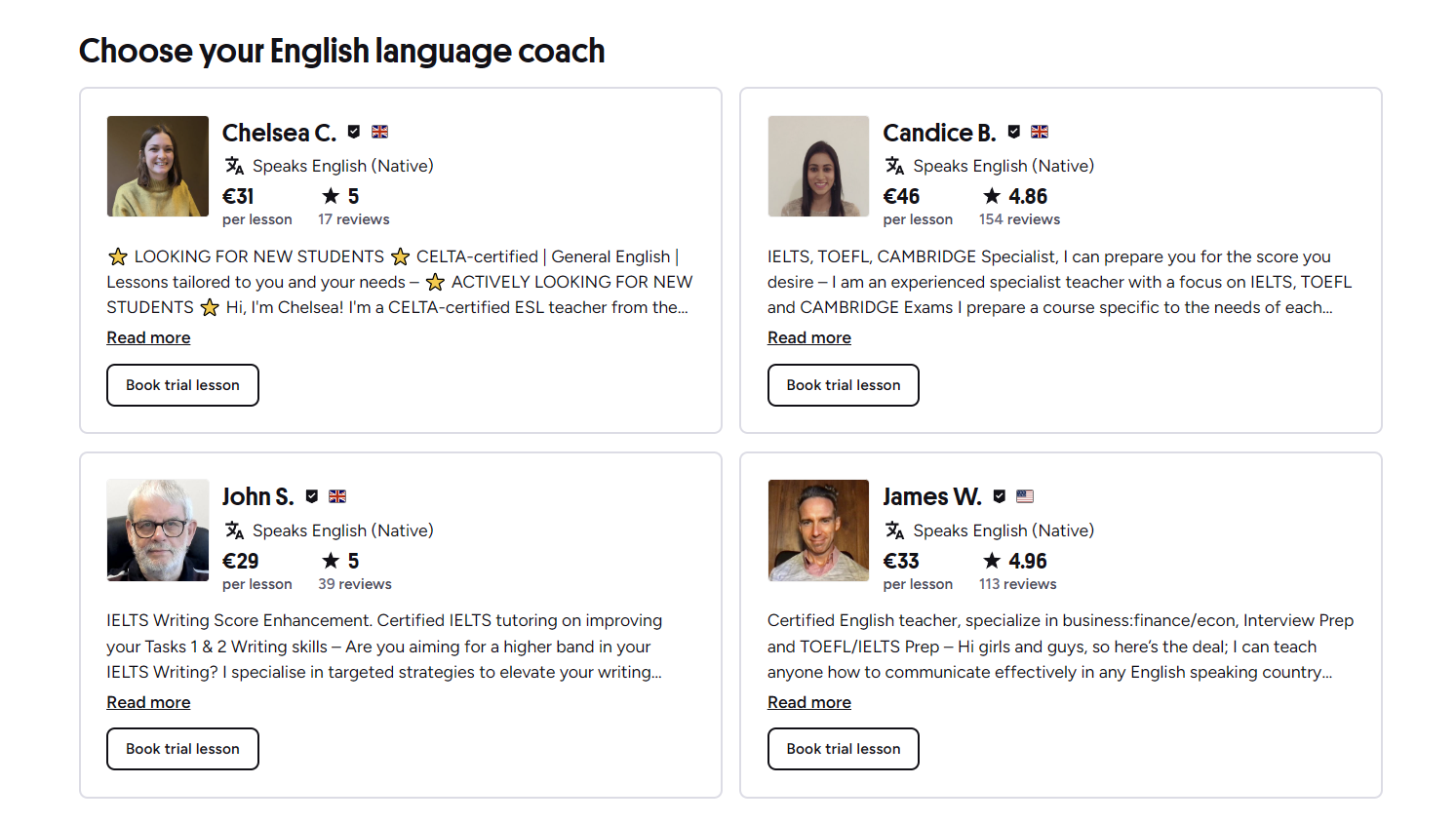
English pronunciation remains one of the most persistent challenges for language learners worldwide. Even advanced students who master grammar and vocabulary often struggle with sounds that don't exist in their native language, rhythm patterns that feel unnatural, or intonation that changes meaning in ways textbooks rarely explain. Preply addresses this gap by connecting learners with tutors who specialize in pronunciation coaching, offering one-on-one sessions tailored to individual speech patterns and goals.
Contents
- 1. Why Pronunciation Matters in English Learning
- 2. How Preply Structures Its Pronunciation Courses
- 3. Finding the Right Tutor for Accent Training
- 4. Lesson Formats and Teaching Methods
- 4.1. IPA-Based Instruction
- 4.2. Minimal Pair Drills
- 4.3. Prosody and Connected Speech
- 5. Using the Preply Platform for Pronunciation Practice
- 6. Tracking Progress and Measuring Improvement
- 7. Pricing and Subscription Options
- 8. Common Challenges and How Tutors Address Them
- 8.1. Vowel System Gaps
- 8.2. Consonant Clusters and Final Consonants
- 8.3. Suprasegmental Transfer
- 9. Student Experiences and Outcomes
- 10. Comparing Preply with Other Pronunciation Resources
- 11. Tips for Getting the Most from Your Lessons
- 12. Preply English Pronunciation Courses: Final Assessment
The platform hosts thousands of English tutors, many of whom list pronunciation, accent reduction, or speaking confidence as primary teaching focuses. Unlike generic language apps that rely on automated speech recognition, Preply's model centers on human feedback. A tutor can hear the subtle difference between a learner's attempt at the 'th' sound and the target production, then demonstrate tongue placement, airflow, and voicing in real time. That immediate, personalized correction is difficult to replicate with software alone.
Courses on Preply aren't pre-packaged curricula in the traditional sense. Instead, each tutor designs a learning plan based on the student's native language, current level, professional needs, and personal preferences. Some tutors follow established methodologies like the International Phonetic Alphabet (IPA) for precise sound mapping, while others use conversational drills, minimal pair exercises, or tongue twisters to build muscle memory. The flexibility means a business professional preparing for presentations gets different material than an actor working on a specific dialect.
Why Pronunciation Matters in English Learning
Clear pronunciation affects more than aesthetics. In professional settings, heavy accents can lead to misunderstandings during negotiations, presentations, or client calls. Research consistently shows that listeners make unconscious judgments about competence, credibility, and even intelligence based on speech clarity. For non-native speakers in English-dominant workplaces, improving pronunciation often correlates with faster career advancement and stronger professional networks.
Socially, pronunciation confidence encourages participation. Learners who worry about being misunderstood may avoid speaking in meetings, social gatherings, or even everyday transactions like ordering coffee. This avoidance creates a feedback loop: less practice leads to slower improvement, which reinforces anxiety. Breaking that cycle requires a safe environment where mistakes are expected and corrected constructively — exactly what a one-on-one tutor provides.
English presents particular difficulties because its spelling-to-sound correspondence is notoriously inconsistent. Words like 'though,' 'through,' 'tough,' and 'thought' share similar spellings but vastly different vowel sounds. Stress patterns shift meaning: 'record' as a noun versus 'record' as a verb. Intonation turns statements into questions or signals sarcasm. These features rarely receive systematic attention in general English classes, leaving gaps that specialized pronunciation training fills.
How Preply Structures Its Pronunciation Courses
Preply doesn't impose a single curriculum. When you search for pronunciation tutors, you'll see profiles highlighting different approaches: some offer 'American accent training,' others 'British RP coaching,' and many 'general English pronunciation.' Each tutor sets their own methodology, materials, and pacing. During a trial lesson — typically 25 or 50 minutes at a reduced rate — the tutor assesses your speech, identifies priority areas, and proposes a plan.
A typical pronunciation roadmap might start with a diagnostic reading passage or free conversation to catalog recurring errors. The tutor then prioritizes sounds that most affect intelligibility for your specific language background. For example, Spanish speakers often need work on vowel distinctions like 'ship' versus 'sheep,' while Mandarin speakers may focus on final consonants and consonant clusters. Japanese speakers frequently target 'r' versus 'l' and 'th' sounds. This language-specific targeting accelerates progress compared to generic drills.
Lessons usually blend explanation, demonstration, guided practice, and homework. A tutor might spend ten minutes explaining the mechanics of the voiced 'th' (/ð/) using a diagram or hand gesture, then have you repeat minimal pairs like 'then' versus 'den,' 'breathe' versus 'breed.' They'll correct in real time, often exaggerating the contrast. Homework could include recording yourself reading a paragraph, practicing tongue twisters, or using a pronunciation app for daily drills between sessions.
Many tutors incorporate technology. Some use spectrogram software to visualize your vowel formants against native speaker benchmarks. Others assign exercises from platforms like ELSA Speak or Speechling for automated daily practice, then review recordings during lessons. The combination of human expertise and tech-assisted repetition creates a feedback loop that's more effective than either alone.
Finding the Right Tutor for Accent Training
With thousands of tutors, filtering effectively saves time and money. Start by using the 'pronunciation' or 'accent reduction' specialty tags in Preply's search. Then examine profiles for relevant credentials: certifications in TESOL, CELTA, or specific pronunciation methodologies like Compton P-ESL or the Color Vowel Chart. Some tutors hold linguistics degrees or have speech-language pathology backgrounds — valuable for complex articulation issues.
Watch introduction videos. A tutor's own speech clarity, teaching style, and personality come through in these short clips. Look for someone who speaks at a comfortable pace, explains concepts simply, and demonstrates the accent you want to acquire. If you're targeting General American, a tutor with a strong regional British accent might not be the best model, even if they're an excellent teacher. Conversely, if you need British RP for academic work in the UK, prioritize tutors who use and teach that variety.
- Filter by 'pronunciation' and 'accent reduction' specialties
- Check for relevant certifications (CELTA, TESOL, pronunciation-specific training)
- Watch introduction videos to assess teaching style and accent model
- Read reviews focusing on pronunciation progress, not just general satisfaction
- Consider tutors with experience teaching speakers of your native language
- Book trial lessons with 2-3 tutors before committing to a package
Reviews reveal patterns. Look for comments like 'fixed my 'th' sounds in three lessons' or 'helped me reduce my accent for job interviews.' Generic praise ('great teacher!') is less useful. Also note whether reviewers share your language background — a tutor who excels with French speakers might not know the specific interference patterns of Korean or Arabic learners.
Lesson Formats and Teaching Methods
Pronunciation lessons on Preply vary widely in structure. Understanding common formats helps you choose a tutor whose approach matches your learning style. The most effective methods combine explicit instruction — explaining how a sound is produced — with massive amounts of guided repetition and feedback.
IPA-Based Instruction
Tutors trained in the International Phonetic Alphabet use symbols to represent each English sound precisely. They teach you to read and write IPA transcriptions, which removes ambiguity from spelling. For example, the vowel in 'cat' is /æ/, in 'cut' it's /ʌ/, and in 'cart' (British) it's /ɑː/. Learning IPA takes initial effort but pays off by giving you a universal notation system for any word you encounter. This method suits analytical learners who want to understand the 'why' behind each correction.
Minimal Pair Drills
Minimal pairs are words that differ by only one sound: 'ship/sheep,' 'bet/bat,' 'coat/caught.' Drilling these trains your ear to hear the distinction and your mouth to produce it. Tutors often start with listening discrimination — you identify which word they said — then move to production. This approach builds phonemic awareness, the foundation of accurate pronunciation. It's especially effective for vowel distinctions that don't exist in your native language.
Prosody and Connected Speech
Individual sounds matter, but rhythm, stress, and intonation — collectively called prosody — often determine whether you sound natural. English is stress-timed: content words (nouns, verbs, adjectives) get emphasized while function words (articles, prepositions, auxiliaries) are reduced. Connected speech processes like linking ('turn off' → 'tur-noff'), elision ('next day' → 'nex-day'), and assimilation ('ten boys' → 'tem boys') make fluent speech sound fast and fluid. Tutors who address prosody early prevent the 'robotic' effect of perfect vowels delivered with flat intonation.
Scroll horizontally to see all columns
| Method | Focus | Best For |
|---|---|---|
| IPA-Based | Precise sound articulation | Analytical learners, advanced students |
| Minimal Pairs | Phonemic discrimination | Vowel/consonant confusion, all levels |
| Prosody Training | Rhythm, stress, intonation | Fluency, naturalness, presentation skills |
| Tongue Twisters | Articulatory agility | Muscle memory, specific sound clusters |
| Shadowing | Imitation of native models | Prosody, fluency, accent adoption |
Shadowing — repeating audio immediately after hearing it, mimicking speed, rhythm, and intonation — is a staple of many tutors' toolkits. Some use TED talks, podcasts, or news broadcasts as source material. Others record custom passages targeting your problem sounds. Shadowing builds the motor patterns for connected speech more effectively than isolated word drills.
The best pronunciation tutors don't just correct sounds. They teach you how to listen to yourself, so you become your own coach between lessons.
Using the Preply Platform for Pronunciation Practice
Preply's video classroom includes features that support pronunciation work. The shared whiteboard lets tutors draw mouth diagrams, write IPA symbols, or annotate texts with stress marks. Screen sharing allows real-time viewing of spectrograms, pronunciation apps, or YouTube videos of native speakers. The recording feature — available with student consent — lets you revisit lessons, compare your production to the tutor's model, and track progress over weeks.
The Preply mobile app (iOS and Android) syncs your schedule, lesson notes, and homework. You can practice vocabulary flashcards with audio, review tutor feedback, and even take lessons on your phone — though a desktop or tablet provides a larger view for mouth diagrams and shared materials. Push notifications remind you of upcoming sessions and assigned practice.
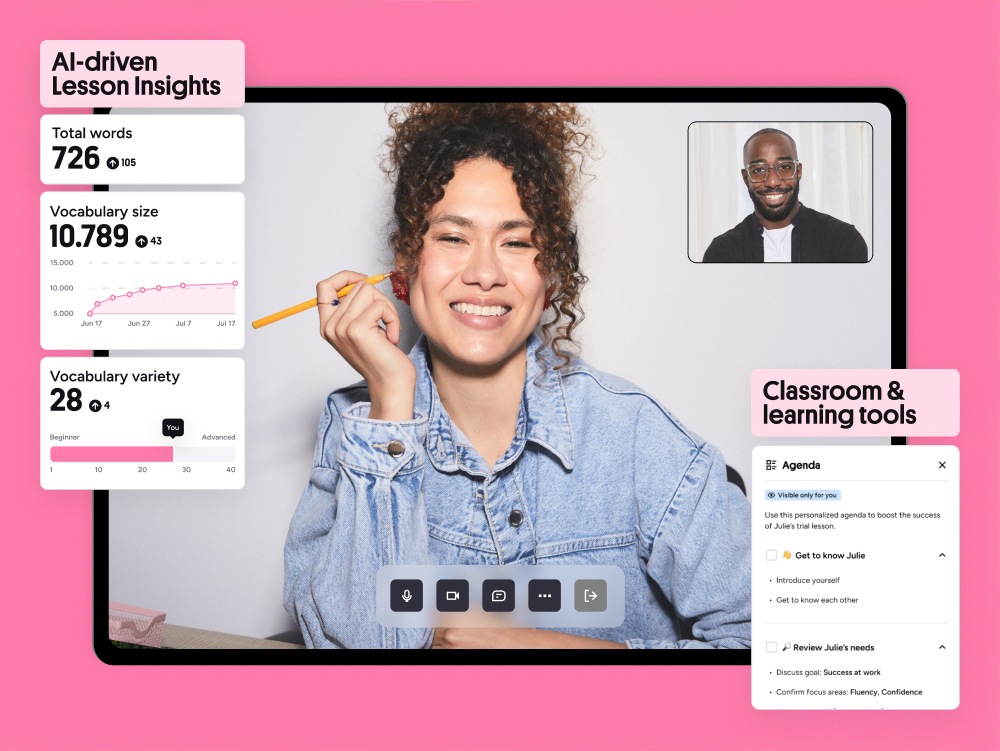
Preply's vocabulary tool lets tutors create custom word lists with audio recordings. For pronunciation students, this means a personalized library of your target words, minimal pairs, and practice sentences — all recorded by your tutor in your target accent. You can play them at reduced speed, loop difficult sections, and record yourself for comparison. This extends practice beyond the 50-minute lesson window.
Tracking Progress and Measuring Improvement
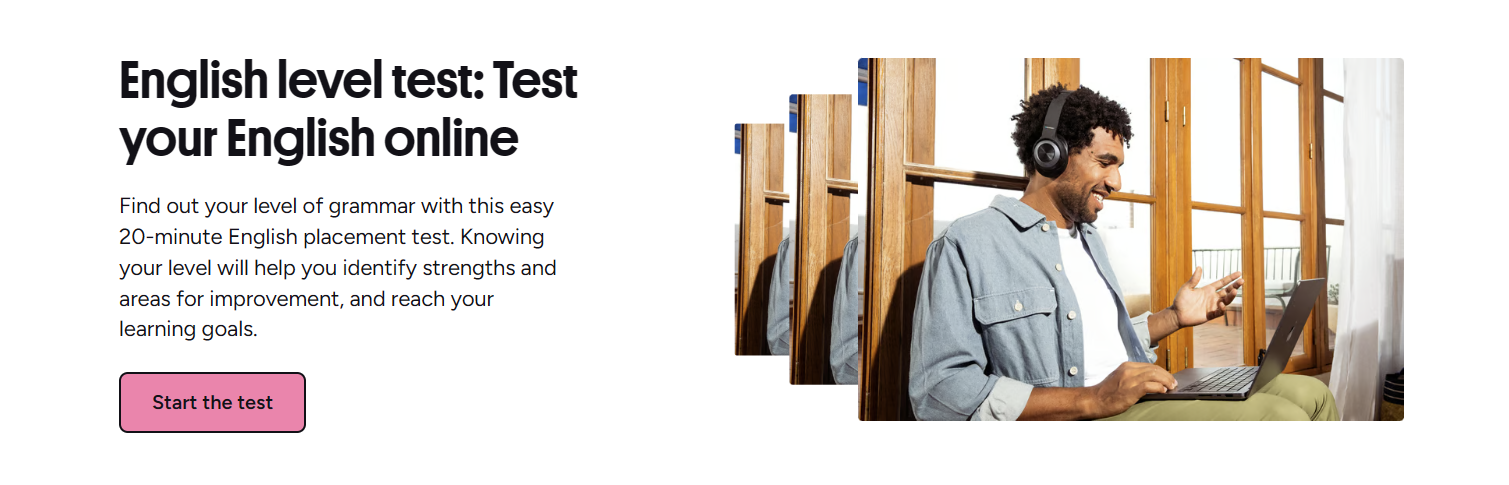
Pronunciation progress can feel invisible day to day. Preply provides several tracking mechanisms. Tutors often maintain a shared document listing target sounds, current status (not started, in progress, mastered), and example words. Some use Preply's built-in progress tracker, which logs lesson frequency, topics covered, and self-assessment ratings. The platform also offers an English level test that includes a speaking component — useful for baseline and periodic reassessment.
More concrete measures include recording the same passage monthly and comparing spectrograms, or having a native-speaking friend or colleague rate your intelligibility on a scale. Some tutors administer standardized assessments like the Pronunciation Intelligibility Scale or the Comprehensive Assessment of Spoken English. These provide objective benchmarks, though they're not required for most learners.
- Record a standard paragraph monthly; compare waveforms or spectrograms
- Ask a native speaker to rate intelligibility of a 2-minute speech sample
- Track specific sounds: from 'cannot produce' to 'consistent in words' to 'automatic in conversation'
- Use Preply's level test speaking section quarterly
- Note real-world wins: fewer 'could you repeat that?' moments, successful presentations, phone calls without clarification
Plateaus are normal. After initial gains on obvious errors, subtler issues — vowel quality in unstressed syllables, linking across word boundaries, intonation contours for politeness — take longer. A good tutor adjusts the plan, introduces new techniques, or shifts focus to prosody when segmental accuracy is solid. Communication about what's working and what feels stuck keeps the partnership effective.
Pricing and Subscription Options
Preply tutors set their own hourly rates, typically ranging from $10 to $40 for pronunciation specialists. Tutors with advanced certifications, linguistics degrees, or niche expertise (e.g., medical English pronunciation, legal English, acting dialects) charge at the higher end. The platform operates on a subscription model: you purchase a package of hours (4, 8, 12, or more per month) at a slight discount versus single lessons. Unused hours roll over for one month; after that, they expire.
Trial lessons cost 50-70% of the tutor's regular rate and last 25 or 50 minutes. This lets you test compatibility before committing. If a tutor isn't a fit, you can request a refund for the trial and try another. Preply's satisfaction guarantee covers the first lesson with any new tutor — if you're unsatisfied, you get a free replacement lesson with a different tutor.
Scroll horizontally to see all columns
| Tutor Tier | Hourly Rate Range | Typical Background |
|---|---|---|
| Newer tutors | $10-$18 | TEFL certified, building experience |
| Experienced | $18-$30 | CELTA/DELTA, 3+ years teaching pronunciation |
| Specialists | $30-$50+ | Linguistics MA, speech pathology, accent coaching certification |
For corporate clients, Preply Business offers team plans with centralized billing, progress dashboards, and dedicated account management. Companies can curate tutor pools for specific needs — like pronunciation for customer support teams or presentation skills for executives. Volume discounts apply. Individual learners sometimes find better value in 12-hour monthly packages if they commit to two lessons weekly, which is a common cadence for pronunciation work.
Common Challenges and How Tutors Address Them
Every language background brings predictable pronunciation interference patterns. Experienced tutors anticipate these and have ready-made drills. Understanding your likely challenges helps you evaluate whether a tutor truly knows your needs.
Vowel System Gaps
English has 14-20 vowel sounds depending on dialect; many languages have 5-7. Spanish speakers often merge /ɪ/ and /iː/ (ship/sheep), /æ/ and /ʌ/ (cat/cut). Japanese speakers may collapse /æ/, /ʌ/, and /ɑ/ into a single vowel. Arabic speakers frequently struggle with /p/ versus /b/ and /v/ versus /f/. Tutors use minimal pairs, visual aids (mouth diagrams, IPA), and tactile cues (hand on throat for voicing, mirror for lip shape) to establish new categories.
Consonant Clusters and Final Consonants
Languages with simple syllable structures (CV, CVC) make English clusters like 'strengths' (/strɛŋkθs/) or final consonants in 'find,' 'held,' 'jumped' difficult. Learners insert vowels ('fi-nid') or delete consonants ('fin'). Tutors break clusters into manageable chunks, practice with epenthetic vowels temporarily ('su-tre-ng-ths'), then gradually increase speed. Final consonant drills often use phrase contexts where the next word begins with a vowel, forcing linkage: 'find it' → 'fai-nit.'
Suprasegmental Transfer
Tone languages (Mandarin, Vietnamese, Thai) use pitch to distinguish word meaning. Speakers may apply lexical tone patterns to English sentences, creating unnatural intonation. Syllable-timed languages (French, Spanish, Korean) give equal weight to each syllable, producing a 'machine-gun' rhythm in stress-timed English. Tutors address this with metronome practice, tapping stress beats, and extensive shadowing of natural speech. The goal isn't to erase native prosody but to add English patterns as an alternative mode.
Your first language isn't a problem to fix. It's a system you've mastered. Pronunciation training adds a new system — it doesn't delete the old one.
Student Experiences and Outcomes
Outcomes vary based on starting level, practice consistency, tutor match, and goal specificity. Learners who attend twice weekly, complete assigned recordings, and actively use target sounds in daily life typically report noticeable intelligibility gains within 8-12 weeks. Those treating lessons as their only practice — no homework, no self-recording, no conscious application outside class — progress slower, often plateauing after initial easy fixes.
Success stories cluster around concrete milestones: passing a speaking exam (IELTS, TOEFL, OET), delivering a conference presentation without repetition requests, understanding fast native speech in meetings, or simply ordering coffee without the barista asking 'what?' A software engineer from Brazil reported that after 20 lessons focusing on vowel distinctions and word stress, his code review meetings became smoother because colleagues stopped asking him to repeat variable names. A Japanese marketing manager found that intonation work eliminated the 'are you asking or telling me?' confusion in her client calls.
Not every experience is positive. Common complaints include tutors who talk too much (reducing student speaking time), inconsistent feedback, or over-reliance on generic materials not tailored to the student's language background. Some learners find the subscription model pressure to use hours leads to scheduling lessons when they're too tired for effective practice. The platform's flexibility cuts both ways: it requires self-discipline to maintain momentum.
A recurring theme in reviews: the tutor relationship matters more than the platform. Learners who click with a tutor — shared humor, clear explanations, genuine interest in their progress — stay for months or years. Those who treat tutors as interchangeable service providers often cycle through several before settling or quitting. Investing time in trial lessons pays off.
Comparing Preply with Other Pronunciation Resources
Preply sits in a specific niche: live human coaching at scale. Alternatives include AI apps (ELSA Speak, Speechling, BoldVoice), group classes (local language schools, online academies), self-study books with audio (Ship or Sheep, English Pronunciation in Use), and specialized accent coaches charging $100+/hour. Each has trade-offs.
Scroll horizontally to see all columns
| Option | Cost Range | Personalization | Feedback Quality | Best For |
|---|---|---|---|---|
| Preply 1-on-1 | $10-$50/hr | High | Expert human, real-time | Targeted improvement, accountability |
| AI Apps | $5-$15/mo | Algorithmic | Automated, instant | Daily practice, supplement |
| Group Classes | $15-$30/hr | Low-Medium | Teacher divided among 5-15 | Budget, social motivation |
| Specialist Coaches | $80-$200+/hr | Very High | Expert, often certified | Professional needs, severe issues |
| Self-Study Books | $20-$50 one-time | None | None (self-monitored) | Motivated autodidacts, reference |
AI apps excel at high-repetition drills and instant feedback on isolated sounds. They're poor at prosody, connected speech, and contextual appropriateness. Many Preply tutors actually recommend specific apps for between-lesson practice — a hybrid approach. Group classes lack individual articulation correction; you might practice the wrong muscle pattern for weeks before the teacher notices. Specialist coaches offer deeper expertise but at 3-10x the cost, making them viable for specific high-stakes goals (acting roles, executive coaching) but overkill for general improvement.
Tips for Getting the Most from Your Lessons
Pronunciation changes require rewiring motor patterns established over decades. That takes frequency, not just duration. Three 30-minute sessions weekly beat one 90-minute session. If budget allows only one weekly lesson, supplement with daily 15-minute self-practice using tutor recordings or recommended apps.
- Schedule lessons when you're alert — morning for many, not after a 10-hour workday
- Use a quality headset with microphone; laptop mics miss high-frequency detail
- Record every lesson (with permission) and review within 24 hours
- Practice target sounds in front of a mirror; visual feedback aids motor learning
- Apply one focus sound per day in real conversations — even talking to yourself
- Keep a pronunciation journal: note words that tripped you up, tutor's correction, your practice plan
- Ask your tutor for 'homework' that fits your routine: commute listening, shower practice, bedtime recording
- Reassess goals quarterly: shift from segmentals to prosody, or from accuracy to fluency
Communicate openly with your tutor. If a drill feels useless, say so. If you're not hearing the difference they're describing, ask for another explanation or a different technique. Good tutors have multiple ways to teach the same concept. If they don't, that's information too.
The students who improve fastest aren't the most talented. They're the ones who treat pronunciation like physical therapy: daily reps, honest effort, patience with the boring basics.
Preply English Pronunciation Courses: Final Assessment
Preply's pronunciation offering is fundamentally a marketplace for expertise, not a standardized course. Its strength lies in matching learners with tutors who understand their specific language background, goals, and learning style. The platform tools — video classroom, recording, vocabulary builder, progress tracking — support the work but don't drive it. Results depend on tutor quality, student consistency, and the alignment between the two. For learners willing to invest time in finding the right tutor and commit to regular practice between sessions, Preply provides one of the most accessible paths to measurable pronunciation improvement. Those expecting a plug-and-play curriculum or automated magic will be disappointed. The platform delivers what you put into it: a flexible, human-centered environment for the slow, rewarding work of reshaping how you sound.
Frequently Asked Questions
How many Preply lessons do I need to improve my English pronunciation?
Most learners notice measurable improvement after 8-12 weekly sessions combined with daily practice. Significant accent modification typically takes 20-40 lessons over 3-6 months.
Can Preply tutors help with specific accents like American or British?
Yes. Many tutors specialize in General American, British RP, Australian, or other varieties. Filter by accent preference and confirm during the trial lesson.
Do I need to know IPA (International Phonetic Alphabet) to benefit from pronunciation lessons?
No. Some tutors use IPA; others use plain English descriptions, mouth diagrams, and imitation. Discuss your preference during the trial.
Are Preply pronunciation lessons suitable for complete beginners?
Beginners benefit more from general English foundations first. Pronunciation-focused lessons work best at A2 level and above, when you have enough vocabulary to practice target sounds in context.
What equipment do I need for effective online pronunciation lessons?
A stable internet connection, a headset with a good microphone (not just laptop built-in), and a quiet space. A webcam helps the tutor see your mouth position.
Can I switch tutors if the first one isn't a good fit?
Yes. Preply's satisfaction guarantee covers your first lesson with any tutor. You can request a free replacement lesson with a different tutor if unsatisfied.
How does Preply pronunciation training compare to AI apps like ELSA Speak?
AI apps provide unlimited automated drills and instant feedback on isolated sounds. Preply tutors give expert human feedback on connected speech, prosody, and personalized priorities. Many learners use both.