
Language Learning
Preply Proven Progress: How Learning Tracking Works
Understanding Preply's progress tracking features and how they help you achieve language goals.
Preply Proven Progress represents the platform's structured approach to measuring language improvement over time. Rather than relying on vague feelings of advancement, the system combines initial placement testing, ongoing lesson assessments, and periodic level checks to give learners concrete data about their development. This matters because language learning often feels invisible day to day, and having tangible evidence of growth helps maintain motivation when progress seems slow.
Contents
- 1. How the Progress Tracking System Works
- 2. Initial Assessment and Level Testing
- 3. Setting Learning Goals with Your Tutor
- 4. Lesson-by-Lesson Progress Monitoring
- 5. The Role of Regular Reassessment
- 6. How Tutors Adapt Based on Progress Data
- 7. Progress Reports and What They Show
- 8. Using the Mobile App for Progress Tracking
- 9. Business and Team Progress Features
- 10. Limitations and Considerations
- 11. Comparing Progress Tracking Across Platforms
- 12. Making Progress Data Work for You
- 13. Preply Proven Progress and Exam Preparation
- 14. Final Assessment of Preply Proven Progress
The concept builds on a simple premise: consistent measurement leads to better outcomes. When students can see exactly which skills have improved and which need more work, they make smarter decisions about lesson focus, practice time, and tutor selection. Tutors also benefit from this data, allowing them to adjust lesson plans with precision rather than guessing what a student needs next.
Preply's approach differs from traditional classroom tracking in several ways. The one-on-one format means assessments are personalized to each learner's goals, whether that's business English, exam preparation, or conversational fluency. The platform's technology automates much of the data collection, reducing the administrative burden on tutors while giving students immediate access to their progress metrics.
This article examines how Preply Proven Progress works in practice, from the initial level test through ongoing tracking to the final assessment that demonstrates measurable improvement. We'll look at the tools available to students and tutors, the types of data collected, and how this information translates into more effective learning.
How the Progress Tracking System Works
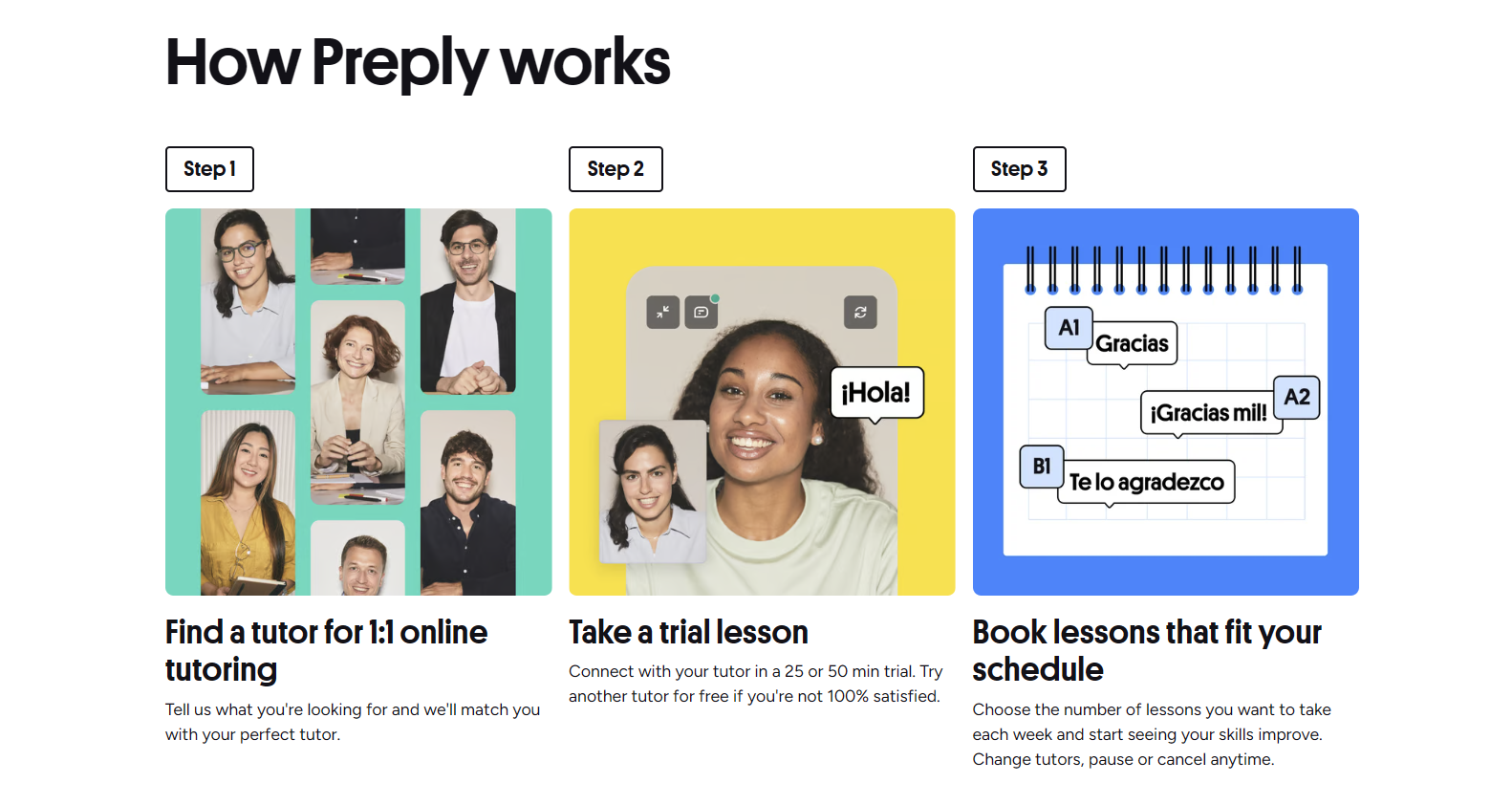
Preply's progress tracking operates on three interconnected layers. The foundation is the placement test, which establishes a baseline CEFR level across reading, writing, listening, and speaking. The middle layer consists of lesson-level feedback where tutors rate specific competencies after each session. The top layer involves periodic reassessment using standardized tests that compare current ability against the original baseline.
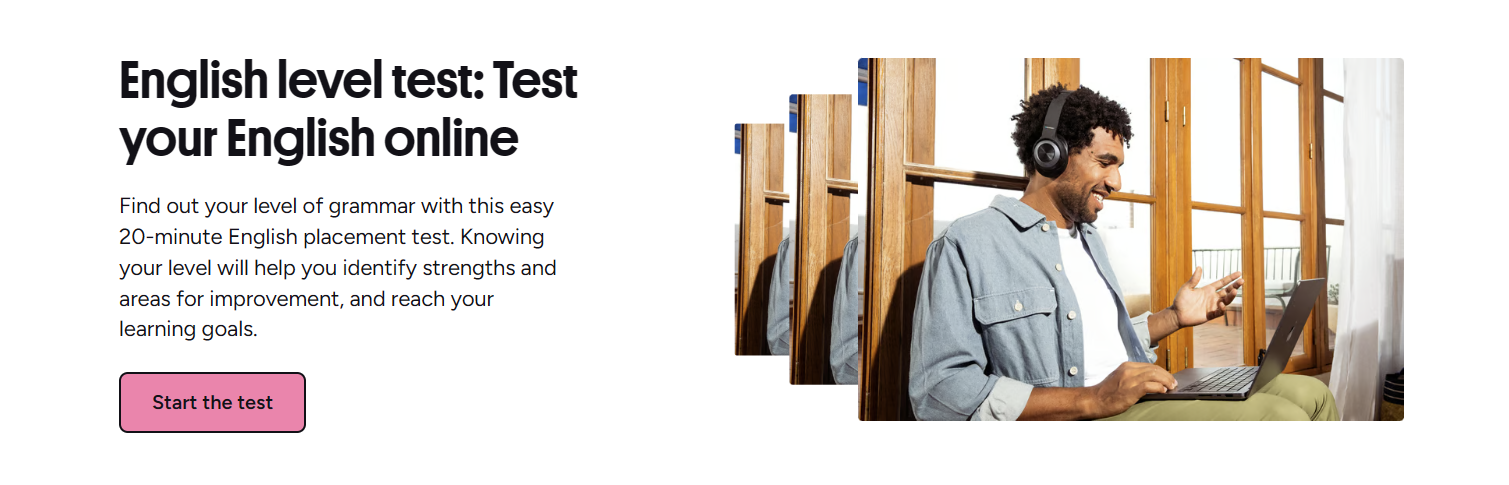
The placement test typically takes 20 to 30 minutes and covers grammar, vocabulary, reading comprehension, and listening. Speaking assessment happens during the first lesson with a tutor, who evaluates fluency, pronunciation, and interactive communication skills. This multi-modal approach captures a more complete picture than written tests alone, especially for learners whose spoken ability differs significantly from their passive knowledge.
- Initial CEFR placement test (grammar, vocabulary, reading, listening)
- Speaking evaluation during first tutor session
- Goal-setting conversation to define target outcomes
- Lesson-by-lesson competency ratings from tutors
- Monthly or quarterly reassessment tests
- Automated progress dashboard accessible to student and tutor
After the baseline is established, the system tracks micro-progress through tutor feedback forms completed after each lesson. Tutors rate the student's performance on specific skills covered that session — perhaps business email writing, past tense narration, or pronunciation of particular phonemes. These ratings accumulate into skill-level trend lines that show improvement trajectories over weeks and months.
Initial Assessment and Level Testing
The Preply English Level Test serves as the primary diagnostic tool for new students. Available free on the platform, it adapts difficulty based on responses, narrowing in on an accurate CEFR placement within 25 to 30 questions. The test evaluates grammatical accuracy, vocabulary range, reading comprehension, and listening comprehension through multiple-choice and fill-in-the-blank formats.
What makes this test useful for progress tracking is its repeatability. Students can retake the level test at any interval — monthly, quarterly, or before a major milestone like an exam date. Because the test draws from a large item bank and uses adaptive algorithms, retesting produces comparable results without simple memorization effects. The platform stores each attempt with timestamps, creating a longitudinal record of level changes.
For languages other than English, Preply offers similar placement assessments for Spanish, German, French, and several other major languages. The structure mirrors the English test but aligns with language-specific CEFR descriptors. Students learning less common languages may rely more on tutor-conducted oral assessments during trial lessons, since standardized tests aren't available for every language on the platform.
Scroll horizontally to see all columns
| Language | Test Availability | Skills Assessed | Retest Interval |
|---|---|---|---|
| English | Full adaptive test | Grammar, vocab, reading, listening | Anytime |
| Spanish | Full adaptive test | Grammar, vocab, reading, listening | Anytime |
| German | Full adaptive test | Grammar, vocab, reading, listening | Anytime |
| French | Full adaptive test | Grammar, vocab, reading, listening | Anytime |
| Other languages | Tutor oral assessment | Speaking, listening, goals | Per tutor schedule |
The speaking component deserves special attention. Unlike the automated sections, speaking evaluation requires human judgment. During the first lesson, tutors use a structured rubric covering fluency, coherence, lexical resource, grammatical range, and pronunciation. This rubric aligns with CEFR speaking descriptors and IELTS-style criteria, giving students a speaking sub-score that often differs from their written test result — a common and expected discrepancy.
A student testing at B2 in grammar but B1 in speaking isn't failing — they have a typical profile that tells the tutor exactly where to focus.
Setting Learning Goals with Your Tutor
Goal setting happens in the first or second lesson, after the tutor has reviewed the placement test results and conducted their own speaking assessment. This conversation translates abstract level descriptors into concrete, personal objectives. A student at B1 might target B2 for work presentations in six months, or aim to pass IELTS 7.0 within a year. The tutor helps break these targets into monthly milestones with specific skill focuses.
The platform provides a goal-setting framework that tutors can customize. Categories include general fluency, exam preparation, business communication, academic writing, pronunciation, and specialized vocabulary. Students select primary and secondary focus areas, which then shape the competency tags tutors use in lesson feedback. This tagging system is what makes the progress dashboard meaningful — it connects daily lesson work to long-term objectives.
- Review placement test results together
- Discuss timeline and weekly commitment
- Select primary focus: fluency, exam, business, academic, etc.
- Define measurable monthly milestones
- Agree on reassessment schedule
- Document goals in shared lesson notes
Goals aren't static. The system encourages quarterly review sessions where student and tutor examine progress data, discuss what's working, and adjust targets. A student progressing faster than expected might raise their goal; one hitting plateaus might shift focus to a weaker skill area. This flexibility prevents the frustration of rigid plans that don't match reality.
Lesson-by-Lesson Progress Monitoring
Each Preply lesson concludes with a structured feedback form the tutor completes before marking the session finished. The form covers up to five competencies tagged for that lesson, each rated on a five-point scale from 'needs significant work' to 'mastered.' Tutors also write brief qualitative notes explaining the rating, noting breakthroughs, persistent errors, or recommended self-study.
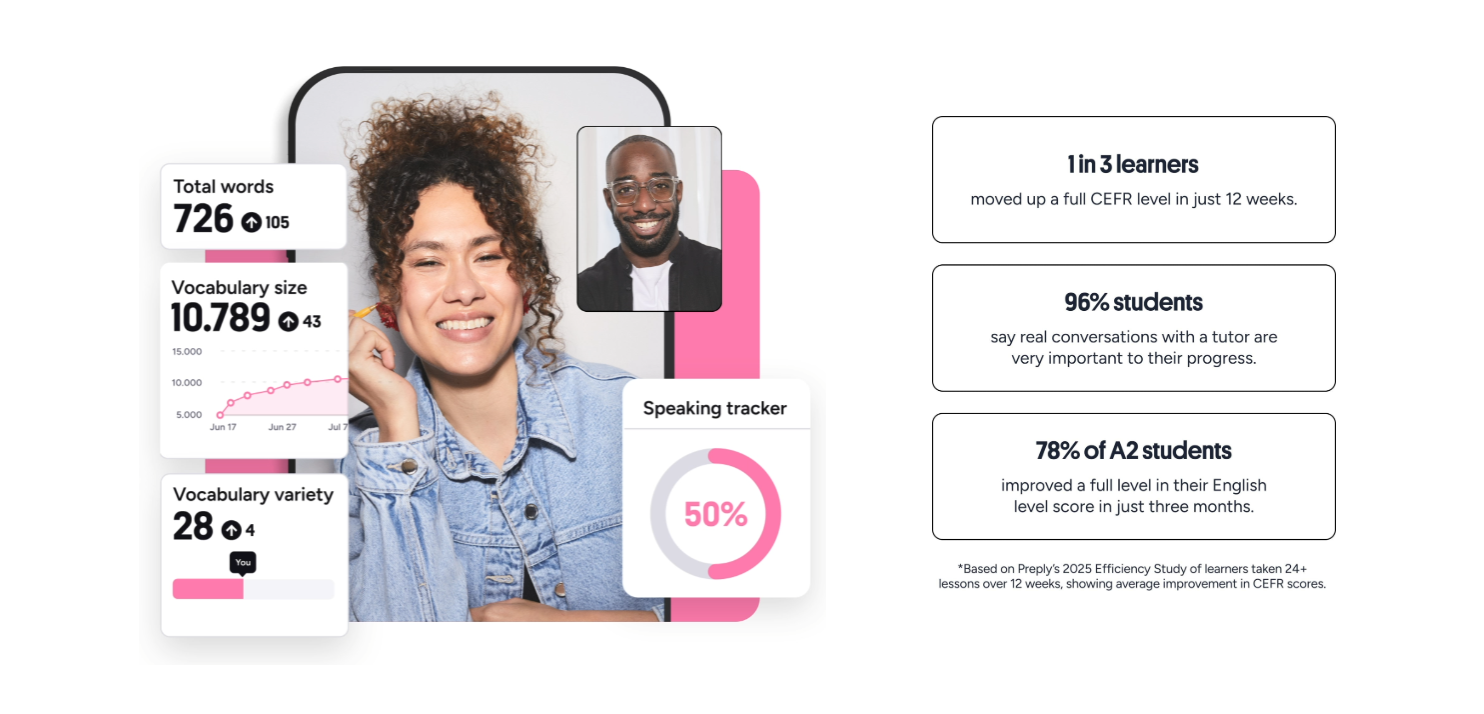
Students see this feedback immediately in their lesson history and on the progress dashboard. The dashboard aggregates ratings by competency tag, showing trend lines over time. A student focusing on business email writing sees a chart of their last 20 ratings for that specific skill, making it obvious whether they're improving, plateauing, or regressing. This granularity is where Preply's system differs from simple lesson completion tracking.
The competency tags come from a standardized taxonomy aligned with CEFR descriptors but broken into finer-grained skills. Instead of just 'writing B2,' tags include 'formal email structure,' 'persuasive language,' 'report organization,' and 'tone adjustment.' This specificity helps tutors target exactly what the student needs and gives students clearer insight into their strengths and gaps.
Scroll horizontally to see all columns
| Focus Area | Competency Tags (Examples) |
|---|---|
| Business English | Formal email structure, meeting participation, negotiation language, presentation delivery |
| Exam Prep (IELTS) | Task 1 report writing, Task 2 essay structure, speaking part 2 long turn, listening for detail |
| General Fluency | Conversation initiation, topic development, clarification strategies, idiomatic expressions |
| Pronunciation | Vowel contrasts, consonant clusters, word stress patterns, intonation contours |
| Academic Writing | Thesis statement formulation, paragraph cohesion, citation integration, hedging language |
Tutors can also create custom tags for highly specific needs — medical terminology for a doctor, legal contract language for a lawyer, or technical vocabulary for an engineer. These custom tags appear in the same dashboard, ensuring niche learning goals get tracked with the same rigor as standard competencies.
The tag system turns vague 'I want to improve my English' into 'I need to master formal email structure and meeting participation' — trackable, teachable, achievable.
The Role of Regular Reassessment
Lesson-level feedback captures micro-progress, but macro-progress requires standardized reassessment. Preply recommends retaking the level test every 8 to 12 weeks, or after approximately 20 to 30 hours of tutoring. This interval balances sensitivity to change with statistical reliability — testing too frequently introduces noise, while testing too rarely misses plateaus that need intervention.
The reassessment uses the same adaptive test engine as the initial placement, ensuring comparability. Results display as a side-by-side comparison: previous CEFR level, current CEFR level, and sub-score changes for each skill area. A student might move from B1 to B2 overall while seeing reading jump two sub-levels but speaking only one — valuable information for adjusting lesson focus.
For exam-focused students, Preply also offers practice tests modeled on IELTS, TOEFL, Cambridge, and other major exams. These aren't official exams but use similar formats and scoring rubrics. Tutors can administer these as mock exams under timed conditions, providing both score predictions and detailed diagnostic feedback. The practice test results integrate into the same progress dashboard, sitting alongside CEFR tracking.
How Tutors Adapt Based on Progress Data
The progress dashboard isn't just for students — tutors have a parallel view showing all their students' competency trends, reassessment histories, and goal completion rates. This data informs lesson planning in concrete ways. A tutor seeing a student's pronunciation scores stagnate for three weeks knows to introduce targeted phoneme drills, minimal pair practice, or shadowing exercises in the next sessions.
The platform also flags patterns across a tutor's student base. If multiple students struggle with the same competency — say, conditional sentences — the tutor might develop a reusable mini-module or adjust their default curriculum sequence. This aggregate insight improves teaching efficiency without compromising personalization.
- Review student dashboard before each lesson
- Identify stagnating competencies for targeted practice
- Adjust lesson difficulty based on trend direction
- Prepare materials for weak areas in advance
- Celebrate measurable improvements to reinforce motivation
- Modify long-term plan if reassessment shows unexpected shifts
Tutors receive training on interpreting progress data during onboarding and ongoing professional development. The platform provides guidelines for translating dashboard trends into pedagogical decisions — when to persist with a skill, when to spiral back to foundations, when to accelerate. This reduces the risk of tutors overreacting to single data points or missing gradual declines.
Data without pedagogical judgment is just noise. The dashboard shows what's happening; the tutor decides why and what to do next.
Progress Reports and What They Show
Preply generates formal progress reports at reassessment milestones and on demand. These reports compile level test comparisons, competency trend charts, lesson attendance and completion rates, tutor qualitative summaries, and goal achievement status. Reports can be downloaded as PDFs for employer reimbursement, visa applications, or personal records.
The report structure follows a consistent format: executive summary with overall CEFR change, skill-by-skill breakdown with visual trend lines, competency-level detail for focus areas, tutor narrative assessment, and recommended next steps. This standardization makes reports comparable across time and useful for stakeholders who need verified progress evidence.
Scroll horizontally to see all columns
| Section | Content |
|---|---|
| Executive Summary | Overall CEFR change, hours studied, lessons completed, goal status |
| Skill Breakdown | Reading, writing, listening, speaking sub-scores with trend charts |
| Focus Competencies | Detailed ratings for student's selected goal tags |
| Tutor Assessment | Qualitative evaluation of strengths, weaknesses, learning style |
| Recommendations | Specific focus areas, suggested resources, timeline adjustments |
For business and enterprise accounts, reports include additional metrics: team-level aggregates, budget utilization, ROI calculations based on predefined KPIs, and compliance tracking for mandatory training hours. These features support organizational language programs where progress data feeds into performance reviews or promotion criteria.
Using the Mobile App for Progress Tracking
The Preply mobile app brings progress tracking to the device most learners carry everywhere. The app dashboard mirrors the web version's core features: competency trend charts, upcoming reassessment reminders, goal progress bars, and lesson feedback history. Push notifications alert students when tutors submit feedback, when reassessment windows open, or when they've hit a milestone like 50 lessons completed.
Mobile access changes how students engage with their data. Instead of reviewing progress only during lessons, learners can check trends during commute time, review tutor notes before the next session, or share a competency chart with a colleague for accountability. The app also supports offline lesson material review, so progress isn't interrupted by connectivity issues.
The app includes a practice mode with spaced-repetition vocabulary exercises tied to the student's current competency tags. Words and phrases encountered in lessons automatically enter the review queue, and performance on these micro-exercises feeds back into the progress dashboard as supplementary data points. This creates a continuous loop between lesson learning, self-study practice, and progress measurement.
Business and Team Progress Features
Preply Business extends the individual progress system to organizational level. Administrators get a dashboard showing aggregate team progress, individual learner trajectories, budget consumption, and program-level ROI metrics. Each team member still has their personal progress view, but managers can see patterns across the group — which departments are advancing fastest, which skills need company-wide workshops, whether the program meets its language targets.
The business platform supports custom goal frameworks aligned with corporate competency models. A company might define 'Client-Facing English' as a composite of presentation delivery, negotiation language, email professionalism, and cultural awareness. Employees select this framework, and their progress tracks against these organization-specific competencies rather than generic CEFR descriptors alone.
- Team-level progress aggregates and heatmaps
- Custom competency frameworks aligned to business roles
- Budget tracking and cost-per-skill-improvement metrics
- Compliance reporting for mandatory training hours
- Admin controls for reassessment scheduling
- Integration with HR systems for performance review data
Enterprise accounts add dedicated customer success managers who analyze progress data quarterly and recommend program adjustments — adding group classes for common weak areas, adjusting tutor assignments based on specialization match, or modifying lesson frequency based on engagement patterns. This managed approach helps organizations avoid the common pitfall of purchasing licenses that go unused.
Corporate language programs fail when nobody watches the data. Preply Business makes progress visible to the people who approve the budget.
Limitations and Considerations
No progress tracking system is perfect, and Preply's has constraints worth understanding. The CEFR alignment, while standardized, involves interpretation — different tutors may rate the same performance slightly differently on the 5-point scale. The platform provides calibration guidelines, but human variance remains. Students working with multiple tutors may see more rating fluctuation than those with a single consistent tutor.
The adaptive level test, while reliable for placement, has measurement error at the extremes. Very high (C1/C2) and very low (A0/A1) learners may get less precise sub-score differentiation because the item bank concentrates on the B1-B2 range where most learners cluster. For these students, tutor-conducted assessments carry more weight than test scores.
Another limitation: the system tracks what happens during Preply lessons and on Preply tests. Self-study outside the platform — reading books, watching shows, using other apps — doesn't automatically feed into the dashboard unless the student manually logs it or the tutor incorporates it into lesson tags. This means the progress picture is partial for learners doing significant independent work.
Comparing Progress Tracking Across Platforms
Most language learning platforms offer some form of progress tracking, but the depth and utility vary widely. Duolingo tracks streak length, XP, and skill tree completion — engagement metrics rather than proficiency metrics. Babbel shows course completion percentages and review intervals. iTalki leaves tracking entirely to individual tutors with no platform-level system. Preply's approach sits closer to formal language assessment frameworks than to gamified engagement tracking.
Scroll horizontally to see all columns
| Platform | Tracking Type | Standardization | External Validity |
|---|---|---|---|
| Preply | CEFR-aligned competency tracking + adaptive testing | High (platform-enforced tutor forms) | Moderate (CEFR alignment, not official certification) |
| Duolingo | Gamified engagement (streaks, XP, crowns) | High (automated) | Low (no proficiency correlation) |
| Babbel | Course completion + spaced repetition stats | Medium (course-based) | Low-Moderate (CEFR-labeled courses) |
| iTalki | Tutor-dependent, no platform system | None | None |
| Rosetta Stone | Unit completion + speech recognition scores | Medium (automated) | Low-Moderate |
The trade-off is complexity. Preply's system requires tutor participation, student engagement with data, and regular reassessment discipline. Platforms with simpler tracking demand less but also provide less actionable insight. For learners who want evidence of improvement — for employers, for visa applications, for personal satisfaction — the extra structure pays off. For casual learners who just want to maintain a habit, simpler systems may suffice.
Making Progress Data Work for You
The value of progress tracking depends entirely on how you use it. Students who check their dashboard weekly, discuss trends with their tutor, and adjust self-study based on competency gaps improve faster than those who ignore the data. The system rewards active engagement — it's a tool, not an automatic outcome generator.
- Review dashboard before each lesson to prime focus
- Ask tutor to explain any rating that seems off
- Use competency gaps to guide self-study between lessons
- Schedule reassessments proactively, not reactively
- Share progress reports with stakeholders who need evidence
- Celebrate measurable wins — they're real and earned
Tutors who integrate dashboard review into their lesson routine — spending the first two minutes looking at trends, the last two minutes previewing next session's focus based on gaps — create a tighter feedback loop. Students notice when their tutor references specific data points: 'Your formal email structure scores have climbed from 2.3 to 3.8 over six weeks, so let's shift this week to negotiation language.' That specificity builds trust and demonstrates the tutor's investment.
Progress tracking without action is just decoration. The dashboard tells you where you are; your next lesson decides where you go.
Preply Proven Progress and Exam Preparation
Exam-focused learners — IELTS, TOEFL, Cambridge, TOEIC — benefit from Preply's dual tracking system: CEFR progress for general proficiency and exam-specific practice tests for targeted readiness. The platform's IELTS and TOEFL practice tests mirror official formats, timing, and scoring criteria. Tutors certified in exam preparation administer these under simulated conditions, providing band score predictions and detailed section-by-section analysis.
The practice test results integrate into the same dashboard, allowing students to see both their general English trajectory and their exam-specific trajectory side by side. A student might be solid B2 overall but scoring 6.0 on IELTS writing — the gap reveals exactly where exam technique, not language ability, is the bottleneck. This distinction saves weeks of misdirected study.
Scroll horizontally to see all columns
| Exam | Practice Test Availability | Scoring Method | Tutor Certification |
|---|---|---|---|
| IELTS Academic | Full mock tests (all 4 sections) | Band score prediction + criteria breakdown | IELTS-certified tutors available |
| TOEFL iBT | Full mock tests (all 4 sections) | Scaled score prediction + section analysis | TOEFL-trained tutors available |
| Cambridge (B2/C1) | Reading, writing, listening, speaking | Grade prediction + skill profile | Cambridge-experienced tutors |
| TOEIC | Listening and reading sections | Scaled score prediction | Business English specialists |
For exam students, the reassessment schedule often aligns with test dates rather than fixed intervals. A student targeting IELTS in three months might take practice tests every three weeks, using each result to calibrate the next study block. The tutor uses the diagnostic breakdown to assign precise homework — not 'write more essays' but 'practice Task 1 overview paragraphs with comparative language' based on the specific criteria where scores lag.
Frequently Asked Questions
How often should I retake the Preply level test?
Every 8 to 12 weeks or after 20 to 30 lesson hours. Testing more frequently adds noise; testing less frequently misses plateaus.
Can I track progress if I switch tutors?
Yes. Your competency history, level test results, and goal data stay with your account. New tutors see your full progress record.
Do all tutors use the same rating standards?
Preply provides calibration guidelines and training, but some variance exists. Consistency improves when you work with one primary tutor.
Is the progress data accepted for visa or employer requirements?
Progress reports can support applications but aren't official certifications. For formal proof, take an accredited exam like IELTS or TOEFL.
What if my speaking level differs from my test level?
This is common. The dashboard shows separate sub-scores. Your tutor will address the gap directly in lessons.
Can I add my own competency tags for niche goals?
Yes. Tutors can create custom tags for specialized vocabulary or skills not in the standard taxonomy.
Does the mobile app show the same data as the web dashboard?
Yes. The app mirrors core progress features including trend charts, feedback history, and reassessment reminders.
Final Assessment of Preply Proven Progress
Preply Proven Progress delivers on its promise: a structured, data-informed framework for tracking language improvement that goes beyond completion metrics into actual proficiency measurement. The combination of adaptive CEFR testing, granular competency tagging, tutor feedback loops, and visual trend analysis gives learners and tutors a shared evidence base for decision-making. For serious learners — whether studying for career advancement, exam certification, or personal mastery — this system transforms vague effort into visible trajectory.
The system's strength lies in its integration. Placement tests, lesson feedback, reassessments, and goal tracking aren't separate features; they feed each other. A reassessment dip in listening triggers tutor focus on listening competencies, which generates new lesson tags, which updates the dashboard, which informs the next goal review. This closed loop is what separates meaningful tracking from dashboard theater.
Limitations exist. Tutor rating variance, test precision at CEFR extremes, and the exclusion of off-platform self-study mean the data requires interpretation, not blind trust. But these are constraints of any human-in-the-loop assessment system, not fatal flaws. The platform provides enough transparency — visible rater notes, test timestamps, competency definitions — for informed users to weigh the evidence appropriately.
For organizations, the business-tier analytics add a layer of accountability that most corporate language programs lack. Team heatmaps, custom competency frameworks, and ROI metrics turn language training from a cost center into a measurable investment. The dedicated success management for enterprise accounts helps ensure the data actually drives program improvements rather than sitting in unread reports.
Ultimately, Preply Proven Progress works because it respects the complexity of language learning while providing enough structure to make that complexity navigable. It doesn't promise fluency in 30 days. It promises that if you put in the hours, you'll know exactly what those hours achieved — and what to do next.