
Language Learning
Preply English Phrases for Real Conversations
Master everyday expressions, business idioms, and conversational fluency with personalized tutoring.
Most language apps teach vocabulary in isolation. You memorize a word, maybe see it in a sentence, then move on. But real communication runs on phrases — chunks of language that native speakers use automatically. Preply takes a different approach. The platform connects you with tutors who build lessons around the expressions you actually need, whether that's ordering coffee in London, negotiating a contract in Singapore, or making small talk at a conference in Toronto.
Contents
- 1. Why Phrases Matter More Than Words
- 2. How Preply Structures Phrase Learning
- 3. Finding Tutors Who Teach Real Usage
- 4. Common Everyday Expressions Covered
- 5. Business English Phrases for Professionals
- 6. Idioms and Colloquialisms That Textbooks Miss
- 7. Practicing Phrases in Live Lessons
- 8. Using the Preply App for Phrase Review
- 9. Tracking Progress with Phrase Mastery
- 10. Pricing and Lesson Options for Phrase Focus
- 11. Final Assessment of Preply English Phrases
The difference shows up fast. A student who knows five thousand individual words but no collocations still sounds robotic. Someone with two thousand words and two hundred high-frequency phrases sounds natural. Preply tutors know this. They prioritize the phrases that carry the most communicative weight for your specific situation.
Why Phrases Matter More Than Words
English relies heavily on fixed and semi-fixed expressions. "Make a decision" not "do a decision." "Heavy rain" not "strong rain." "Take place" not "happen place." These aren't arbitrary rules — they're statistical patterns baked into how the language works. When you learn phrases instead of isolated words, you absorb grammar, collocation, and register simultaneously.
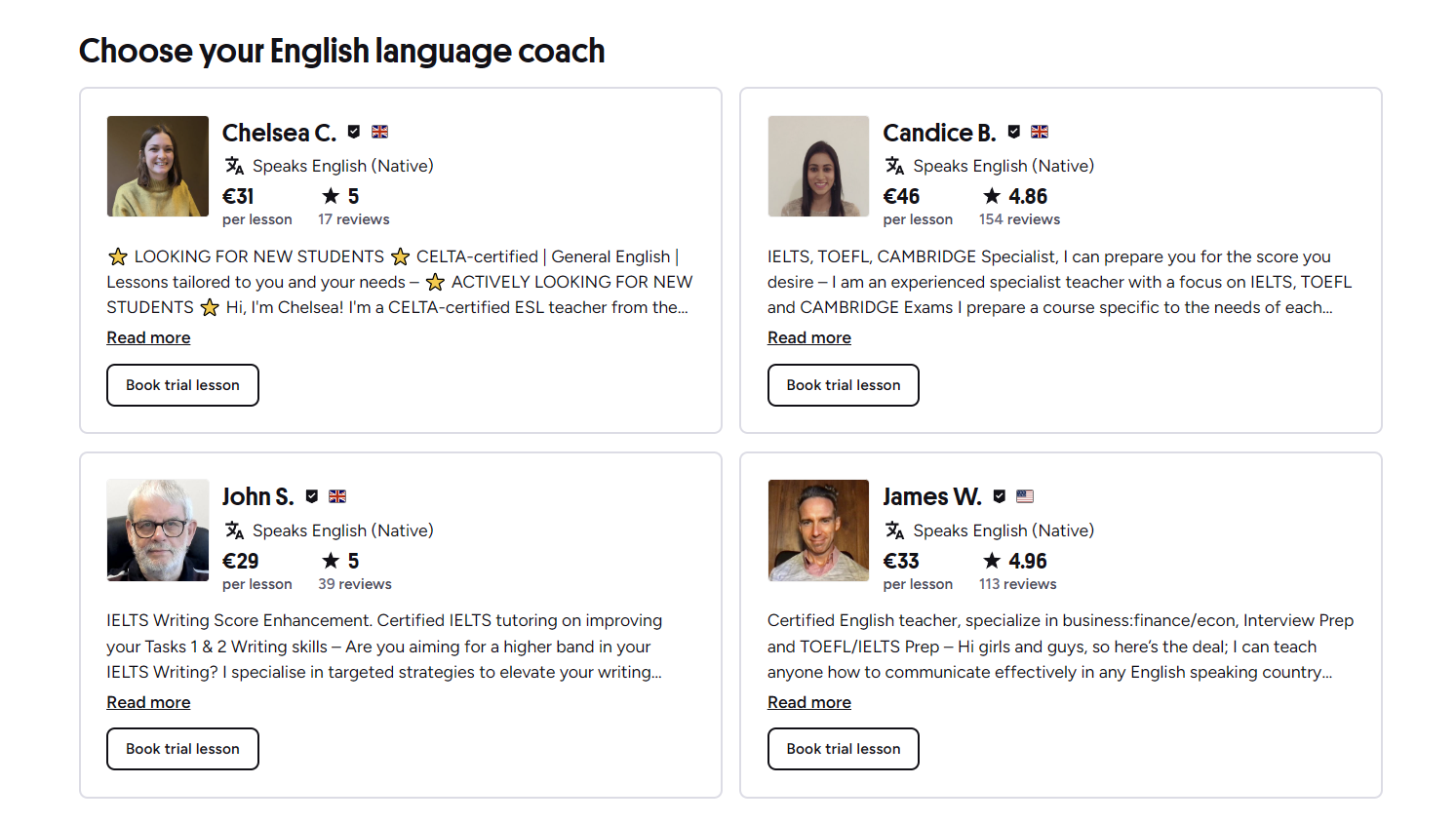
Preply's tutor marketplace lets you filter for instructors who specialize in phrase-based teaching. Many list "conversational English," "business English," or "idioms and phrasal verbs" as focus areas. You can read their profiles, watch intro videos, and book trial lessons to see who actually teaches this way versus who just claims to.
- Phrases reduce cognitive load — you retrieve one chunk instead of assembling three words
- They encode register automatically — "I'm up to my ears" sounds different than "I am very busy"
- Native speakers process chunks faster than word-by-word constructions
- Phrases carry cultural nuance that individual words cannot
A tutor who understands this will spend less time on vocabulary lists and more time on role-plays, dialogue analysis, and spaced repetition of target expressions. That's the Preply advantage — you're not locked into a rigid curriculum. You find someone whose teaching style matches how you actually learn.
How Preply Structures Phrase Learning
The platform itself doesn't impose a phrase curriculum. That flexibility is intentional. Instead, Preply gives tutors tools to create structured phrase practice: shared whiteboards for mapping collocations, homework assignments with spaced repetition, lesson notes that track which expressions you've covered, and a vocabulary review system that lets you save phrases from each session.
During a typical phrase-focused lesson, a tutor might introduce five to seven target expressions through a short dialogue or video clip. You practice pronunciation, discuss context and register, then move to controlled practice — gap fills, transformation drills, mini role-plays. The final stage is freer production where you use the phrases in your own sentences. Good tutors record the target phrases in the lesson notes so you can review them later.
The review system is where Preply differs from a simple video call. After each lesson, the platform prompts you to save new vocabulary. Those saved items enter a spaced repetition queue. You can also export them to Anki or Quizlet if you prefer external tools. This turns a 50-minute conversation into a lasting phrase bank.
Finding Tutors Who Teach Real Usage
Not every tutor on Preply teaches phrases effectively. Some default to grammar drills or free conversation without feedback. The platform's review system helps, but you need to know what to look for. Tutors who specialize in phrase-based teaching usually mention specific methodologies: lexical approach, task-based learning, or communicative language teaching. Their profiles often list concrete outcomes — "master 50 business meeting phrases in 10 lessons" rather than "improve your English."
Trial lessons are essential. Use the first session to test whether the tutor actually notices and corrects your phrase-level errors. Say something slightly off like "I made a research" instead of "I did some research" or "I conducted research." A phrase-aware tutor will catch it, explain the collocation, and give you two more examples. A grammar-focused tutor might just say "research is uncountable" and move on.
Filter by specialization tags: "Business English," "IELTS Speaking," "Conversational English," "Phrasal Verbs." Read the written reviews — students often mention whether a tutor taught useful expressions or just corrected grammar. Video intros reveal teaching style more than text profiles. Watch for tutors who use props, slides, or screen sharing to present phrases visually.
Common Everyday Expressions Covered
Everyday English runs on a surprisingly small set of high-frequency phrases. Preply tutors typically organize these by function: greetings and leave-takings, asking for clarification, expressing opinions, agreeing and disagreeing, making suggestions, handling problems. A beginner might spend three months on fifty core phrases. An advanced learner might cover the same ground in two weeks but with more nuanced variants — "I'm not so sure about that" versus "I disagree."
Scroll horizontally to see all columns
| Function | Example Phrases | Typical CEFR Level |
|---|---|---|
| Greetings & Leave-takings | How's it going? / Catch you later / Good to see you | A1-A2 |
| Clarification | Could you run that by me again? / What do you mean by...? | A2-B1 |
| Opinions | The way I see it / If you ask me / I'd say that... | B1-B2 |
| Agreeing/Disagreeing | I'm with you on that / Not really / That's one way to put it | B1-B2 |
| Suggestions | Why don't we...? / How about...? / You might want to... | A2-B1 |
| Problem Handling | There's been a mix-up / Let me sort this out / I'll look into it | B2-C1 |
The best tutors don't just hand you lists. They build lessons around situations you face. If you're a nurse, you need phrases for patient handoffs. If you're a software engineer, you need expressions for code reviews and stand-ups. Preply's tutor search lets you filter by professional background — many tutors have previous careers in business, healthcare, tech, or academia before teaching.
Business English Phrases for Professionals
Business English isn't a separate language — it's a register with its own phrase inventory. Meetings, negotiations, presentations, emails, and networking each have conventional expressions. "Let's table this" means different things in US versus UK English. "Circle back" and "touch base" are so overused they've become clichés, but you still need to recognize them. Preply has a deep bench of tutors with corporate experience who teach current business phrases, not textbook dialogues from 2005.
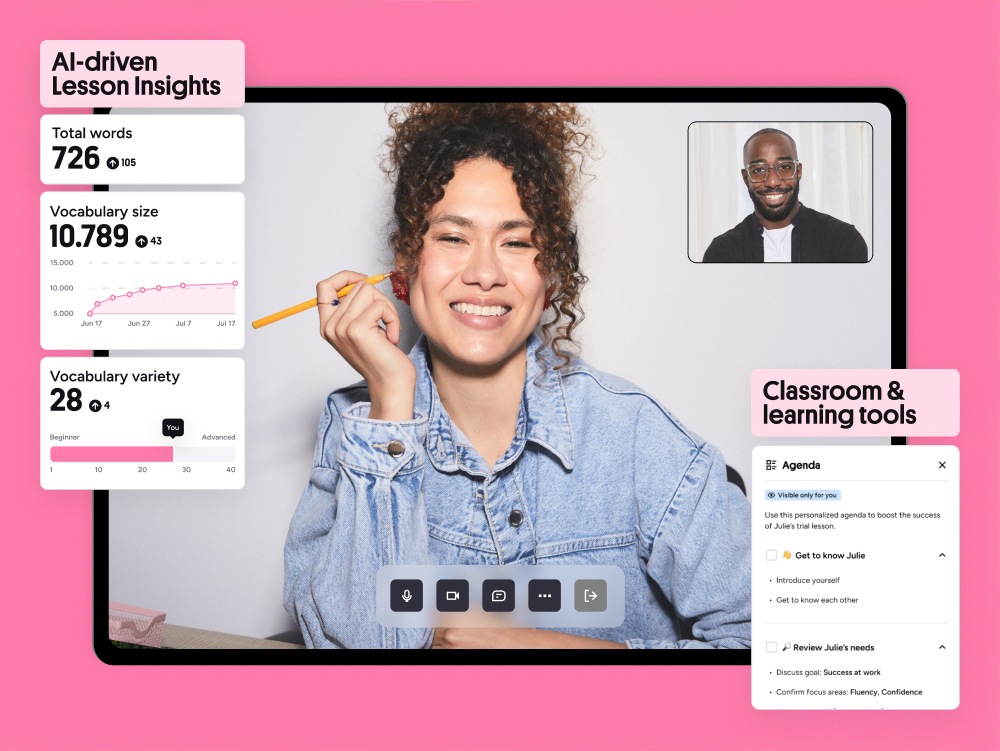
A typical business phrase module might cover: opening and closing meetings, interrupting politely, hedging and softening disagreement, summarizing action items, following up by email. Tutors often use real materials — your actual slides, emails, or meeting recordings (with permission). This beats generic case studies because the phrases stick when they're tied to your real work.
- Meeting openers: "Shall we get started?" / "Thanks for making time" / "Let's kick off with..."
- Interrupting: "Sorry to jump in, but..." / "Can I just add something?" / "If I could come in here..."
- Hedging: "I wonder if we might..." / "It could be worth considering..." / "One possibility might be..."
- Action items: "Who's owning this?" / "Let's put a pin in that" / "I'll follow up by Thursday"
- Email phrases: "Per our conversation..." / "Just circling back on..." / "Happy to hop on a quick call"
The nuance matters. "I disagree" is direct. "I'm not entirely convinced" is diplomatic. "That's an interesting perspective" can mean "you're wrong" in certain cultures. Tutors with international business experience teach these subtleties. They'll also warn you about phrases that sound unnatural — "as per your request" reads like a 1990s memo. "As you asked" or "following up on your request" sounds human.
Idioms and Colloquialisms That Textbooks Miss
Idioms are where phrase learning gets messy. "Break a leg" means good luck. "Cost an arm and a leg" means expensive. "Under the weather" means sick. Textbooks teach these as isolated curiosities. Preply tutors teach them in clusters by theme — body idioms, sports idioms, weather idioms — and more importantly, they teach frequency and register. "It's raining cats and dogs" is something your grandmother says. "It's chucking it down" or "It's bucketing down" is what you'll hear in Manchester.
The platform's vocabulary tool lets tutors tag idioms by region (US, UK, AU, CA) and formality. You can filter your review deck to practice only the expressions relevant to your target dialect. This matters. An Indian software engineer moving to Berlin needs different idioms than a Brazilian marketer relocating to Austin. Preply's global tutor pool means you can find someone who knows the specific variety you need.
Idioms aren't decoration. They're how native speakers package complex attitudes in few words. Skip them and you'll always sound like you're translating.
Phrasal verbs deserve their own category. They're technically verb-particle combinations, but functionally they're phrases. "Give up," "give in," "give out," "give away," "give back" — each has a distinct meaning that isn't predictable from the parts. Good tutors teach them in semantic sets with context: "The machine gave out" (stopped working) versus "He gave out the papers" (distributed). They also teach the grammar — separable versus inseparable, transitive versus intransitive — without turning it into a lecture.
Practicing Phrases in Live Lessons
Live practice is where phrases become automatic. Preply's video classroom supports screen sharing, collaborative documents, and a whiteboard. Tutors use these for phrase drills that feel like games: timed description challenges using target expressions, picture narration with required phrases, story chains where each person adds a sentence using the next phrase on the list. The best sessions balance structure with spontaneity.
Error correction during phrase practice needs finesse. Over-correction kills flow. Under-correction fossilizes errors. Experienced Preply tutors use delayed correction — they note phrase mistakes during your speaking turn, then review them after you finish. They might rewrite your sentence on the shared screen: "You said 'I'm agree.' In English we say 'I agree' or 'I'm in agreement.' Let's practice both." This preserves confidence while fixing the pattern.
Homework between lessons matters. Tutors often assign phrase journals — write three sentences using each target expression, record yourself saying them, or find the phrase in a podcast or article. The platform's messaging system lets you send audio clips for pronunciation feedback between sessions. This continuity is what separates phrase acquisition from phrase exposure.
Using the Preply App for Phrase Review
The mobile app extends phrase practice beyond lesson time. You can review saved vocabulary during commutes, access lesson notes offline, and complete tutor-assigned exercises. The spaced repetition algorithm prioritizes phrases you struggle with. Some tutors create custom flashcard sets in the app for their students — themed decks like "phrases for job interviews" or "expressions for complaining politely."
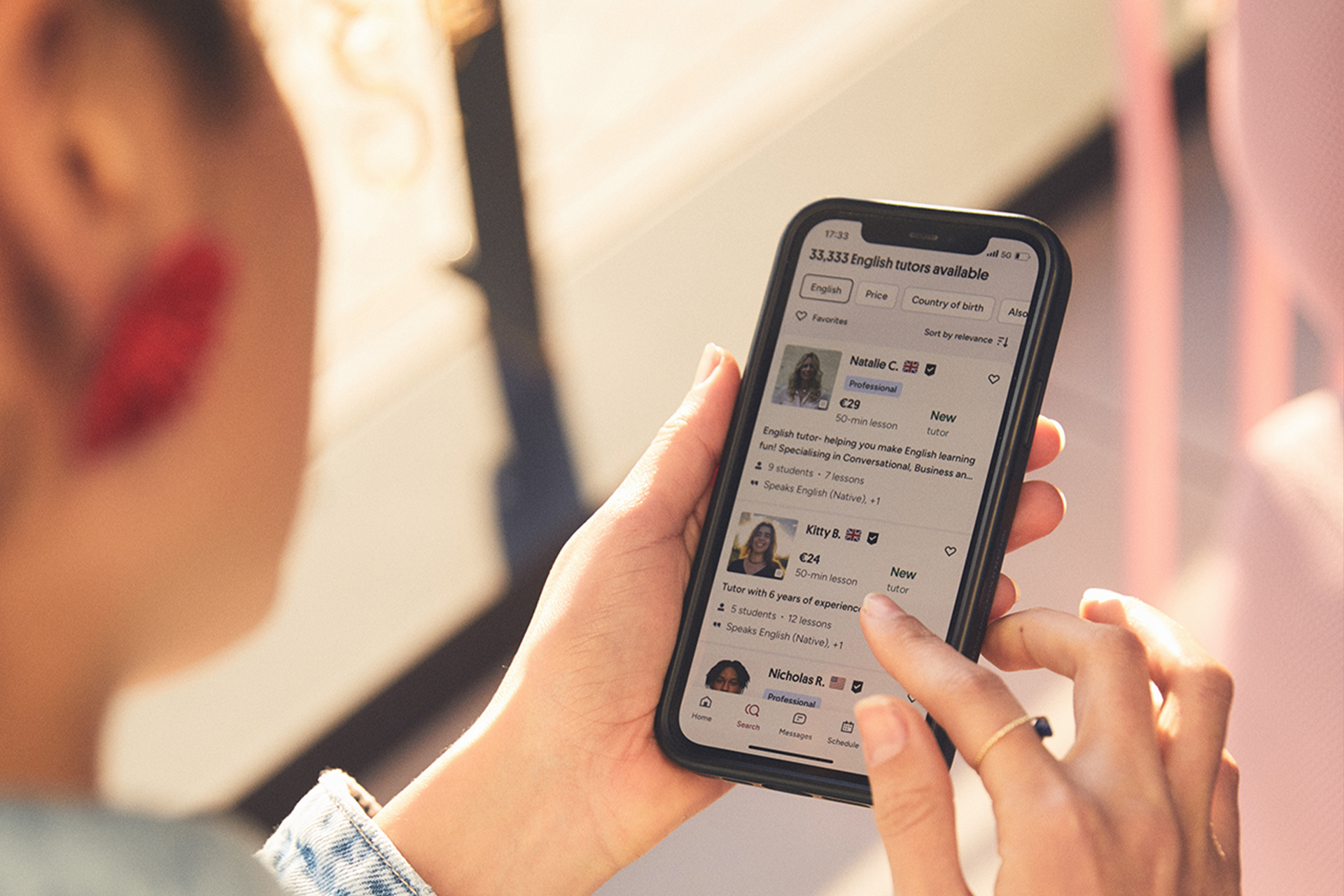
The app also handles scheduling, payments, and tutor messaging. You can filter tutor availability by timezone, book recurring slots, and reschedule up to four hours before a lesson. For phrase learners, the ability to message your tutor a quick question — "Is 'on the same page' too informal for a client email?" — gets you answers without waiting for the next session.
Tracking Progress with Phrase Mastery
Progress tracking on Preply is tutor-driven, not algorithmic. There's no automated proficiency score. Instead, tutors set learning goals with you — "master 30 negotiation phrases by month three" — and assess through observation, recorded speaking tasks, and periodic reviews. Some use the CEFR framework. Others create custom benchmarks: "Can handle a client complaint call using appropriate softening phrases."
The platform's lesson history shows every session's topic, duration, and notes. You can search past lessons for specific phrases. This creates an accidental corpus — your personal phrase archive. After six months, you have a searchable record of every expression you've studied, with context. That's more useful than a test score.
Scroll horizontally to see all columns
| Method | Frequency | Best For |
|---|---|---|
| Tutor observation notes | Every lesson | Real-time usage accuracy |
| Recorded speaking tasks | Monthly | Fluency and pronunciation |
| Phrase recall tests | Bi-weekly | Retention of target expressions |
| Situational role-play assessment | Quarterly | Appropriate register selection |
| Self-assessment checklist | Monthly | Learner awareness of gaps |
You can also take Preply's English level test periodically. It's adaptive and covers grammar, vocabulary, and reading — not specifically phrases, but it gives a broad benchmark. Some tutors align their phrase curriculum to CEFR levels so you know roughly where you stand. The test is free for students and takes about 20 minutes.
Pricing and Lesson Options for Phrase Focus
Preply uses a tutor-set pricing model. Rates range from roughly $5 to $75 per hour, with most professional English tutors clustering between $15 and $35. You buy lesson packages — 5, 10, or 20 hours — which lowers the per-hour cost. For phrase-focused learning, 50-minute sessions once or twice weekly work well. That frequency keeps phrases in active memory without overwhelming your review capacity.
Group lessons are cheaper but less effective for phrase work. You need individual feedback on collocation and register. Some tutors offer 30-minute intensive sessions focused purely on phrase drills — good for maintenance once you've built a base. The platform also sells subscription plans with fixed monthly hours. These suit learners who want structure, but check the rollover policy. Unused hours don't always carry over.
Promo codes appear regularly — first-lesson discounts, seasonal offers, referral credits. The platform emails them, but you can also search "Preply promo code" before booking. Some tutors offer their own package discounts for committed students. Ask during the trial. The worst they say is no.
Final Assessment of Preply English Phrases
Preply works for phrase learning because it removes the curriculum bottleneck. You're not forced through a generic syllabus. You find a tutor who teaches the expressions you need, in the variety you need, at the pace you need. The platform's tools — lesson notes, vocabulary review, spaced repetition, messaging — support the process without dictating it. That flexibility is the product.
The trade-off is variability. Tutor quality ranges widely. You'll kiss a few frogs. Trial lessons cost time and sometimes money. The review system helps but isn't foolproof — some tutors game it. You need to be an active consumer: read reviews critically, use trials strategically, switch tutors if the phrase focus isn't there. Preply gives you the marketplace. You still have to shop well.
The platform doesn't teach you phrases. Tutors do. Preply just makes it possible to find the right one.
For someone serious about phrase acquisition, the combination of tutor choice, lesson flexibility, and review tools makes Preply a strong option. It's not a magic solution. You still need consistent practice, spaced repetition, and willingness to sound foolish while new phrases settle in. But the right tutor accelerates that process dramatically. That's what you're paying for.
Frequently Asked Questions
How many phrases can I realistically learn per lesson?
Most tutors target 5-7 new expressions per 50-minute session. That allows enough time for presentation, controlled practice, and freer production. Trying to cover more usually leads to shallow retention.
Can I request specific phrase categories like legal or medical English?
Yes. Many tutors list professional specializations. Filter by keywords like "legal English," "medical English," or "aviation English." You can also message tutors before booking to confirm they have materials for your field.
Does Preply provide phrase lists or textbooks?
The platform doesn't supply a fixed phrase curriculum. Tutors create or curate their own materials. Some use published business English textbooks, others build custom decks from authentic sources like TED talks, podcasts, or industry articles.
How do I know if a tutor actually teaches phrases versus just chatting?
Check their profile for methodology keywords: "lexical approach," "collocations," "phrase-based." Watch their intro video. In the trial, ask directly: "How do you teach phrases?" A good answer includes presentation, practice stages, and review systems.
Can I use Preply just for phrase review without new lessons?
The vocabulary review tool works independently. You can practice saved phrases anytime. But without new input and tutor feedback, your phrase bank stagnates. Most learners combine weekly lessons with daily app review.
Are there tutors who specialize in specific English varieties like Australian or Canadian?
Yes. Filter by tutor nationality or search keywords like "Australian English" or "Canadian English." Many tutors explicitly teach regional idioms, spelling, and pronunciation differences.
What if my tutor's phrase choices feel outdated or too formal?
Give feedback directly. Say "I'd like more current, natural expressions — what people actually say in 2024." Good tutors adjust. If they don't, use the review system to flag the mismatch and switch tutors. You're not locked in.