
Language Learning
Preply Spanish Level Test: Complete Guide to Placement and Proficiency
Understanding placement testing on Preply for Spanish learners
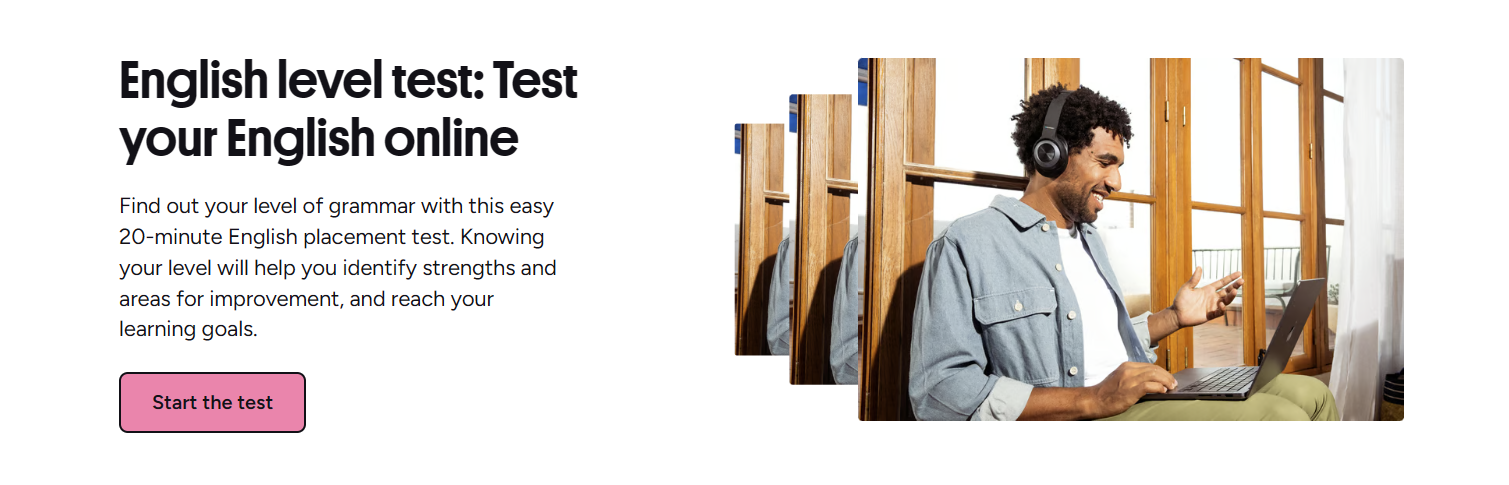
The Preply Spanish level test gives learners a quick way to gauge where they stand before booking lessons. It takes roughly twenty minutes and covers grammar, vocabulary, reading, and listening. The result maps to the CEFR scale from A1 to C2, which most tutors on the platform use to tailor their first session. You do not need an account to start, though saving the result requires signing up.
Contents
- 1. What Is the Preply Spanish Level Test
- 2. How the Test Works and What It Measures
- 3. Taking the Test: Step-by-Step Process
- 4. Understanding Your CEFR Level Results
- 5. How Tutors Use Your Test Results
- 6. Retaking the Test and Tracking Progress
- 7. Spanish Level Test vs Other Placement Methods
- 8. Finding Spanish Tutors Based on Your Level
- 9. Preply Spanish Courses for Each Level
- 10. Limitations of the Preply Spanish Test
- 11. Common Questions About the Spanish Test
- 12. Final Assessment of Preply Spanish Level Test
Many people skip placement tests because they assume they already know their level. That assumption often leads to mismatched lessons — either too easy or too hard. The test removes that guesswork. It also gives tutors a concrete starting point so the first paid lesson focuses on actual gaps rather than assessment.
What Is the Preply Spanish Level Test
The test is a free adaptive assessment built into the Preply platform. It adjusts question difficulty based on your answers, which keeps the session short while still covering a wide range of skills. The format mixes multiple choice, fill-in-the-blank, and audio comprehension. There is no speaking or writing component — those get evaluated later with a tutor if you choose.
Preply designed it specifically for their marketplace. The goal is not certification but placement. Universities and employers will not accept it as proof of proficiency. What it does well is match you with tutors who teach at your level and recommend courses that fit.
How the Test Works and What It Measures
The algorithm pulls from a large question bank tagged by CEFR level. Early questions tend to be around A2–B1. If you answer correctly, difficulty rises. If you miss several, it drops. This branching means two test-takers rarely see identical sets. The final score reflects the highest level where you perform consistently.
Grammar and vocabulary carry the most weight. Reading comprehension appears through short texts with follow-up questions. Listening uses brief audio clips — usually a sentence or dialogue — played once. You cannot replay. That design mimics real conversation constraints but can penalize test-takers with temporary audio issues.
- Grammar: verb forms, agreement, sentence structure
- Vocabulary: frequency-based word recognition
- Reading: main idea, detail, inference from short texts
- Listening: comprehension of spoken Spanish at natural speed
Taking the Test: Step-by-Step Process
Go to the Preply Spanish level test page. No login required to begin. Click Start Test. Allow microphone access if prompted — some versions include a brief speaking prompt, though it does not affect the score. Answer each question. You cannot skip or return. The test ends automatically when the system has enough data, usually after 20–25 questions.
Results appear immediately with a CEFR label and a short description. You can share the result, retake, or browse tutors filtered to your level. If you create an account, the score saves to your profile and tutors see it when you message them.
Understanding Your CEFR Level Results
The Common European Framework of Reference divides proficiency into six levels. Preply uses the standard labels: A1 (Beginner), A2 (Elementary), B1 (Intermediate), B2 (Upper Intermediate), C1 (Advanced), C2 (Proficient). Each level describes what you can do in real situations, not just test performance.
Scroll horizontally to see all columns
| Level | Label | Can Do Summary |
|---|---|---|
| A1 | Beginner | Basic phrases, introductions, simple needs |
| A2 | Elementary | Routine tasks, familiar topics, short exchanges |
| B1 | Intermediate | Main points of clear input, travel situations |
| B2 | Upper Intermediate | Complex texts, fluent interaction, detailed views |
| C1 | Advanced | Demanding texts, implicit meaning, flexible use |
| C2 | Proficient | Near-native comprehension, precise expression |
Your result shows a single level, but language ability is rarely even across skills. You might read at B2 but speak at A2. The test cannot capture that split. Treat the label as a starting conversation point with a tutor, not a definitive diagnosis.
How Tutors Use Your Test Results
When you contact a tutor, they see your level if you have taken the test and saved it. Most will still run a quick verbal check in the first lesson. The test result helps them prepare materials at the right difficulty before that lesson. It also filters the tutor list — you can search for tutors who specialize in your level.
Some tutors ignore the test entirely and rely on their own assessment. That is normal. Experienced teachers often spot gaps that adaptive tests miss, especially in speaking and writing. The test gets you in the right ballpark; the tutor fine-tunes.
The interface shows one question at a time with a progress indicator. You cannot review previous answers, which keeps the session moving but can feel rigid if you misclick.
Retaking the Test and Tracking Progress
You can retake the test anytime. Preply does not enforce a cooldown. However, retaking too soon — say, within a week — rarely yields a different result unless the first attempt had technical issues. Real progress takes months of study. The platform does not store a history of past scores automatically. If you want to track improvement, screenshot or note each result.
Some learners retake after completing a course or a set number of lessons. That makes sense as a milestone check. Just remember the test measures receptive skills mostly. Your speaking may improve faster than your score suggests.
Spanish Level Test vs Other Placement Methods
Other free options exist. Instituto Cervantes offers a longer online test with speaking via recording. Duolingo has a placement quiz tied to their course tree. Textbook publishers often provide PDF diagnostics. Each has trade-offs.
Scroll horizontally to see all columns
| Test | Time | Skills Tested | Best For |
|---|---|---|---|
| Preply Spanish Level Test | 20 min | Grammar, vocab, reading, listening | Quick tutor matching on Preply |
| Instituto Cervantes | 45–60 min | All four skills including speaking | Formal self-assessment |
| Duolingo Placement | 10 min | Vocab, grammar, reading | Duolingo course entry |
| Textbook diagnostics | Varies | Course-specific content | Structured self-study programs |
Preply's test wins on speed and integration. If you plan to use the platform, it is the logical choice. If you need a certificate or a full four-skill picture, look elsewhere.
Finding Spanish Tutors Based on Your Level
After the test, the tutor directory filters to show teachers who work with your level. You can further narrow by price, availability, specialty (DELE prep, business Spanish, conversation), and native region. The level filter is not perfect — some tutors tag themselves broadly — but it reduces the pool from thousands to a manageable few dozen.
Read tutor intro videos and reviews. A tutor rated highly for B2 students may not suit an A1 beginner. Look for reviews from learners at your level. The test result gives you a vocabulary to describe your needs: "I tested B1 but struggle with subjunctive" is more actionable than "I know some Spanish."
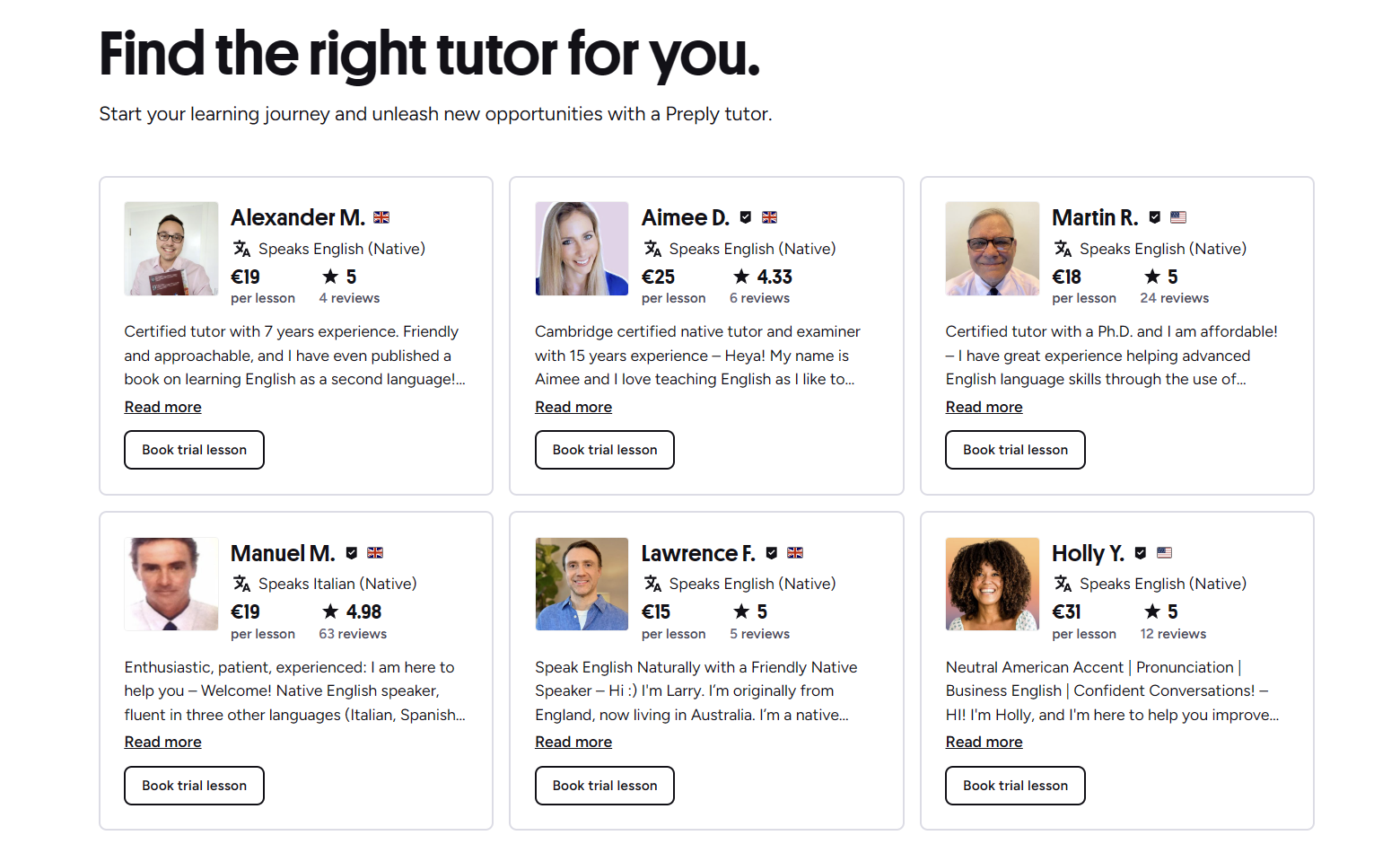
The search results display tutor ratings, hourly rates, and short bios. You can book a trial lesson — usually 50 minutes at a discounted rate — to confirm fit before committing to a package.
Preply Spanish Courses for Each Level
Beyond 1-on-1 lessons, Preply offers structured group courses grouped by CEFR level. These follow a syllabus with set start dates, weekly live sessions, and homework. They cost less per hour than private tutoring but move at a fixed pace. The level test helps you pick the right course cohort.
- A1–A2: Foundations — present tense, basic vocabulary, pronunciation
- B1–B2: Expansion — past tenses, subjunctive introduction, extended conversation
- C1–C2: Refinement — advanced grammar, idioms, professional and academic registers
Courses include access to a community forum and supplementary materials. They suit learners who want accountability and peer interaction. Private lessons remain better for targeted gaps or irregular schedules.
Limitations of the Preply Spanish Test
No adaptive test captures speaking or writing. The Preply version also skips cultural knowledge, pragmatics, and regional variation. A learner strong in Mexican Spanish might score lower on a test weighted toward Peninsular norms, or vice versa. The question bank leans standard but not perfectly neutral.
Test anxiety affects scores. Some learners freeze on timed adaptive formats and underperform. Others guess well and overperform. Neither outcome reflects true communicative ability. That is why tutors still assess in the first lesson.
A placement test is a map, not the territory. It shows roughly where you are, not how to get where you want to go.
Common Questions About the Spanish Test
Learners often ask whether the test expires. It does not, but language skills fade without use. A result from two years ago may not reflect current ability. Another frequent question: does the test cost money? No, it is free for all users, including non-members. Some ask if they can use the result on other platforms. You can share the screenshot, but other schools will likely require their own assessment.
Frequently Asked Questions
How long does the Preply Spanish level test take?
Most people finish in 15–25 minutes. The adaptive format stops when the system has enough data.
Do I need a Preply account to take the test?
No. You can take it as a guest. Creating an account saves the result to your profile.
Can I retake the test if I think the result is wrong?
Yes, anytime. No waiting period. But real level changes take months of study.
Does the test include speaking or writing?
No. It covers grammar, vocabulary, reading, and listening only. Speaking gets assessed in your first lesson with a tutor.
Is the Preply Spanish test accepted for visas or university admission?
No. It is a placement tool for tutor matching, not a certified proficiency exam.
How does the test handle regional Spanish differences?
The test uses standard international Spanish. It does not focus on specific regional variants.
What if I have technical issues during the listening section?
Refresh and restart. The test does not save partial progress. Use headphones and a stable connection.
Final Assessment of Preply Spanish Level Test
The Preply Spanish level test does what it promises: a fast, free placement that connects you to appropriate tutors and courses on the platform. It is not a proficiency certificate. It does not test speaking or writing. It cannot replace a teacher's judgment. But for its intended purpose — getting a Spanish learner into the right first lesson — it works well enough. Take it, note the level, and use it as a conversation starter with a tutor. The real assessment happens in the lesson.
If you are serious about Spanish, treat the test as step one. Step two is finding a tutor who listens to your goals and builds from there. The test gets you in the door. The tutor decides what happens next.